Black box track: This hub is public; core implementation and repo detail stay partner scoped. Research status (what ships, what is spec): Research status. Technical briefings under NDA: Partners.

Vodou

The Spirits and the Service

Haitian Vodou is a living religion born from the encounter of West and Central African traditions, the indigenous Taino, and Catholicism. Bondye—the good God—is the supreme creator. The lwa (loa) are spirits who mediate between the divine and the human. Vodou is service (sèvis): feeding the spirits, honoring the ancestors, sustaining community. It was forged in slavery, nurtured in resistance, and remains vital to Haitian identity and diaspora communities worldwide.

What We Hold Sacred

Bondye & the lwa — Service, spirit, and survival

Vodou holds sacred the relationship between the one God—Bondye, the Good God—and the lwa, the spirits who serve as intermediaries and who are honored through ritual. The transcendent secret of Vodou is sèvis—service. One serves the lwa, one serves the community, one serves the ancestors. The lwa are not worshipped as deities but revered as powerful forces: Papa Legba opens the gates; Erzulie embodies love; Ogou is the warrior; Damballah the serpent of wisdom. Sacred is the peristyle, the drum, the veve drawn on the ground, the moment when the lwa mounts the servant and the divine dances in human form. What Vodou holds most sacred is survival—the survival of a people through slavery, revolution, and diaspora—and the conviction that the spirit world is real, present, and responsive to those who honor it with respect and reciprocity.
Bondye — The Good God

The supreme, distant creator

Bondye (from French "Bon Dieu") is the supreme God—creator of all, but distant. Bondye does not intervene directly in daily life. Communication and relationship happen through the lwa. This structure—a high God and intermediary spirits—reflects both African precedents (like the Yoruba Olodumare) and the practical need, under colonialism, to worship in ways that could coexist with imposed Catholicism.

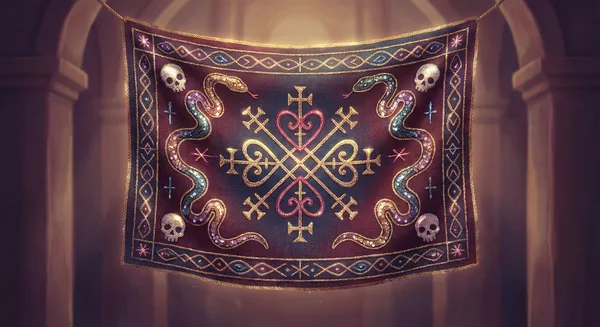
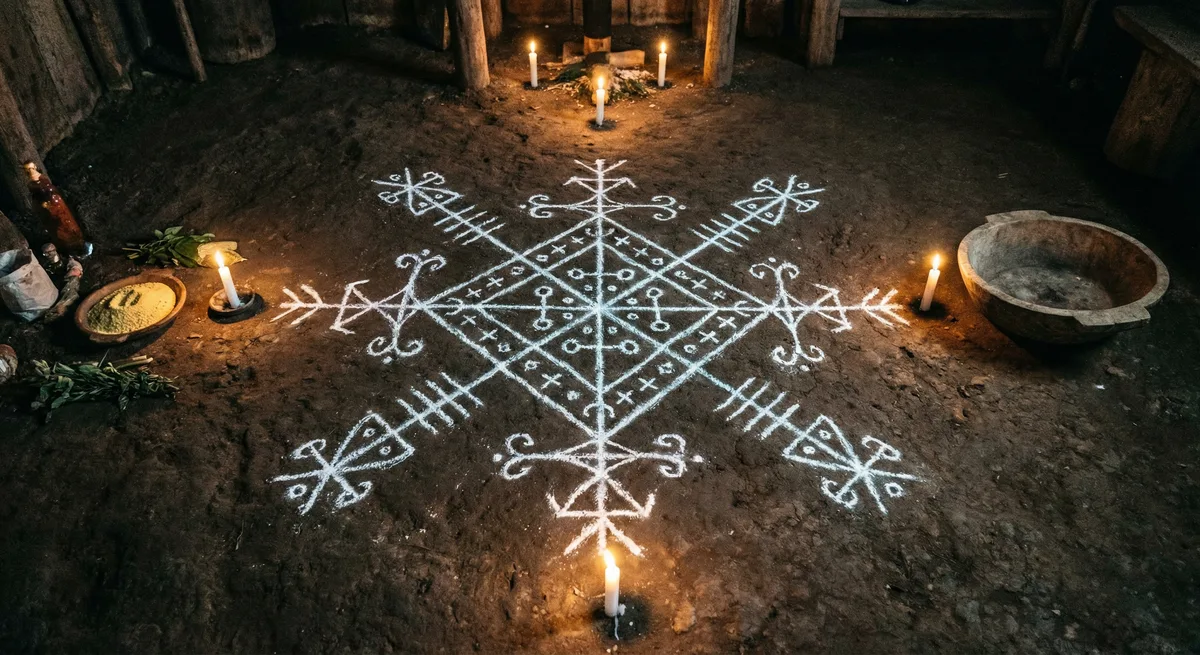
Vèvè — ritual drawing for the lwa, chalk on earth
Vèvè — image to be generated

The Lwa (Loa)

Spirits who serve and are served

The lwa are divine forces—each with personality, preferences, and domains. Legba opens the gate between worlds. Erzulie (Ezili) embodies love, beauty, and sorrow. Ogou is warrior and iron. Damballah is the serpent, wisdom, creation. Some derive from West African Orisha; others from Kongo, Dahomey, or local Taino and Creole sources. The lwa "mount" (possess) their servitors in ceremony—the spirit speaks and acts through the human. This is honor, not exploitation.

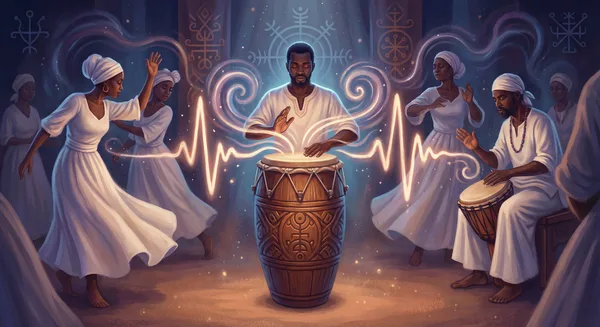
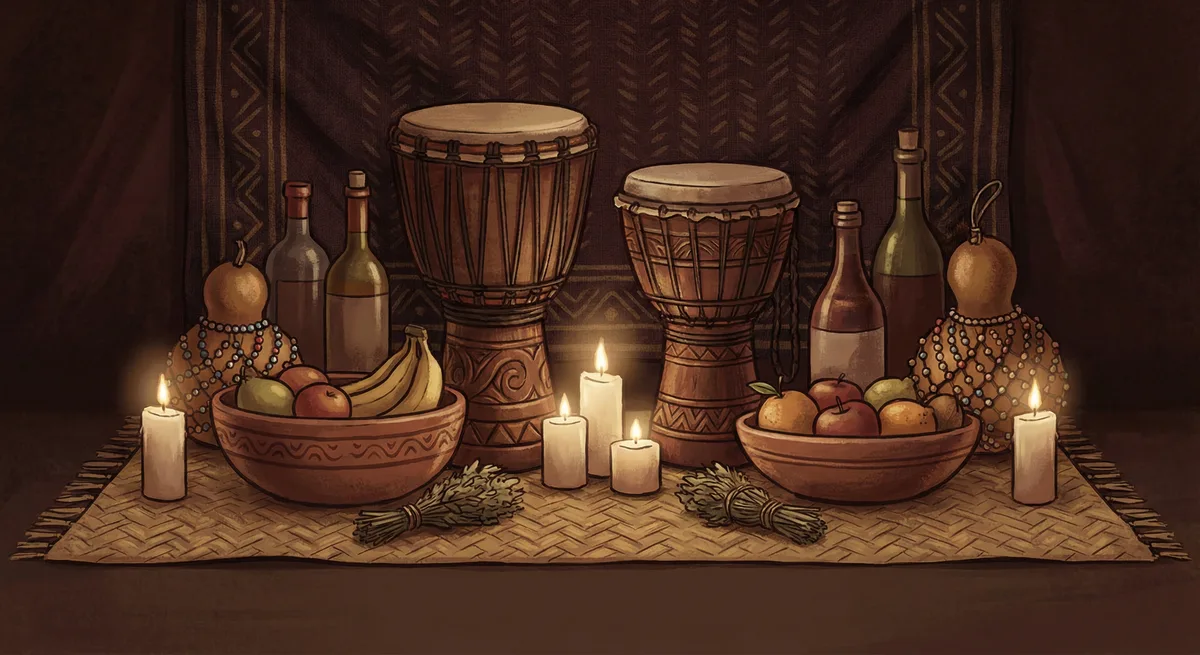
Ritual objects — drums, offerings, reverent arrangement
Ceremony — image to be generated

Sèvis — Service

Feeding the spirits, sustaining the living

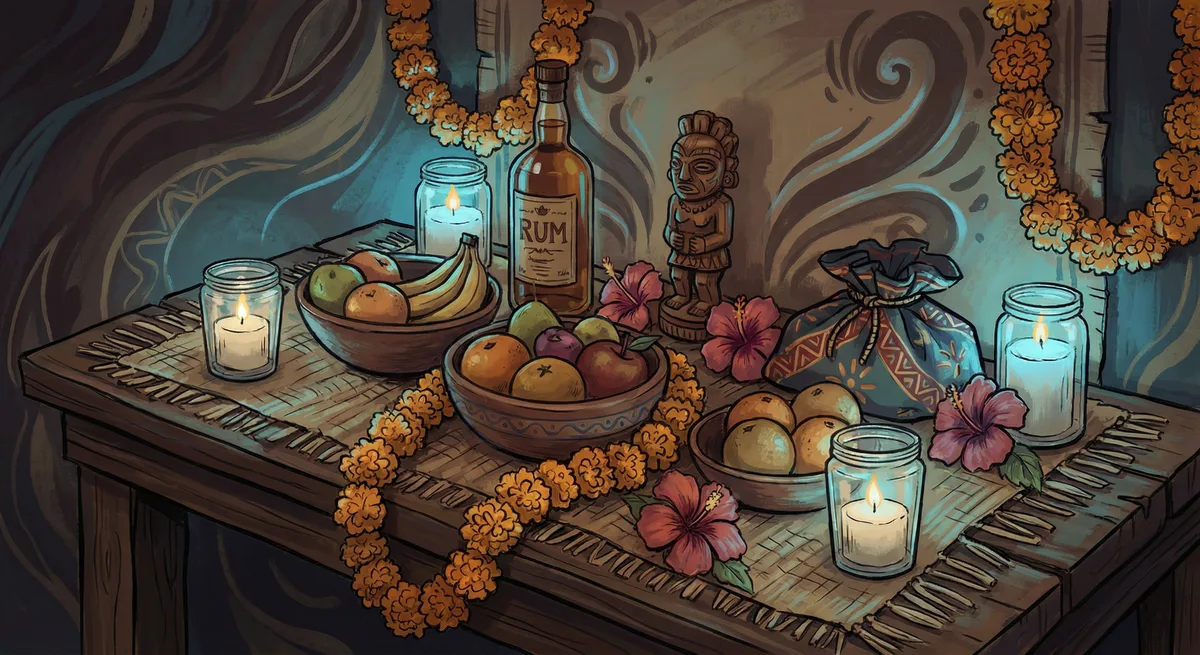
Vodou is sèvis—service. Devotees serve the lwa through prayer, song, dance, and offerings (food, drink, objects). The lwa, in turn, protect and guide. The relationship is reciprocal. The oungan (male priest) or manbo (female priestess) leads ceremonies and serves the spirits. Initiation (kanzo) creates lasting bonds. Service extends to the ancestors (the Gede family of lwa particularly) and to community—healing, counsel, solidarity.

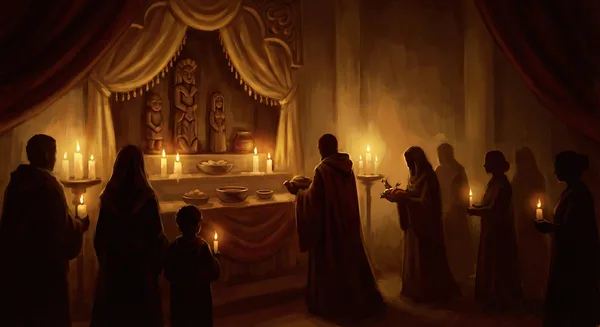
Offerings — food, candles, flowers, reverent
Offerings — image to be generated

Nanchons — The Nations

Families of lwa

Lwa are grouped into "nations" (nanchons) reflecting their origins: Rada (cooler, Dahomean), Petro (hotter, Kongo-Creole), Gede (the dead, humor, transition). Each has distinct rhythms, songs, and characteristics. A house (ounfò) may specialize; many serve multiple nations. The vèvè—symbols drawn in flour or cornmeal—invoke each lwa and mark sacred space.

History & Resistance

Forged in slavery, sustained in freedom

Vodou took shape among enslaved Africans in Saint-Domingue. The Haitian Revolution (1791–1804) was launched at a Vodou ceremony at Bois Caïman. The religion has been persecuted—by colonizers, by dictators, by sensationalist media—yet endures. It is not "voodoo" as caricatured in film; it is a sophisticated tradition of theology, ethics, healing, and community. To honor Vodou is to honor Haitian resilience and the African contribution to the Americas.