Black box track: This hub is public; core implementation and repo detail stay partner scoped. Research status (what ships, what is spec): Research status. Technical briefings under NDA: Partners.

Umbanda

Spirits, Charity, Synthesis

Umbanda emerged in Brazil in the early 20th century—a distinctly Brazilian synthesis of African traditions (orixás), Indigenous spirituality (caboclos), Catholic elements (saints, charity), and Spiritism (Kardecism). It emphasizes charity (caridade) above all: the terreiro serves the suffering, the poor, and spirits in need of evolution. Umbanda is one of Brazil's most practiced religions, open to all regardless of race or background.

What We Hold Sacred

Caridade — Charity and the synthesis of spirits

Umbanda holds sacred caridade—charity—the principle that spiritual work should be offered freely to those in need. Founded in Brazil in the early 20th century, Umbanda synthesizes African traditions (Orixás), Indigenous practices, Spiritism, and Catholicism. The transcendent secret of Umbanda is the hierarchy of spirits: the Orixás at the top; the guides (guias)—Caboclos, Preto Velhos, and others—who work through mediums to heal and counsel; the spirits in development who need help. Sacred is the terreiro where mediums incorporate spirits without charge, where the suffering find solace, and where the poor are served as equals. What Umbanda holds most sacred is the duty to help—both the living and the dead. Every spirit deserves a path toward light. Charity is not optional; it is the very purpose of the tradition. The medium gives the body; the spirit gives the wisdom. Together they serve.

Origin

A new tradition, 1908

Umbanda traces its founding to 1908, when a spirit identified as a caboclo (Indigenous spirit) allegedly incorporated in a young medium in a Kardecist center. The spirit declared a new line of work: charity without payment. Umbanda developed in Rio de Janeiro and São Paulo, blending Candomblé's orixás with caboclos (Indigenous ancestors), pretos velhos (old Black spirits of wisdom), and Kardecist ideas of spirit evolution. It is uniquely Brazilian—born of the encounter of peoples.

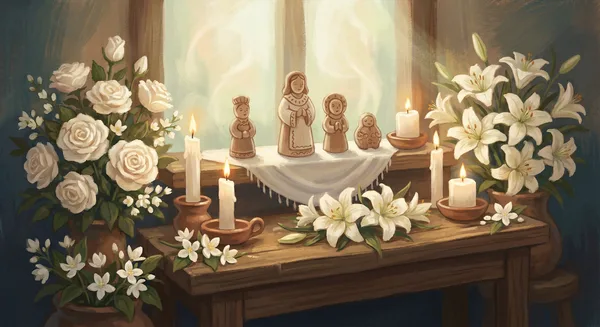
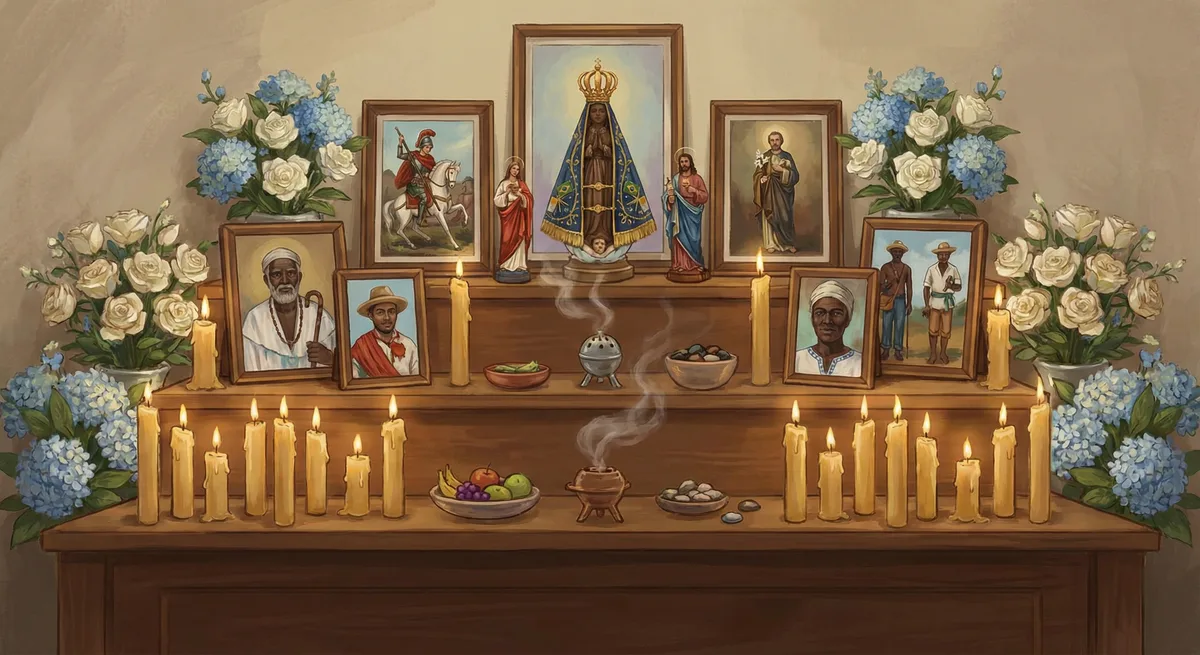
Umbanda altar — candles, flowers, images of saints and spirits, reverent
Altar — image to be generated

Orixás & Spirit Lines

Divine forces and guiding spirits

The orixás (from Yoruba/Candomblé) form the divine foundation—Oxalá, Iemanjá, Xangô, Ogum, Oxum, and others. Umbanda also works with "spirit lines": caboclos (Indigenous spirits of the forest), pretos velhos (wise elders who endured slavery), crianças (child spirits of purity), and more. Each line has its character: caboclos bring strength and nature wisdom; pretos velhos bring patience and counsel. All serve charity.

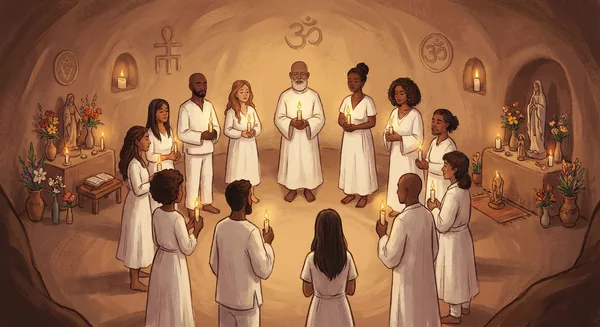
Reverent ceremony — white, candles, community
Ceremony — image to be generated

Charity (Caridade)

Service without charge

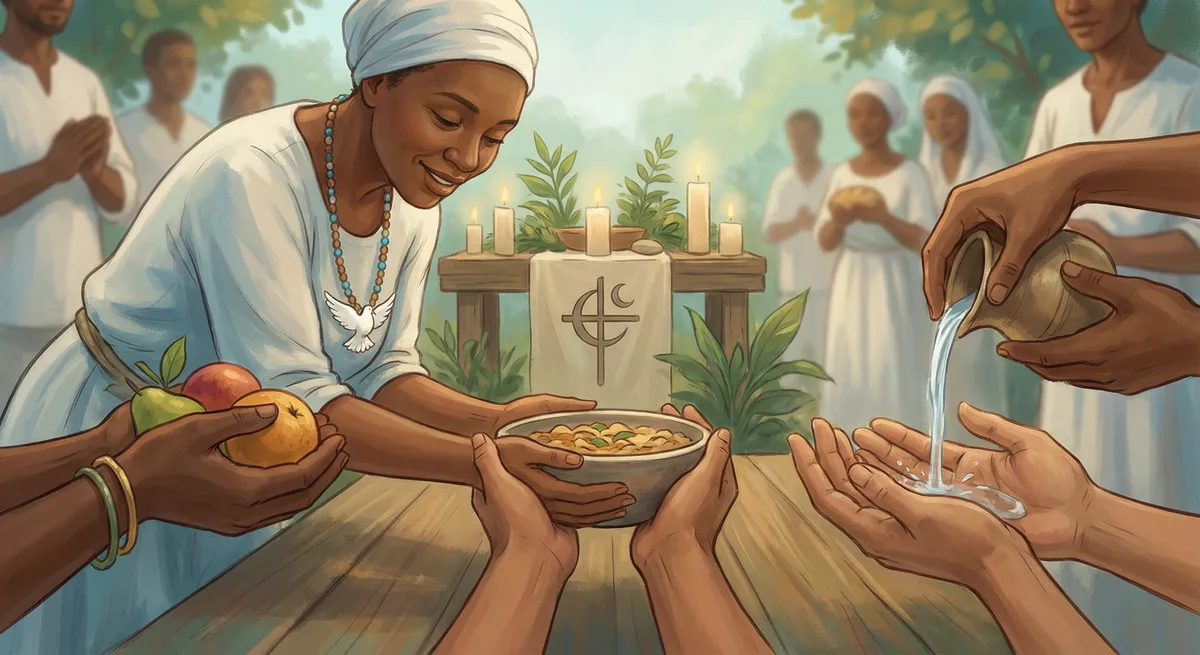
Umbanda's cardinal principle is charity. Consultations (passes, consultations with incorporated spirits) are typically free or low cost. The terreiro serves the sick, the troubled, the poor. Spirit "evolution" is tied to service: spirits who work for charity advance; those who receive help are supported. The ethic is mutual aid—"give without expecting return." This distinguishes Umbanda from traditions that charge for spiritual work.

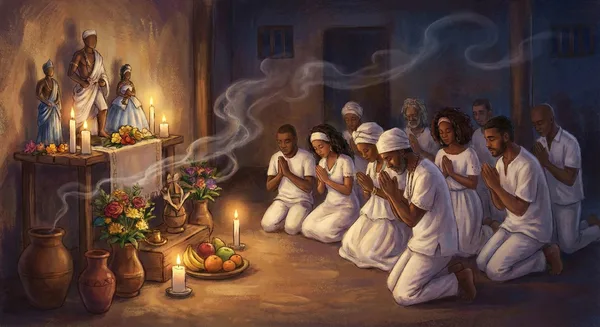
Hands in service—feeding, helping, diverse
Charity — image to be generated

The Terreiro

House of charity

The terreiro (also called centro) is the temple. The pai or mãe de santo leads. Mediums incorporate spirits to offer guidance and healing. Ceremonies often include Catholic prayers (Our Father, Hail Mary) alongside African invocations—the synthesis in practice. White clothing is common. Drumming, song, and dance call the spirits. The terreiro is a place of refuge and transformation.

The Synthesis

African, Indigenous, Catholic, Spiritist

Umbanda does not choose one tradition over another. It holds that different lines of spirit—African, Indigenous, Catholic saints (as manifestations of orixás)—all serve the same divine purpose: the evolution of spirits and the welfare of humanity. This pluralism reflects Brazil's history: a nation forged from many peoples. Umbanda says we need not erase difference; we can unite in charity.