Black box track: This hub is public; core implementation and repo detail stay partner scoped. Research status (what ships, what is spec): Research status. Technical briefings under NDA: Partners.

Mithraism

Mysteries of Mithras — A Roman Path to Salvation

Mithraism was a mystery religion that flourished in the Roman Empire from the 1st to the 4th centuries CE. Its god, Mithras—adapted from the Persian Mithra—was worshipped in underground sanctuaries (mithraea) by soldiers, officials, and merchants. No sacred texts survive; we know the tradition through archaeology, sculpture, and inscriptions. The bull-slaying (tauroctony), the ritual meal, and seven grades of initiation suggest a path of ascent and cosmic redemption. With the rise of Christianity, Mithraism faded. We honor it here as a chapter in humanity's search for meaning through ritual and symbol.

What We Hold Sacred

Mithras & the bull — A historical mystery religion's transcendent mystery

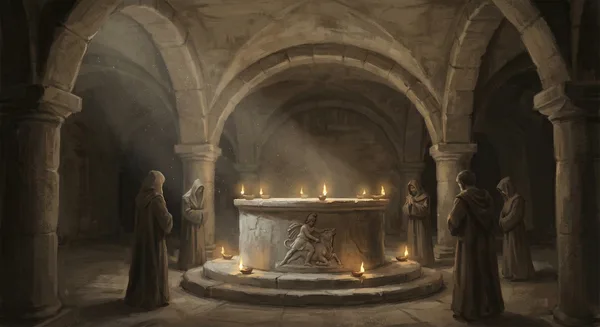
Mithraism, the Roman mystery religion that flourished in the first four centuries CE, left no scriptures—its teachings were transmitted orally in the mithraeum, the underground temple. What it held sacred was enacted rather than written: the tauroctony—Mithras slaying the bull—the grades of initiation (Raven, Bride, Soldier, Lion, Persian, Heliodromus, Father), and the communal meal that bound initiates. The transcendent secret was the soul's journey through the cosmic spheres, the ascent from earth to the realm of the fixed stars. Mithras—often shown with a Phrygian cap, the unconquered sun—mediated between the human and the divine. Though the religion died out and its precise beliefs remain debated, what Mithraism held sacred endures in human memory: the power of initiation to transform, the bond of a secret community, and the hope that the soul might rise through the layers of reality to meet the divine. The mithraeum, lit by torchlight, was a microcosm—a cave that mirrored the cosmos, where the mundane fell away and the transcendent drew near.
Mithras

God of the mystery

Mithras enters Roman religion in the 1st century CE—likely through contact with the East. He is depicted as a youthful figure in Eastern dress, often emerging from a rock, born with a torch and knife. He is "Sol Invictus" (Unconquered Sun), mediator between heaven and earth. Unlike Persian Mithra (contract, covenant), the Roman Mithras has a distinct mythology centered on the slaying of a cosmic bull—an act that, in mystery religion logic, may have released life and salvation for initiates.

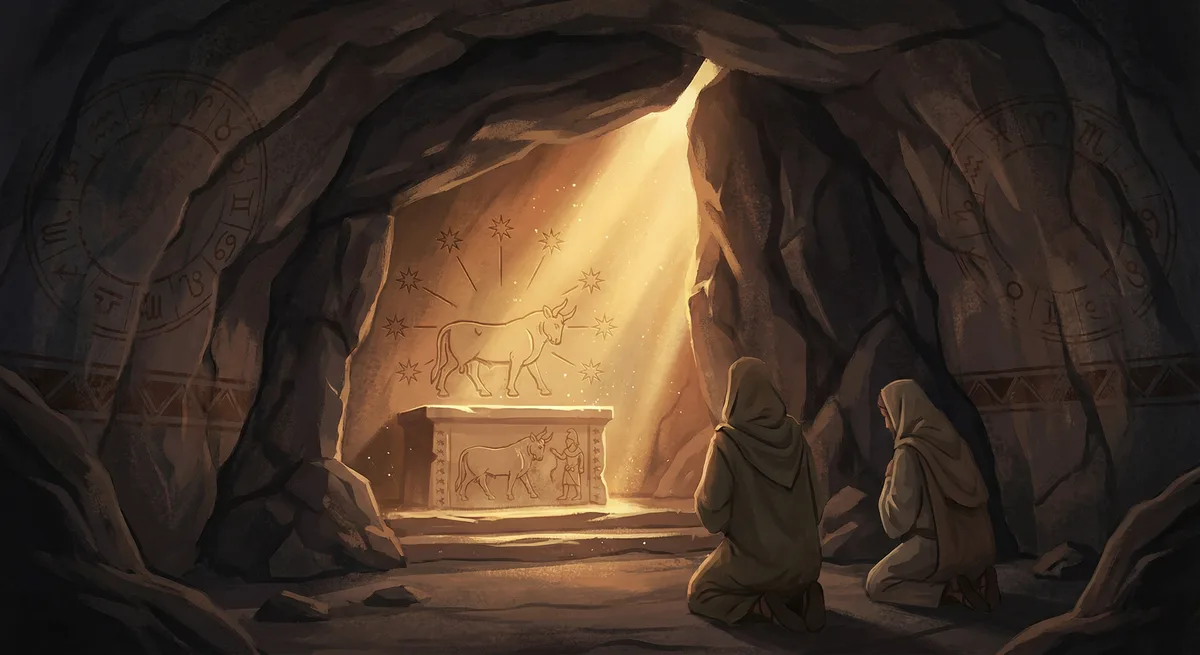
Symbolic — cave, light emerging, reverent
Cave and light — image to be generated

The Bull (Tauroctony)

The central icon

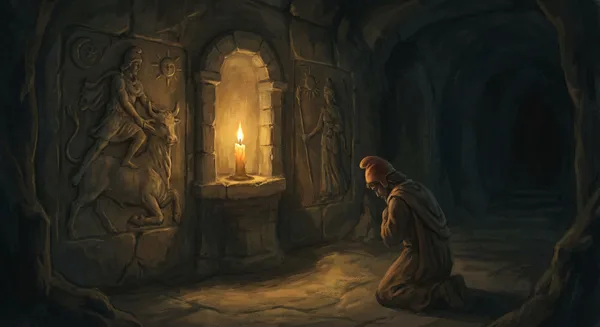
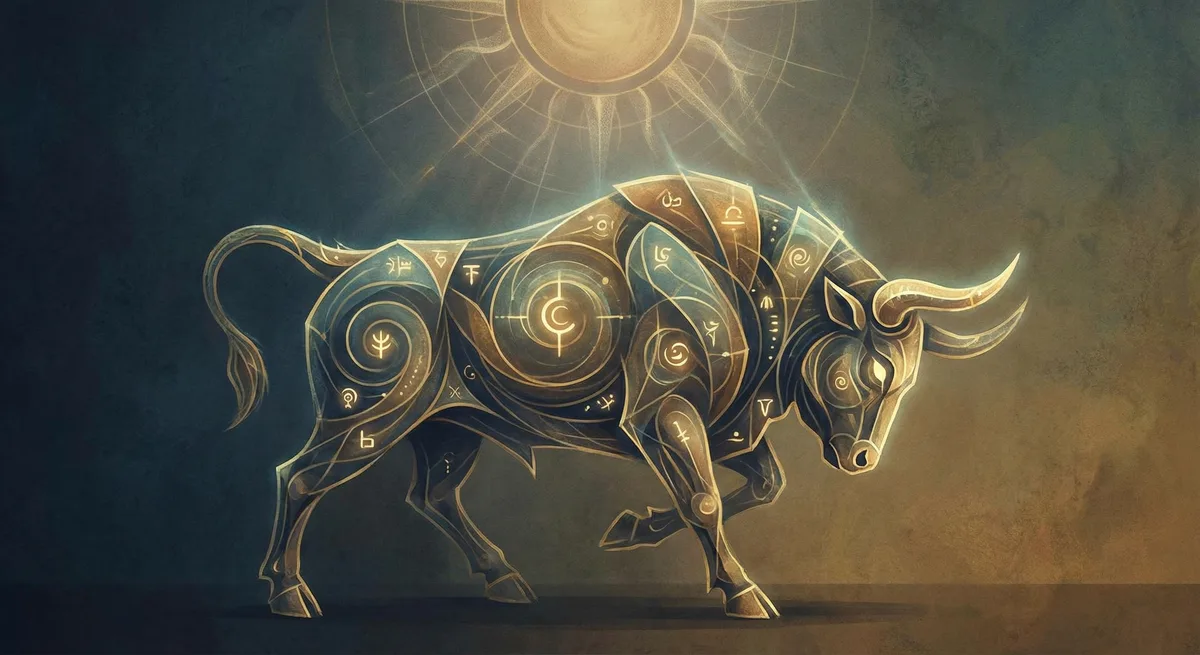
Every mithraeum featured a relief of Mithras slaying a bull—the tauroctony. Mithras kneels on the bull's back, plunging a knife into its neck. A dog and serpent drink the blood; a scorpion attacks the bull's genitals. A raven is often present. The scene is framed by the twin torch-bearers Cautes and Cautopates (dawn and dusk). Scholars debate its meaning—astronomical symbolism, sacrifice, cosmogony—but it clearly stood at the heart of Mithraic devotion. The bull's death may have been understood as a redemptive act.

Abstract — bull, knife, reverent symbolism
Tauroctony — image to be generated

The Mithraeum

Underground sanctity

Mithraea were small, cave-like spaces—often built in basements or carved into rock. The vaulted ceiling sometimes evoked the cosmos. Benches along the walls faced the tauroctony. Initiation was secret; only members entered. The darkness, the intimacy, the shared meal (bread and wine?)—these created bonds among initiates. Mithraea have been found from Hadrian's Wall to the Black Sea, from the Rhine to North Africa. The religion spread with the Roman army.

Grades of Initiation

Seven steps toward the divine

Inscriptions and artwork reveal seven grades: Raven (Corax), Bride (Nymphus), Soldier (Miles), Lion (Leo), Persian (Perses), Courier of the Sun (Heliodromus), and Father (Pater). Each had its symbol and perhaps its ordeal. Progression through the grades may have symbolized ascent through the planetary spheres toward the fixed stars—a soul-journey common in late antique thought. The Father presided over the congregation. Initiation was male; the cult excluded women.

Legacy

Extinct, but preserved in stone

Mithraism was not actively persecuted like Christianity—but as the Empire Christianized, it lost patronage and faded. Its temples were abandoned or repurposed. Because initiates kept silence and left no scriptures, interpretation remains uncertain. We include Mithraism here as a historical tradition that offered salvation through ritual, symbol, and community—a path that, for centuries, answered the longing of thousands across the Roman world.