Black box track: This hub is public; core implementation and repo detail stay partner scoped. Research status (what ships, what is spec): Research status. Technical briefings under NDA: Partners.

Baha'i

Unity of Religion

The Baha'i Faith emerged in 19th-century Persia. Baha'u'llah taught that all religions come from the same Divine Source—one God, progressively revealed through Manifestations including Abraham, Moses, Buddha, Jesus, Muhammad, and, in this age, the Bab and Baha'u'llah. Baha'is work for the unity of humankind, equality of women and men, harmony of religion and science, and the establishment of world peace.

What We Hold Sacred

Progressive Revelation — One truth, many dispensations

Baha'is hold sacred the unity of all revelation. The Qur'an, the Bible, the Bhagavad Gita, the words of Buddha—each is a chapter in one book, a dispensation for its time. The transcendent secret of Baha'i is that God has spoken through every great teacher: Abraham, Moses, Krishna, Buddha, Jesus, Muhammad, the Báb, Baha'u'llah. No tradition is superseded; each is fulfilled. The Kitáb-i-Aqdas and the writings of Baha'u'llah are the latest revelation, but they do not erase what came before. Sacred is the oneness of humanity, the harmony of science and religion, the elimination of prejudice. What Baha'is hold most sacred is the vision of one human family—every soul a leaf of one tree, every tradition a branch of one truth, every revelation a ray of one sun.
Unity — The Central Teaching

One God, one humanity, one religion

"The earth is but one country, and humankind its citizens." Baha'u'llah taught that religious truth is one—revealed in different ages to different peoples through different Manifestations, but always pointing to the same divine reality. Religious strife arises from misunderstanding, not from genuine difference. The Baha'i aim: to recognize the oneness of all traditions and work for global unity.

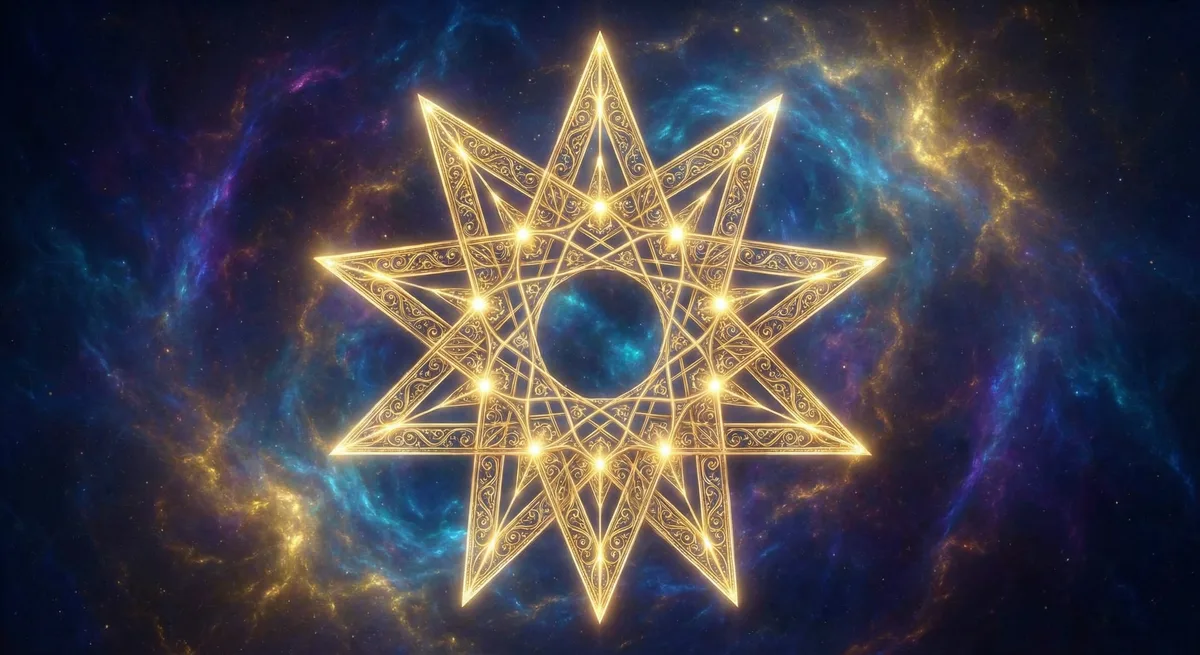
Nine-pointed star — Baha'i symbol, unity
Baha'i symbol — image to be generated

Baha'u'llah

The one through whom this revelation came

Baha'u'llah (1817–1892) was born in Persia. He declared his mission in 1863, following the Bab (1819–1850), who had prepared the way. Baha'u'llah suffered exile and imprisonment—from Tehran to Baghdad, Istanbul, and finally Acre (in modern Israel). His writings include the Kitab-i-Aqdas (the Most Holy Book) and countless tablets. He is buried at the Baha'i World Centre in Haifa.

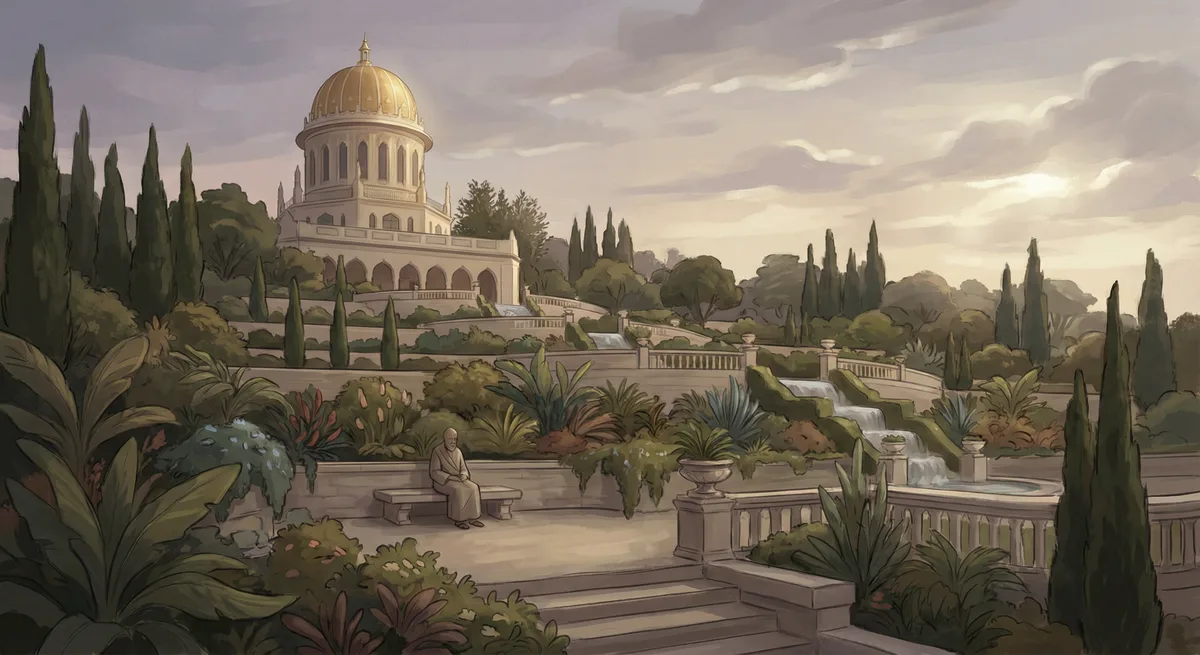
Baha'i gardens or Shrine of the Bab — terraced, serene
Baha'i gardens — image to be generated

Progressive Revelation

One truth, many dispensations

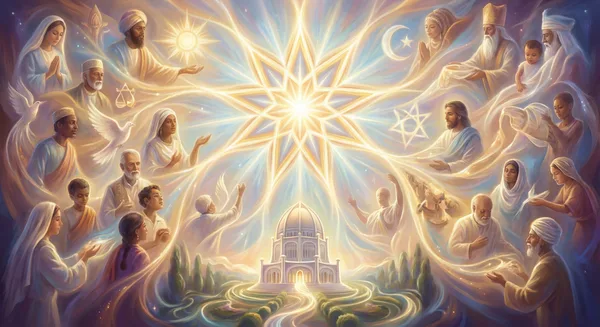
God sends Manifestations—prophets, avatars, messengers—in each age to guide humanity. Krishna, Moses, Zoroaster, Buddha, Jesus, Muhammad, the Bab, Baha'u'llah—each brought teachings suited to their time and place. They are not competitors but successive chapters of one divine education. "This is the changeless Faith of God, eternal in the past, eternal in the future."

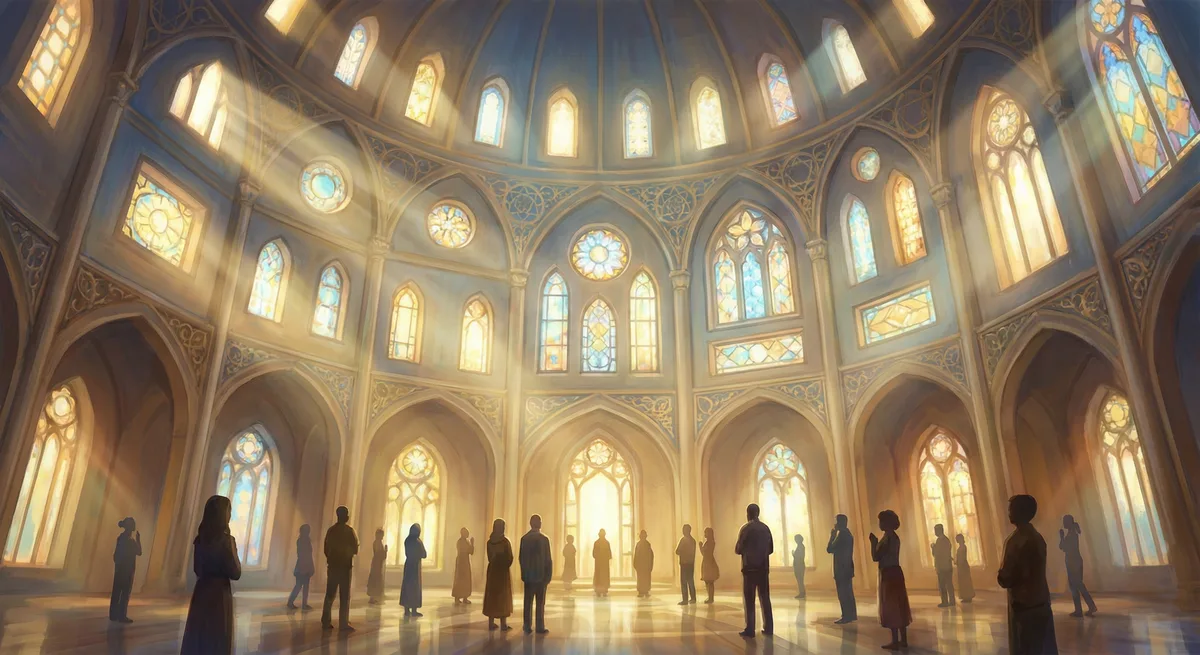
Light streaming through many windows — unity in diversity
Progressive revelation — image to be generated

Core Principles

Unity, equality, peace

Oneness of God — One creator, known by many names.
Oneness of religion — All faiths from the same source.
Oneness of humanity — All races and peoples are one.
Equality of women and men — Essential for peace.
Harmony of religion and science — Both paths to truth.
Universal education — Every child has the right to learn.
Elimination of prejudice — Race, class, nation, gender.

Community & Practice

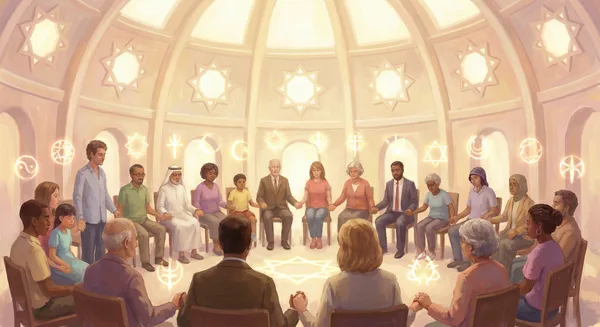
No clergy—consultation and service

Baha'is have no clergy. Local Spiritual Assemblies administer community life. Devotional gatherings, study circles, and children's classes build community. Nineteen-month fast, pilgrimage to Haifa, and daily prayer structure spiritual life. Service to humanity is worship.