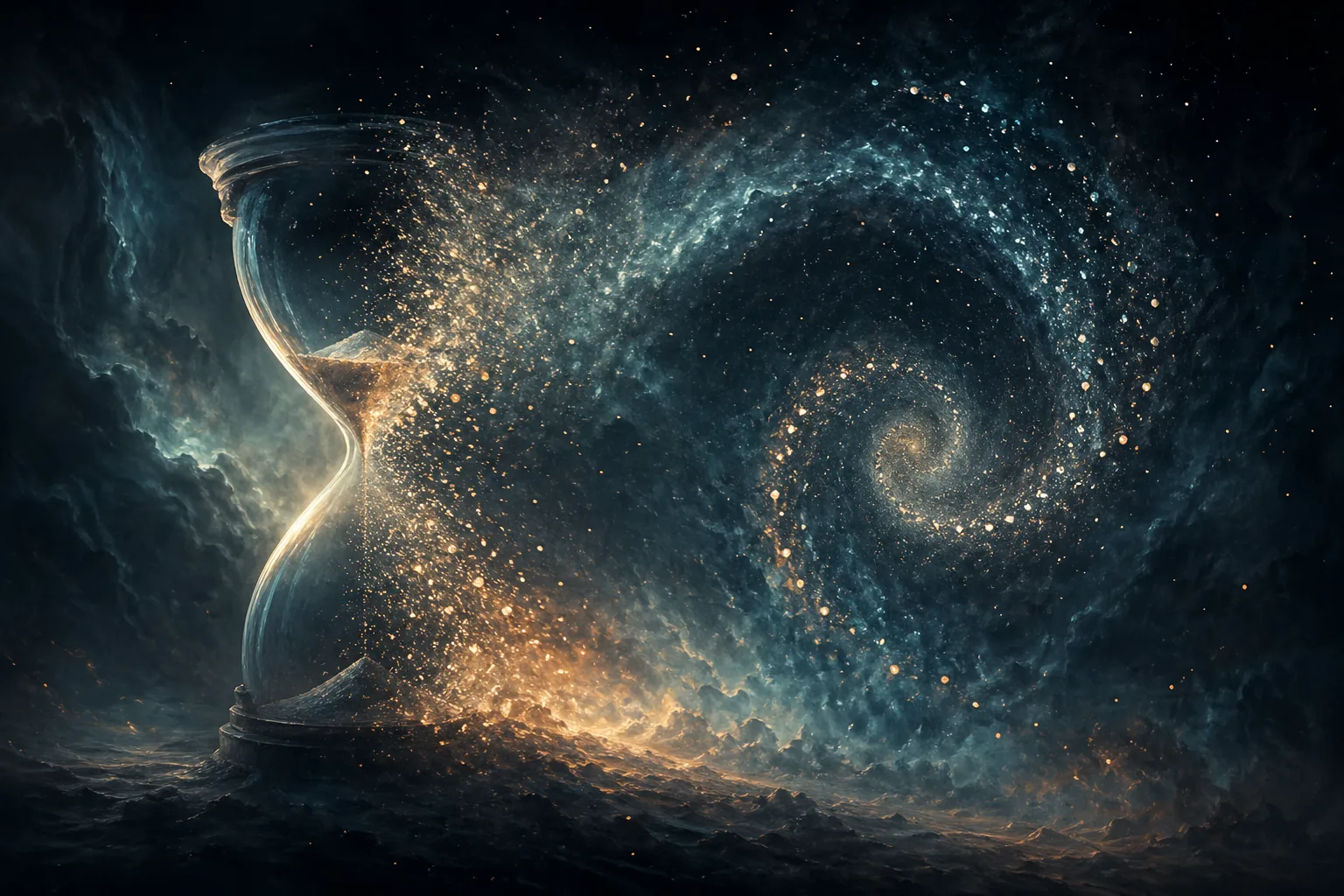
The Arrow of Time
Entropy · Memory · Lived asymmetry
We remember the past and not the future. The equations often look the same if you reverse t.
— Loose paraphrase of common thermodynamics classroom setup
Microscopic laws are often time-symmetric; macroscopic life is not. This piece sketches entropy, coarse-graining, and why “the arrow” is a puzzle you can teach without pretending the universe handed you a simple slogan. Pair product or measurement talk with Research status.
I. Reversible Laws, Irreversible Breakfast
Why the mismatch is the whole story
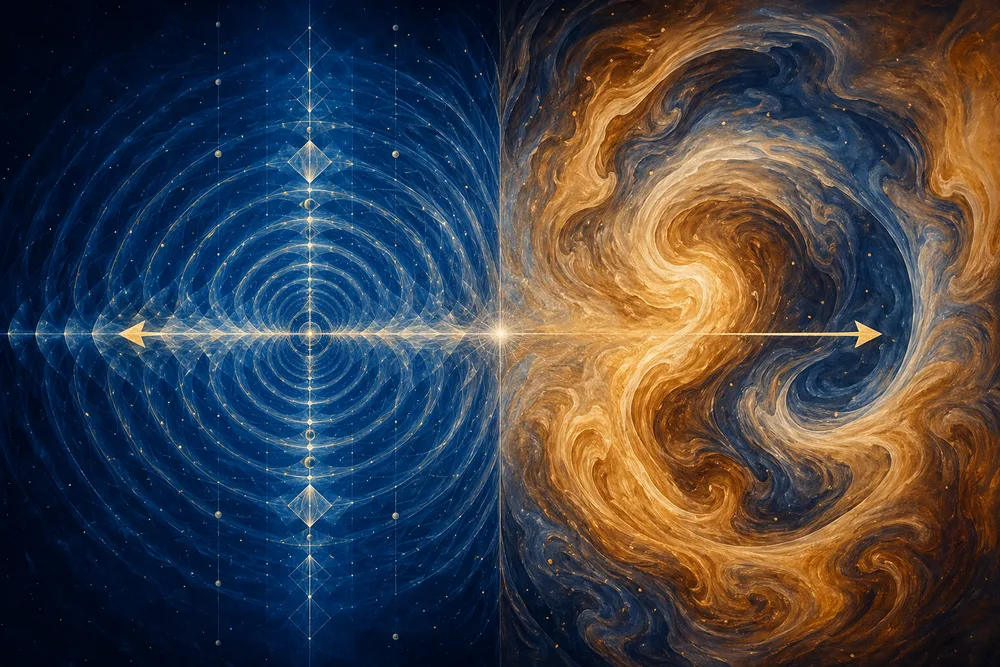
Many fundamental equations are reversible: film them backward and they still solve the same formalism. Yet eggs do not unscramble and cream does not un-mix in your coffee without work.
That contrast is not a failure of physics—it is a hint that our description (what we track and blur out) matters as much as the abstract “laws.”
II. Entropy as Surprise, Not Evil
High entropy is often “more arrangements,” not moral decay
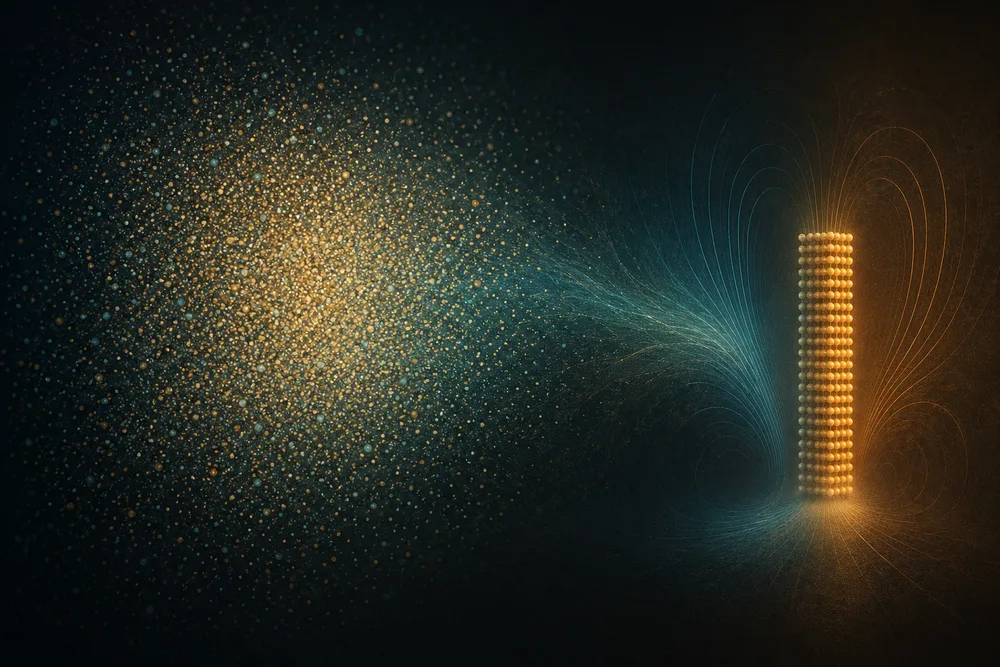
Entropy counts how many microstates look like your macro-state. The Second Law is shorthand: isolated systems drift toward macrostates compatible with more microconfigurations.
Popular talk equates entropy with “disorder.” Engineers know better: order in one place often exports disorder elsewhere—that is why refrigerators have a power cord.
III. Records, Brains, and Film
Why “memory” points forward for organisms
Memory is correlated structure: a burn on the log, ink on paper, a synaptic trace. Making records consumes free energy; erasing them is bounded by Landauer-style arguments (a story for another paragraph).
So organisms, as open thermodynamic systems, carve reliable traces about one wing of time. That is not proof the cosmos “chose” an arrow—it explains why narrators feel one.

IV. Boundary Conditions
Why cosmologists talk about initial low entropy
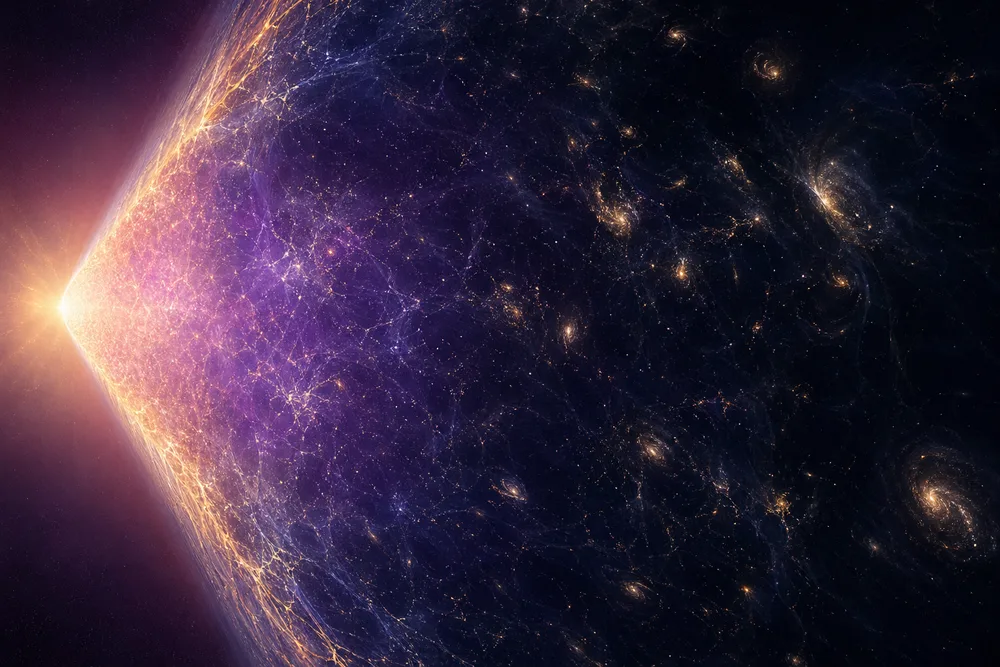
Where does the arrow come from globally? Honest answers point to boundary conditions: we live after a very special-looking early universe with enormous room for gravitational clumping and dissipation.
This essay stops before a full cosmology lecture. The takeaway: the arrow is not a trick of mood—it reflects structure in the world plus what observers can access.

The Arrow, Still Dropped
The arrow of time is one of the cleanest places where mathematics feels timeless and experience does not. Respect both: keep the wonder, refuse fake certainty.
“Past” is what leaves fossils the universe can still read.