Black box track: This hub stays public while core implementation and repo depth remain partner-scoped. For what ships versus what is still spec, see Research status. Formal technical briefings under NDA: Partners.
The black field · 137 · Wisdom
Chokmah 137 specification, diagrams, and art
Chokmah 137
Wisdom and number: one published Leningrad consonant stream window (start 64,516, skip 137), an 11×11 extracted letter lattice, golden-angle packing for visualization (121 nodes), PhiKey-compatible constants, and the research caveats in plain view. Tradition’s Supernal Triad (Keter–Chokmah–Binah) belongs to Kabbalah as usually diagrammed; the ELS window is a separate, checkable object from phyllotaxis or QED.
Epic corridor — wisdom, number, and the public record
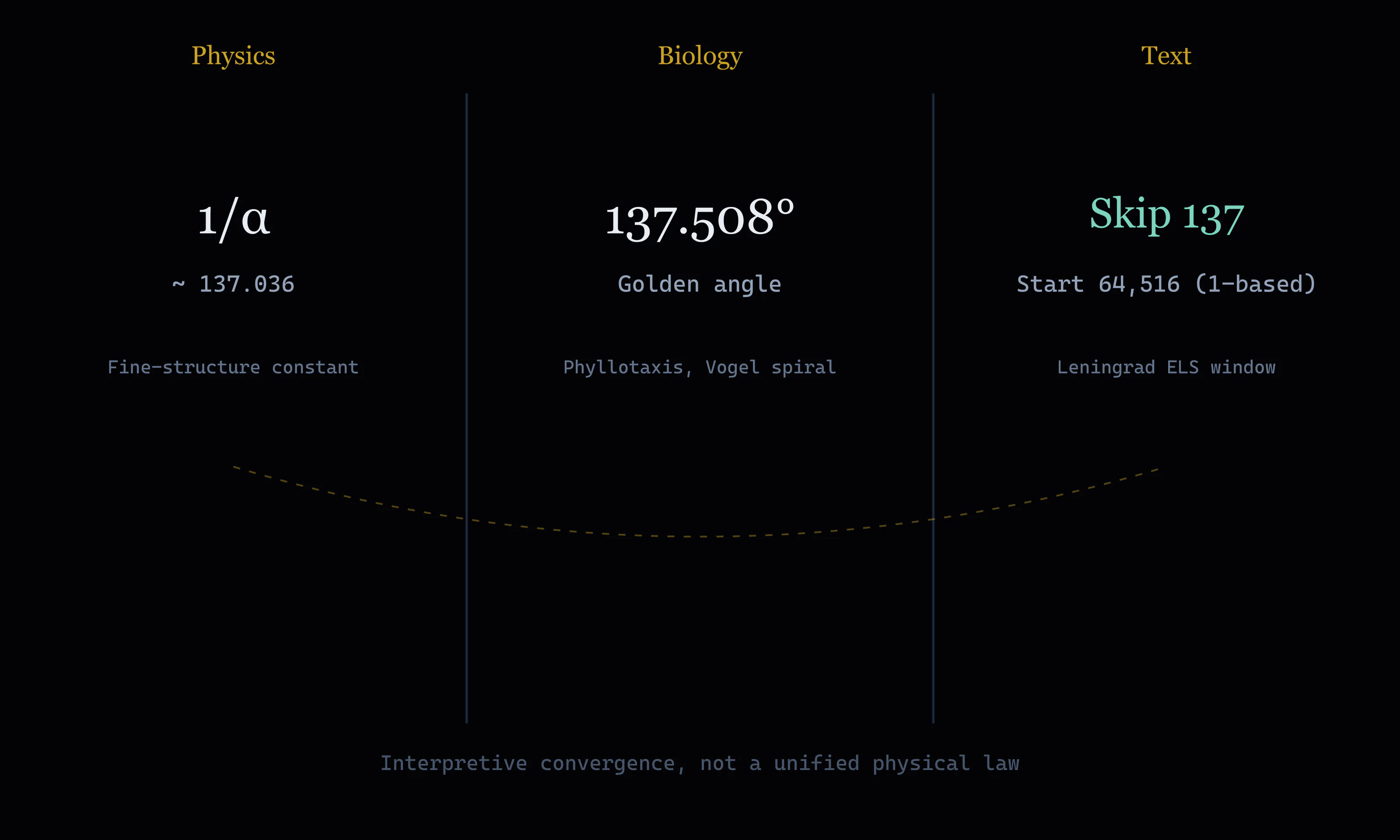
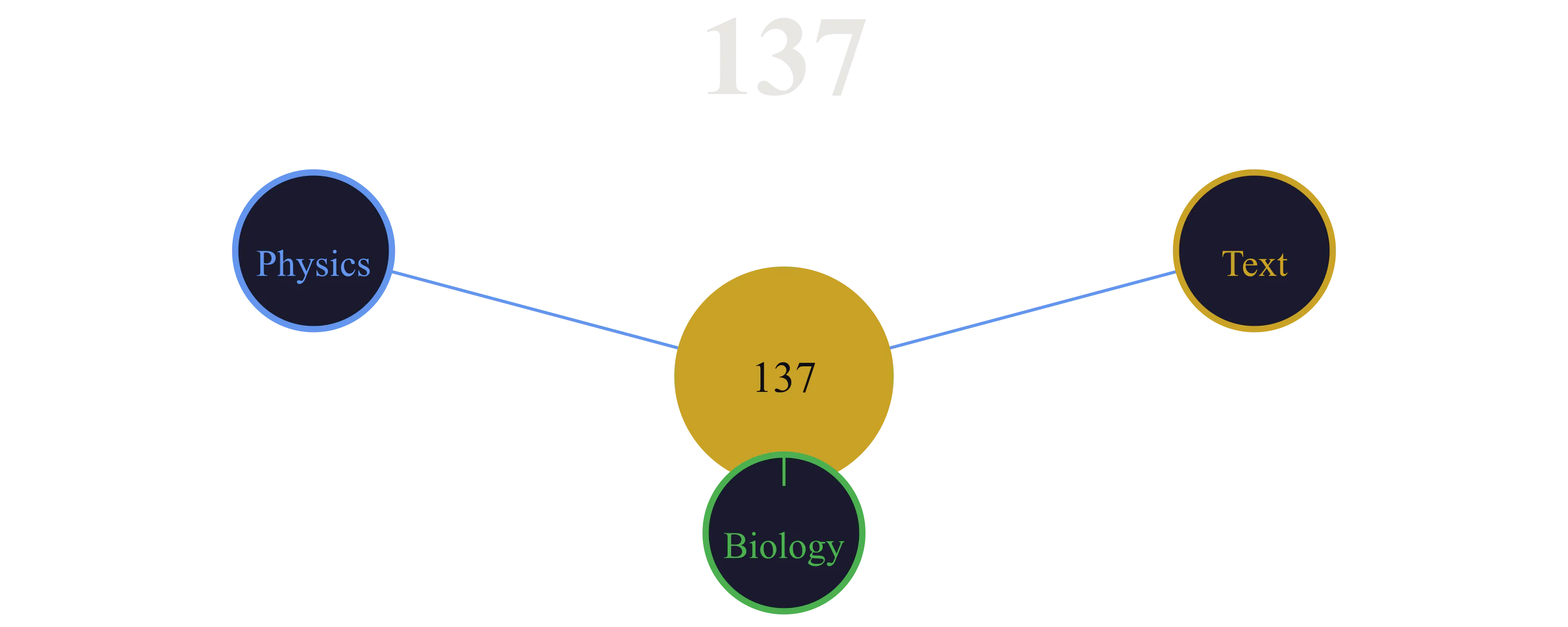
This lane is long on purpose. Down-page you will still find the tight tables, the Leningrad 11×11, and the honesty block—but first we walk the convergence in human scale: physics (α⁻¹ near 137), biology (phyllotaxis near 137.508°), and text (a stated ELS window you can recompute). Photographs break the scroll so your eyes can rest between dense claims. Every image is editorial atmosphere, not evidentiary photography of a phenomenon.
A public threshold
Chokmah (חכמה, Wisdom) names an old intuition: mind meets creation at a boundary you can feel but cannot fully compress. On this site it also names a checkable bundle—public parameters, public caveats, and an engineering lane (PhiKey) that borrows geometry while refusing to smuggle theology into correctness proofs.
When lines almost align, some people pause. Others reach for the next decimal. This page tries to honor both reflexes: reverence without confusion, rigor without contempt.
Threshold mood — scholarship as slow light: the lattice tables below are the card catalog; this photograph is the hush before you open the drawer.
2 · 2 · 2
137 in physics — measured, still mysterious
The fine-structure constant α is a measured pillar of quantum electrodynamics. Its reciprocal sits near 137.036 and has earned folklore (“why this number?”), but mainstream physics does not currently derive α from first principles. That gap is exactly why the integer 137 rings in culture—it is a honest-to-nature loose end, not a password.
We treat overlap with Hebrew skips as parallel corridors. Similar numerals can appear in unrelated mechanisms; analogy is not a joint distribution unless you build one with declared priors and replication.
Instrument mood — accelerators and interferometers reward patience; so does checking an ELS window against an agreed consonant stream.
Golden angle biology — spirals you can photograph
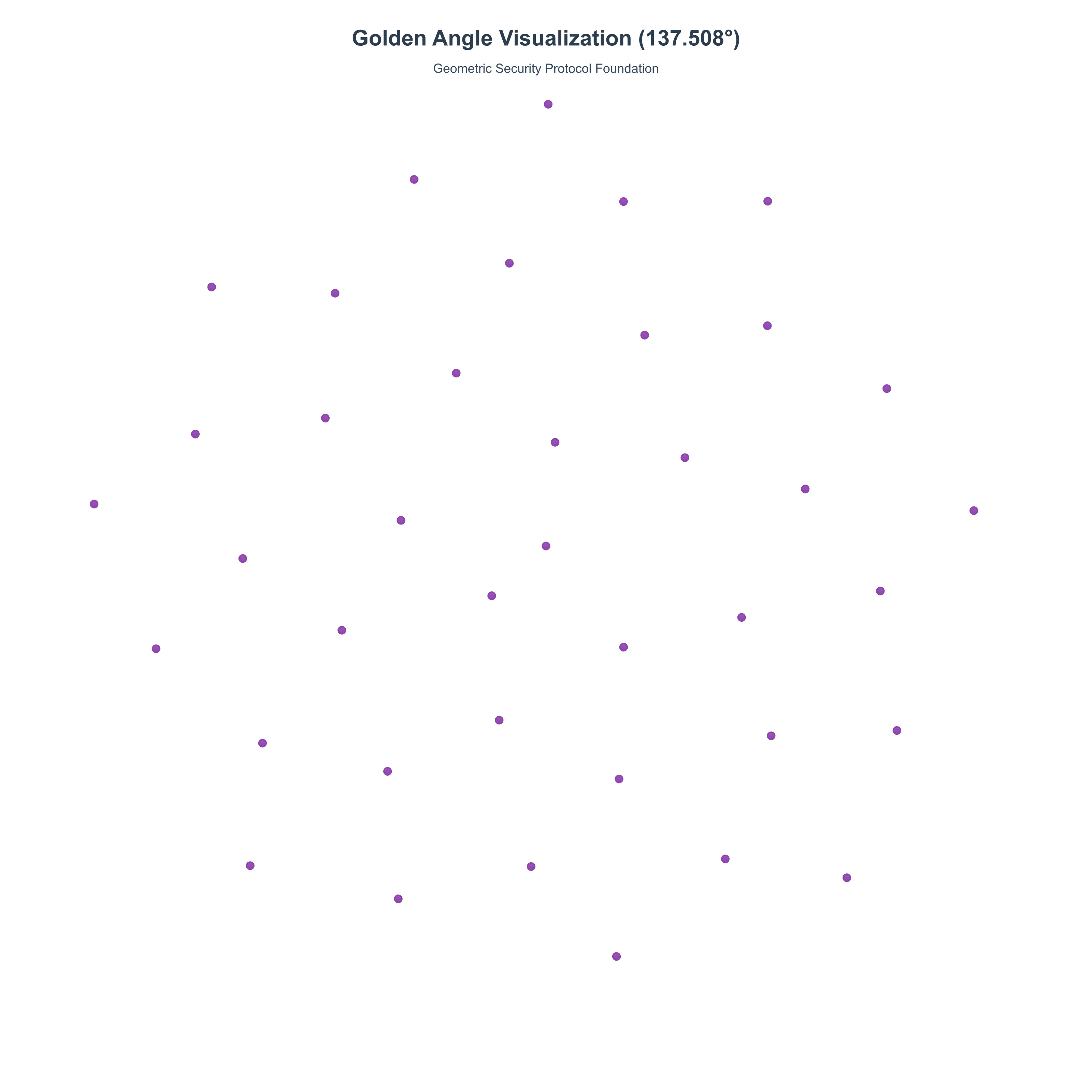
Phyllotaxis often lands near the golden angle, about 137.508° (= 360°/φ²). It is not identical to α⁻¹ in meaning (degrees versus a dimensionless coupling), but the neighborhood is the reason sunflower discs feel “mathematical” without anyone opening a Bible.
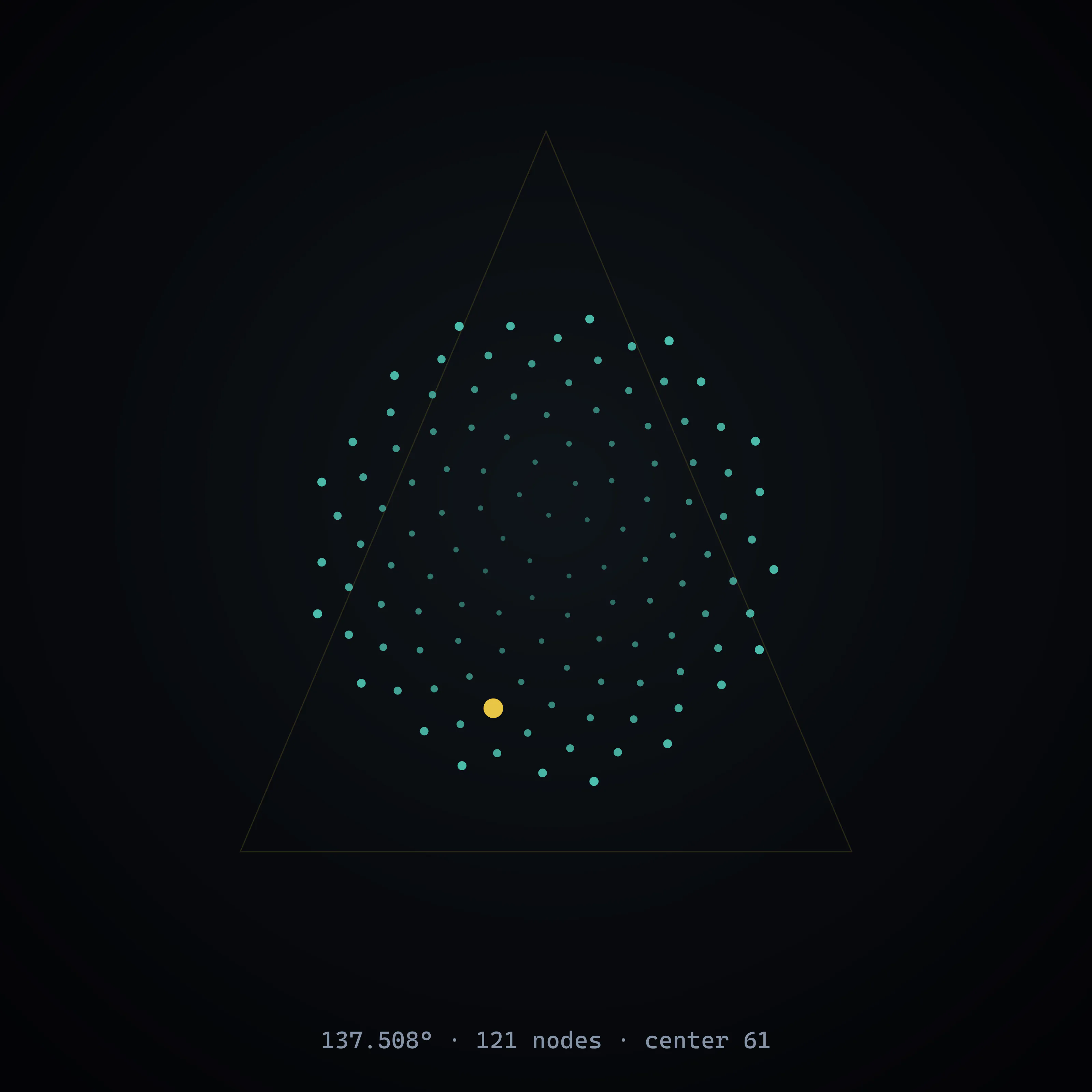
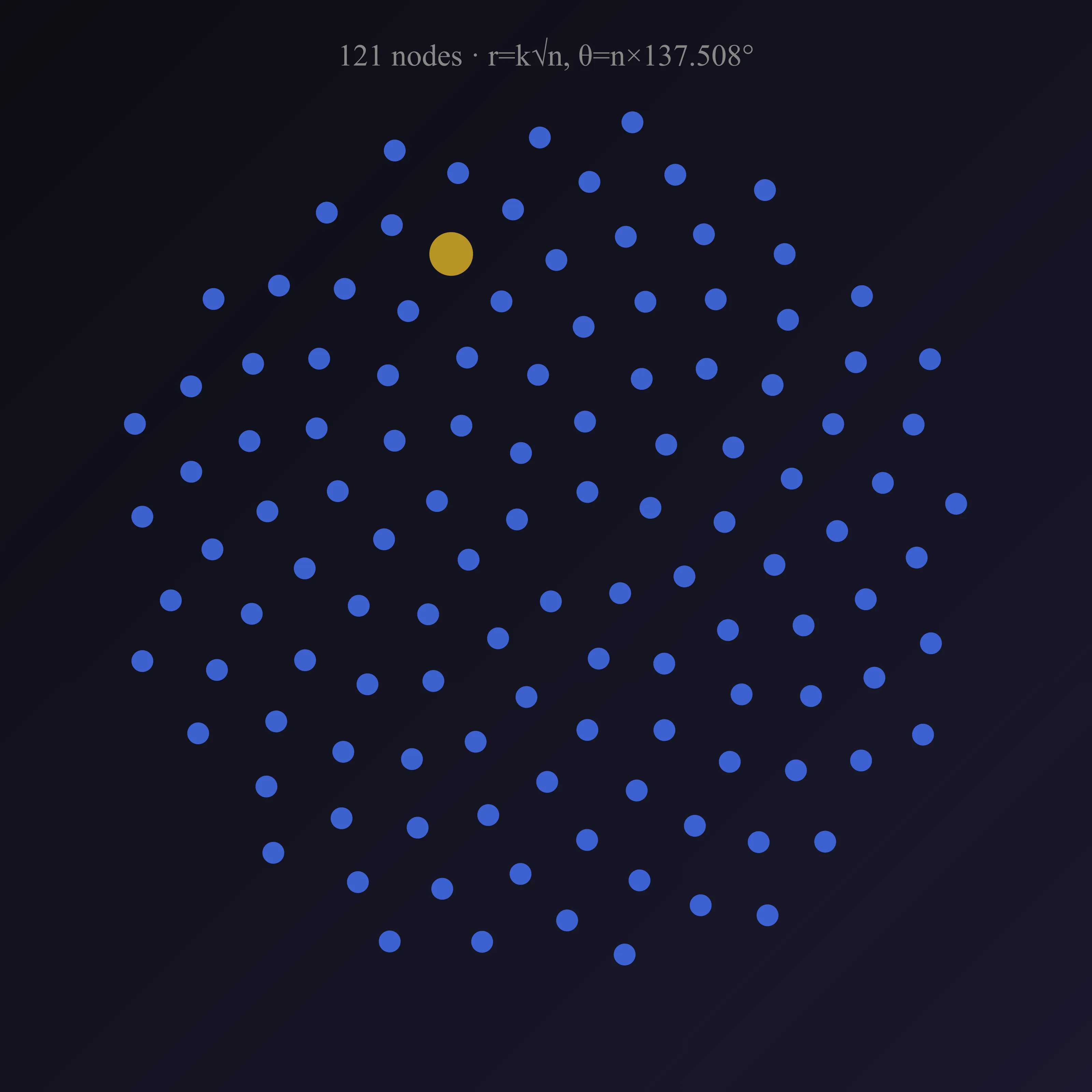
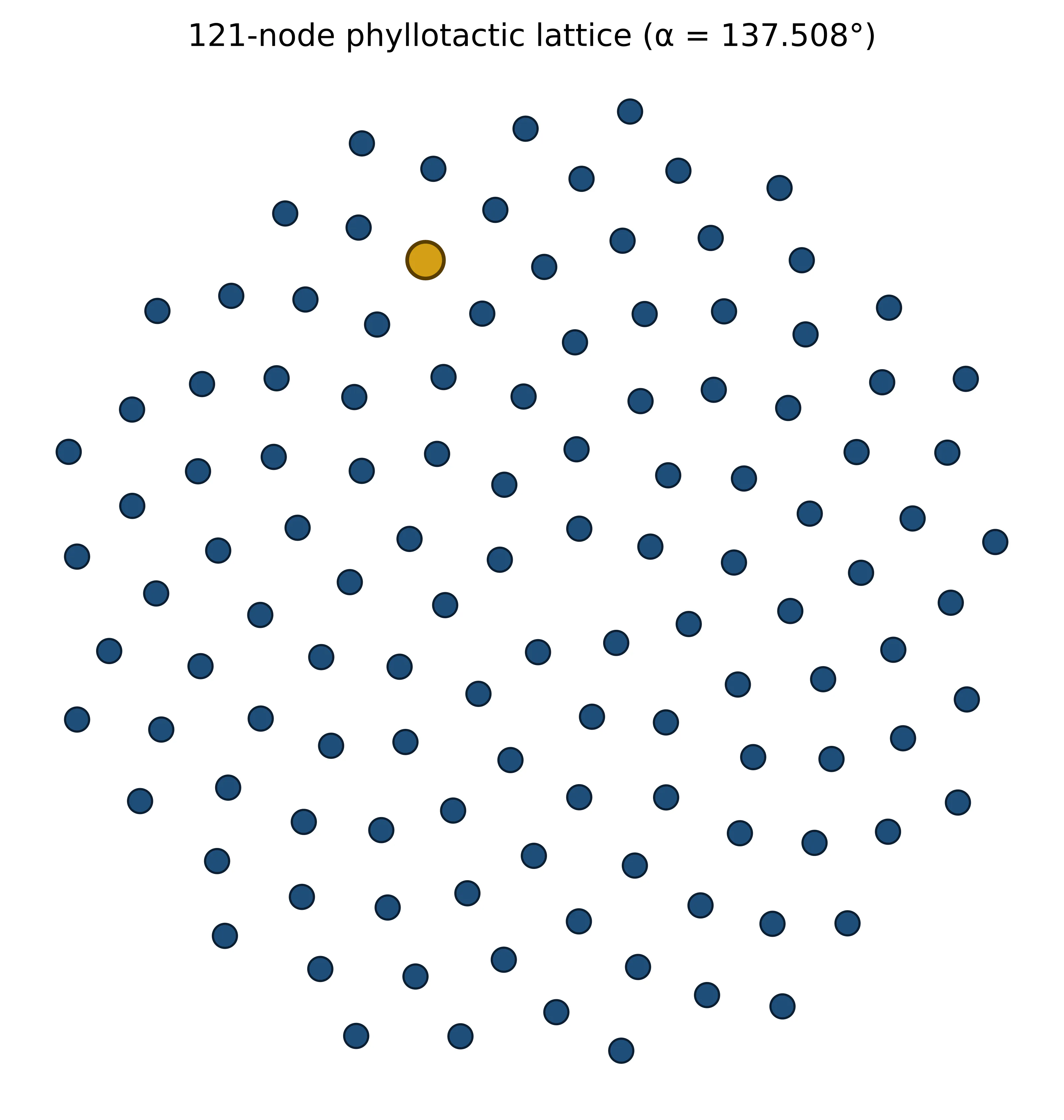
Phyllux publishes 121 nodes on an 11×11 map with center index 61 because that geometry is a practical interface for visualization and hardware narratives—distinct from any Torah matrix claim.
Measured morphology — the plant does not know your skip distance; it still teaches the eye what a golden-angle field looks like.
2 · 2 · 2
The Leningrad window — one stated ELS object
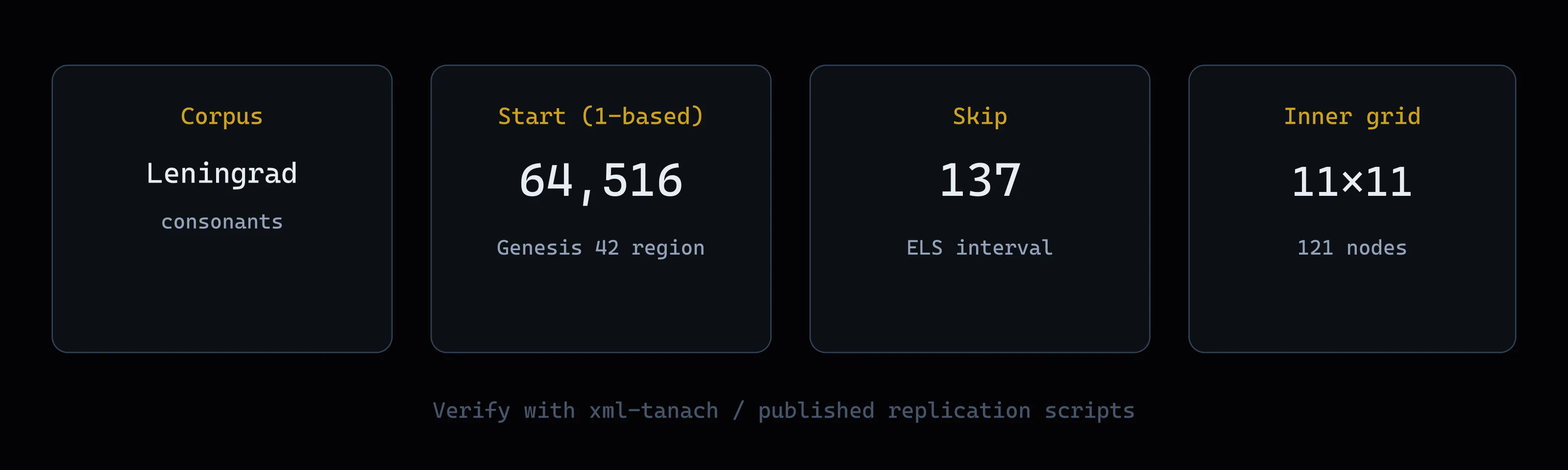
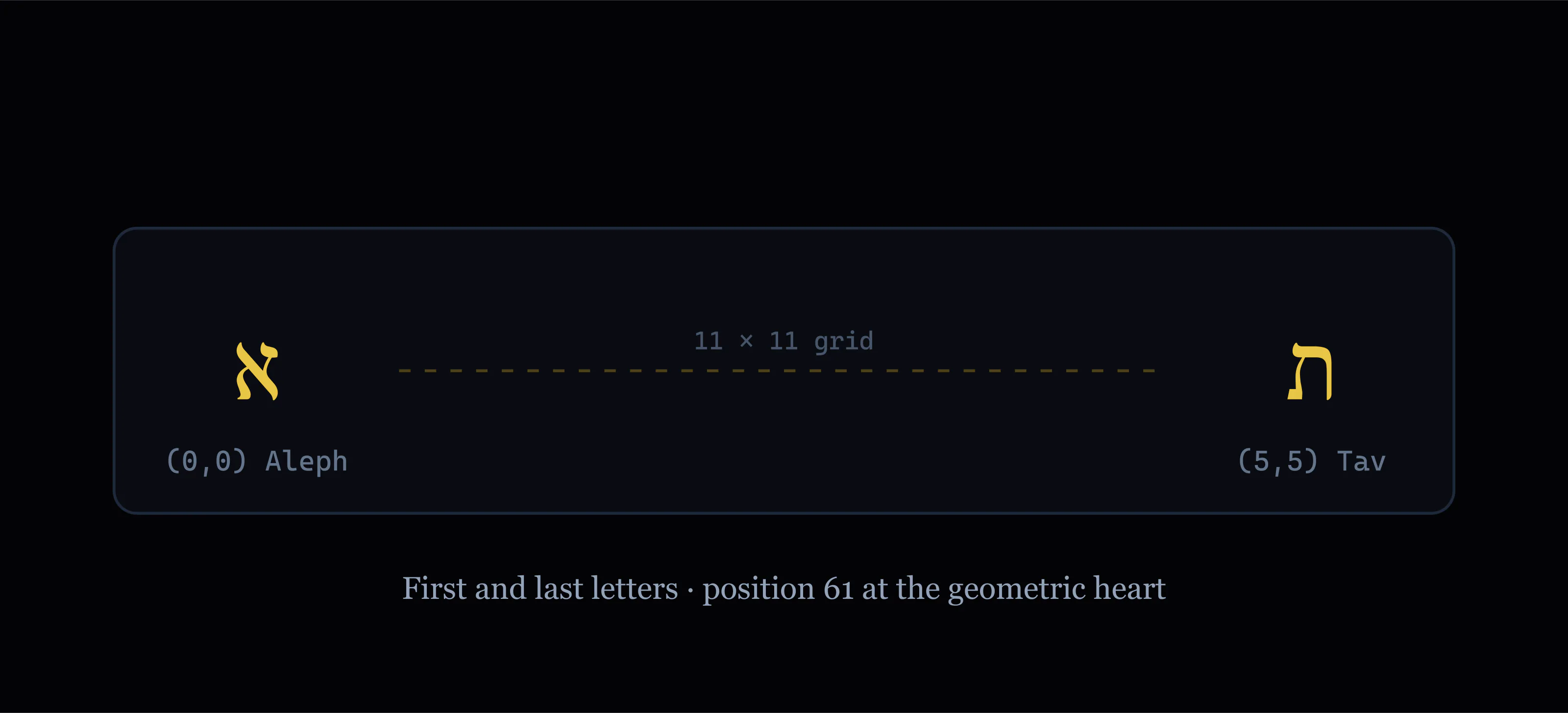
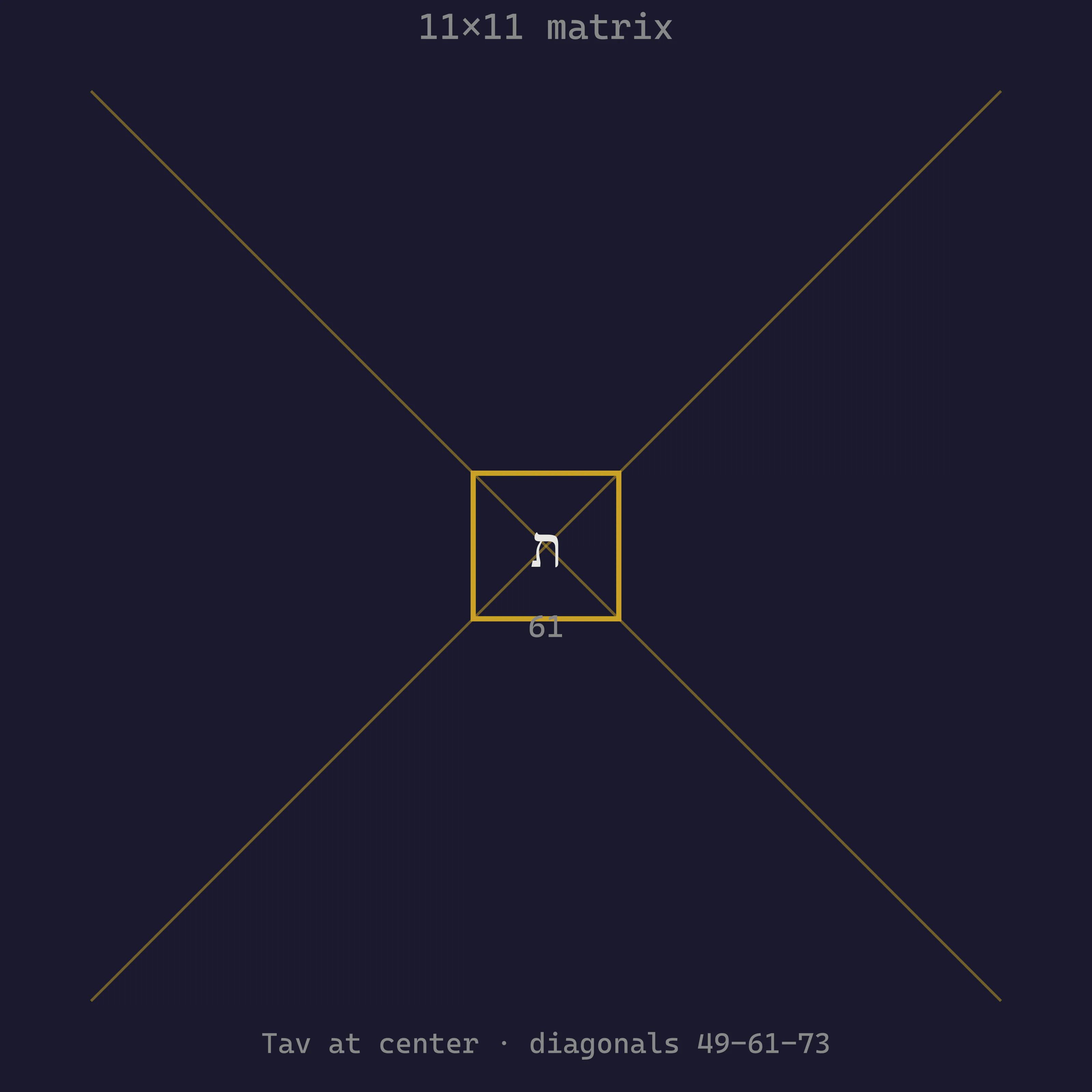
The public specification pins a Masoretic Torah consonant stream (Leningrad / xml-tanach), start 64,516 (1-based), skip 137, an outer matrix, and a centered 11×11 with corner Aleph and center Tav. That object is either reproducible or it is not—your implementation and your normalization decide.
Workspace research records a hard lesson many discover the painful way: other manuscript streams move indices; a flagship triangle claim tested in one protocol did not replicate in Leningrad the way hype promised. We publish the working anchor and the limits together because embarrassment is cheaper than mystification.
Corpus mood — always name your stream; parchment photographs are mood, not evidence of a skip.
Kabbalah’s Supernal Triad — interpretive, not interchangeable with the grid
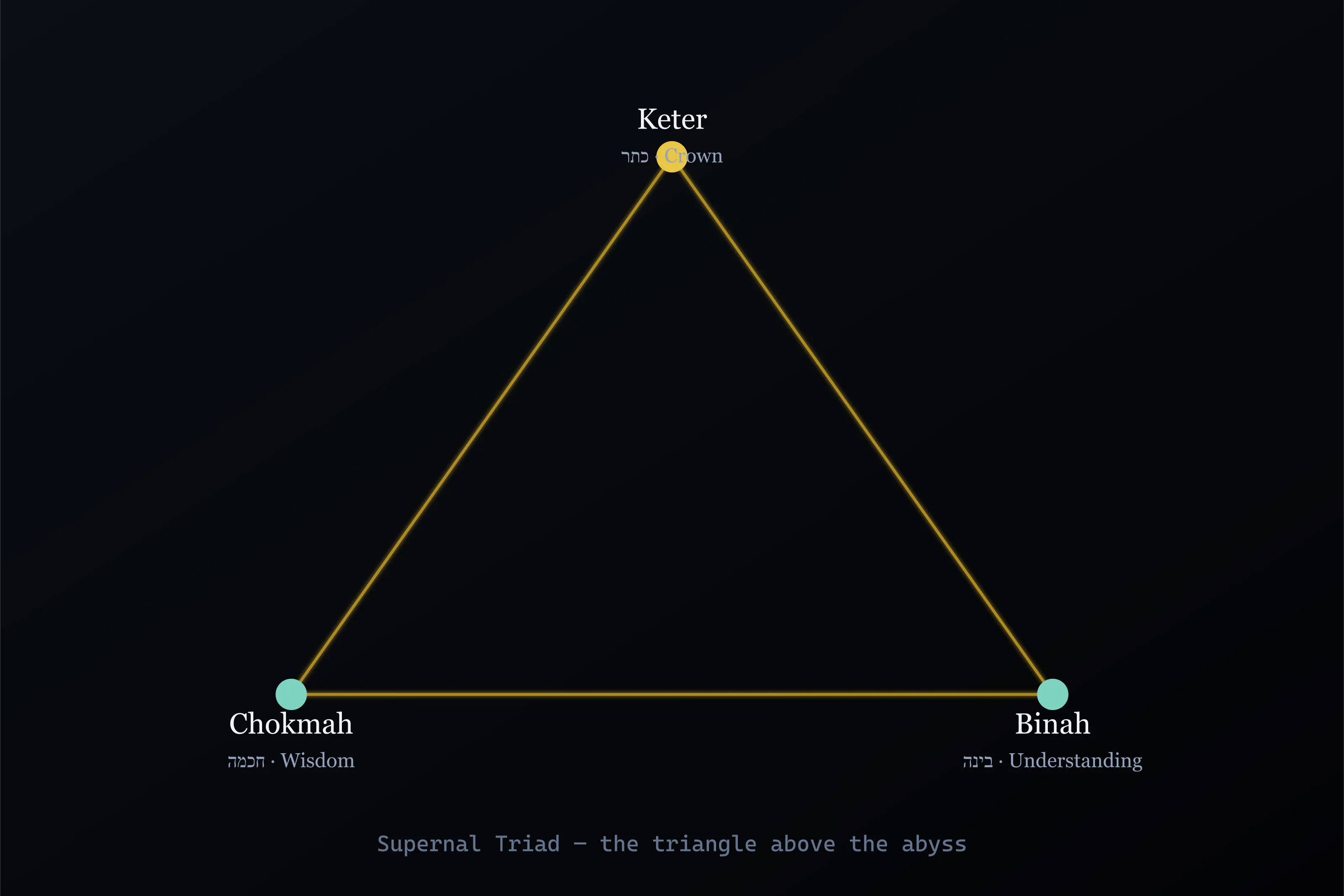
On many Tree-of-Life charts, Keter–Chokmah–Binah crown the map. That vocabulary belongs to a living interpretive tradition; the Leningrad letter matrix is a separate artifact. Collapse the two and you gain drama; keep them apart and you gain clarity.
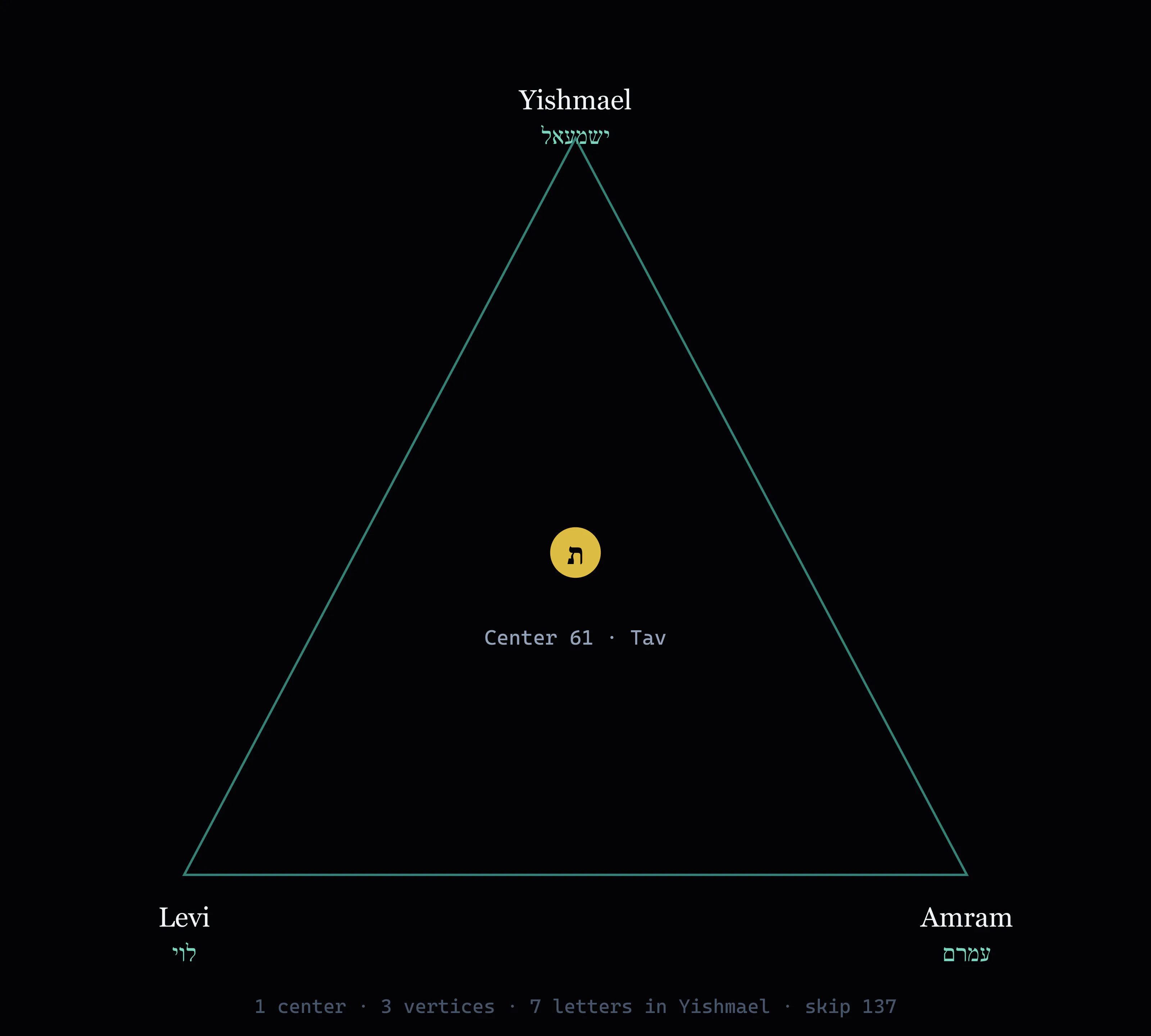
Three 137-year lifespans appear in Torah narrative (Ishmael, Amram; Levi’s line carries priestly weight). Their thematic resonance with skip 137 is mnemonic and midrash-shaped, not a guarantee that short straight paths spell every name inside the inner grid.
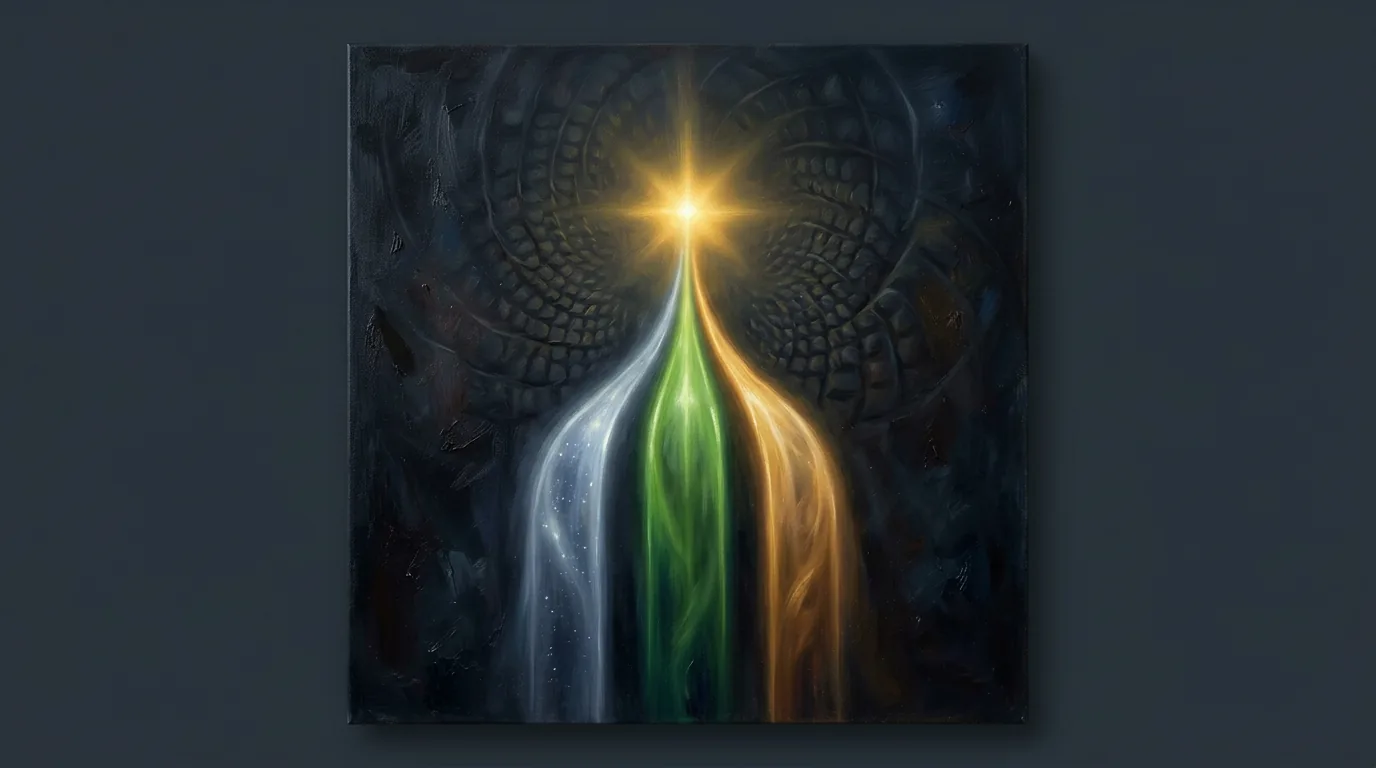
Triadic metaphor — three anchors in light; not a map coordinate claim.
2 · 2 · 2
Engineering without smuggling proof
PhiKey uses a published lattice story and standard cryptography around it. You can adopt the geometry while bracketing theology, or study Torah windows while bracketing product claims—mixing registers is an explicit opt-in, not the default.
If you are here for numbers that ship in hardware, keep Research status open beside this essay. If you are here for soul-threshold language, keep the replication list open too—love without fact-checks ages into superstition faster than code without tests.
Lattice ↔ matter — a visual rhyme between ordered planes; not a metaphysical identity claim.
Weather on the far side of coincidence
The last band in this corridor is weather, not verdict. Convergences can be uncanny and still be fragile under replication. The appropriate stance is calibrated awe: keep the notebooks, publish the parameters, invite strangers to break your favorite pattern.
Below: honesty block, tables, the Leningrad 11×11, and (collapsed) diagram exports plus the 137-frame lattice mosaic for designers who want generative texture.
Threshold weather — emotion is data about you; it is not, by itself, data about the manuscript.
Black triangle · UAP cluster — why search engines vomit when you type “137 triangle”
Phyllux maintains an internal comparison between two different “triangle” worlds. Publishing it here answers a real confusion: the folkloric Black Triangle (UAP reports, film symbolism, occult collage) is not the same object as the Chokmah 137 public specification (ELS window + stated lattice parameters). They rhyme socially; they do not rhyme evidentially unless you prove linkage under one corpus.
SPECULATIVE / CULTURAL. This subsection summarizes folkloric and media clusters (Belgian wave, Phoenix lights, Kubrick triangle motifs, generic occult triangle language) as why unrelated results tangle in search. It is not a claim that UAP phenomena validate an ELS skip, α⁻¹, or the golden angle. Treat witness reports, atmospheric optics, and classified programs as their own contested literatures.
What “Black Triangle” usually names on the open web
A loose bundle: large dark triangular or V-shaped craft in night-sky reporting; cinema grammar where pyramids and triangles mark hierarchy; and symbol decks where “three” points at triads. The Wikipedia article Black triangle (UFO) is a mainstream index for the first thread. None of that bundle implies a Leningrad center letter.
Chokmah 137, by contrast, is pinned: corpus, start index, skip, matrix sizes, corner/center letters. If you want mystery, the honest version is the replication result, not a montage.
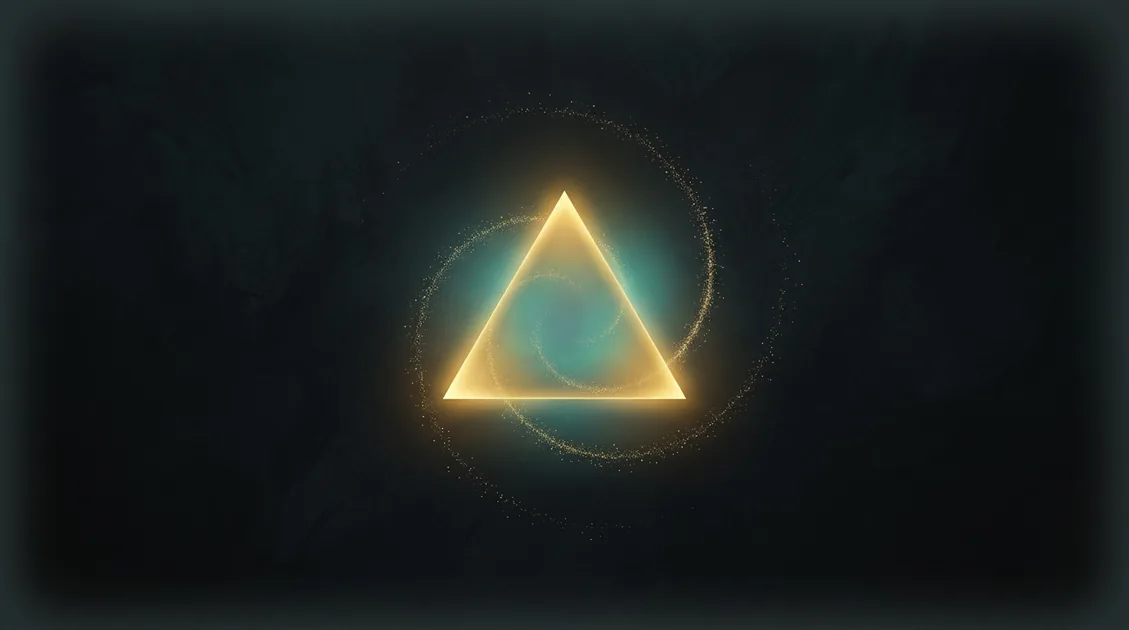
Abstract lights in fog — metaphor only; not presented as UAP, sensor return, or “disclosure.”
Why LLM threads and search got so loud
Workspace research notes (see KNOWLEDGE_BASE/ELS/triangle/investigation.md) describe a reproducible social mechanism: real Torah facts + ELS tooling + permissive model outputs + non-replicating geometry claims + internet collage ⇒ emotional whiplash. That story does not need a villain—only boundary discipline.
If you came here from Grok exports or “triangle” dossiers, welcome. The antidote is boring: name your stream, re-run the window, log the center letter, publish the failure modes.
Listening posture — map-making for weak signals is a better metaphor than gossip-as-proof.
Comparison at a glance (workspace gloss)
Aspect
Black Triangle (folklore / media / UAP reporting)
Chokmah 137 (this page)
Geometry
Triangle craft shape; film composition; symbol triangles in occult collage
Letter lattice parameters; center index; golden-angle visualization layout
137 linkage
Not a formal thread in mainstream UAP literature
Skip distance + α neighborhood + phyllotaxis angle called out explicitly
Kabbalah
Often borrowed as atmosphere in pop esoterica
Uses normative names (Chokmah, Supernal Triad) with a firewall to the ELS artifact
Epistemic contract
Witness narrative, speculation, entertainment grammar
Checklist replication; documented non-replication where tests failed
Source map for deeper binders: internal index CHOKMAH_SOURCES_INDEX.md under KNOWLEDGE_BASE/ELS/triangle/; summarized investigation investigation.md in the same folder.
Technical diagram rasters (WebP exports for editors)
Diagrams
High-resolution WebP rasters (up to 3200px wide, quality 82) exported from the same diagram sources as the legacy SVGs: parameters, Tree-of-Life supernals, Vogel spiral order, three domains, Aleph–Tav bridge, narrative anchors, gematria wordmark, 11×11 matrix shape, and engineering bridges. Schematics, not photographs. Source SVGs remain in the repo for editors; this page ships raster for consistent dark-field rendering.
Canonical parameters — corpus, start, skip, inner grid size.Supernal Triad — Keter, Chokmah, Binah (standard Tree layout).121-node Vogel spiral — golden-angle placement for visual intuition.Three pillars — physics (α⁻¹ neighborhood), biology (golden angle), text (ELS window).Aleph–Tav framing — first and last letter anchors in the spec narrative.Narrative anchors — thematic linkage; not a verified closed ELS loop in Leningrad.חכמה — the word Wisdom as letterform.Phylogrid — 121 positions for orientation.11×11 lattice — shape of the inner letter matrix.Convergence map — parallel corridors, distinct mechanisms.Golden angle — 137.508° ≈ 360°/φ².PhiKey lattice ↔ Vault — how hardware narrative uses geometry (see PhiKey).
Raster masters
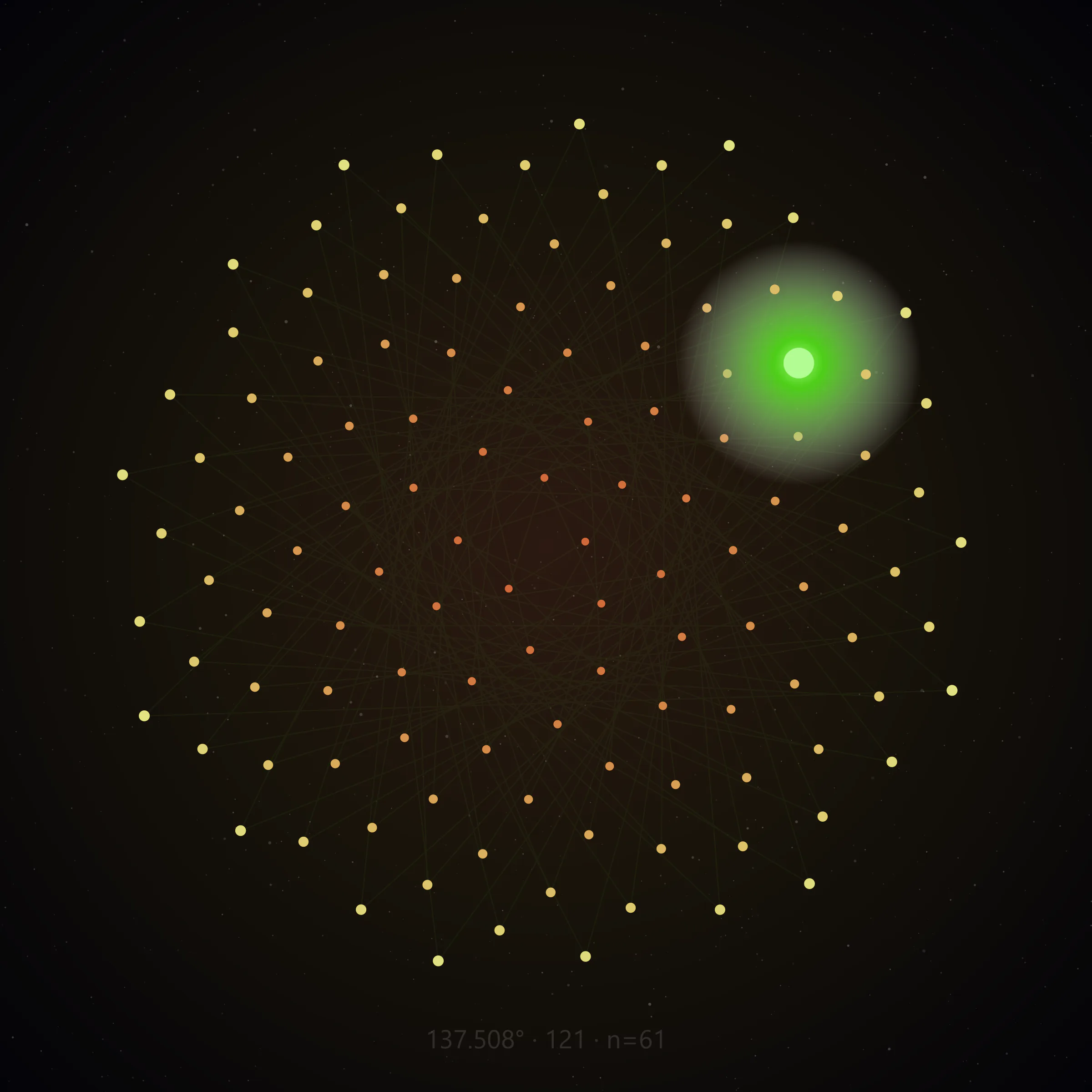
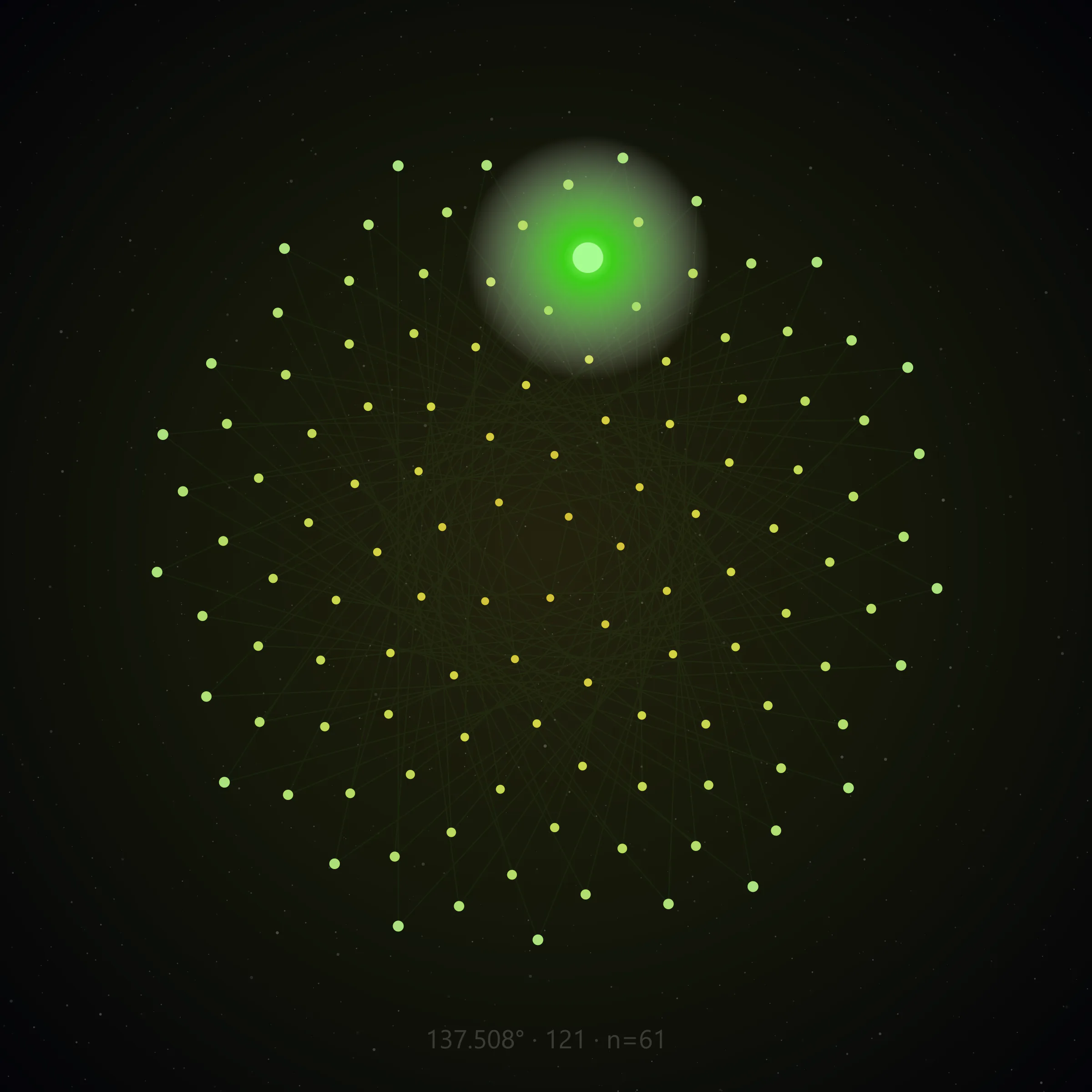
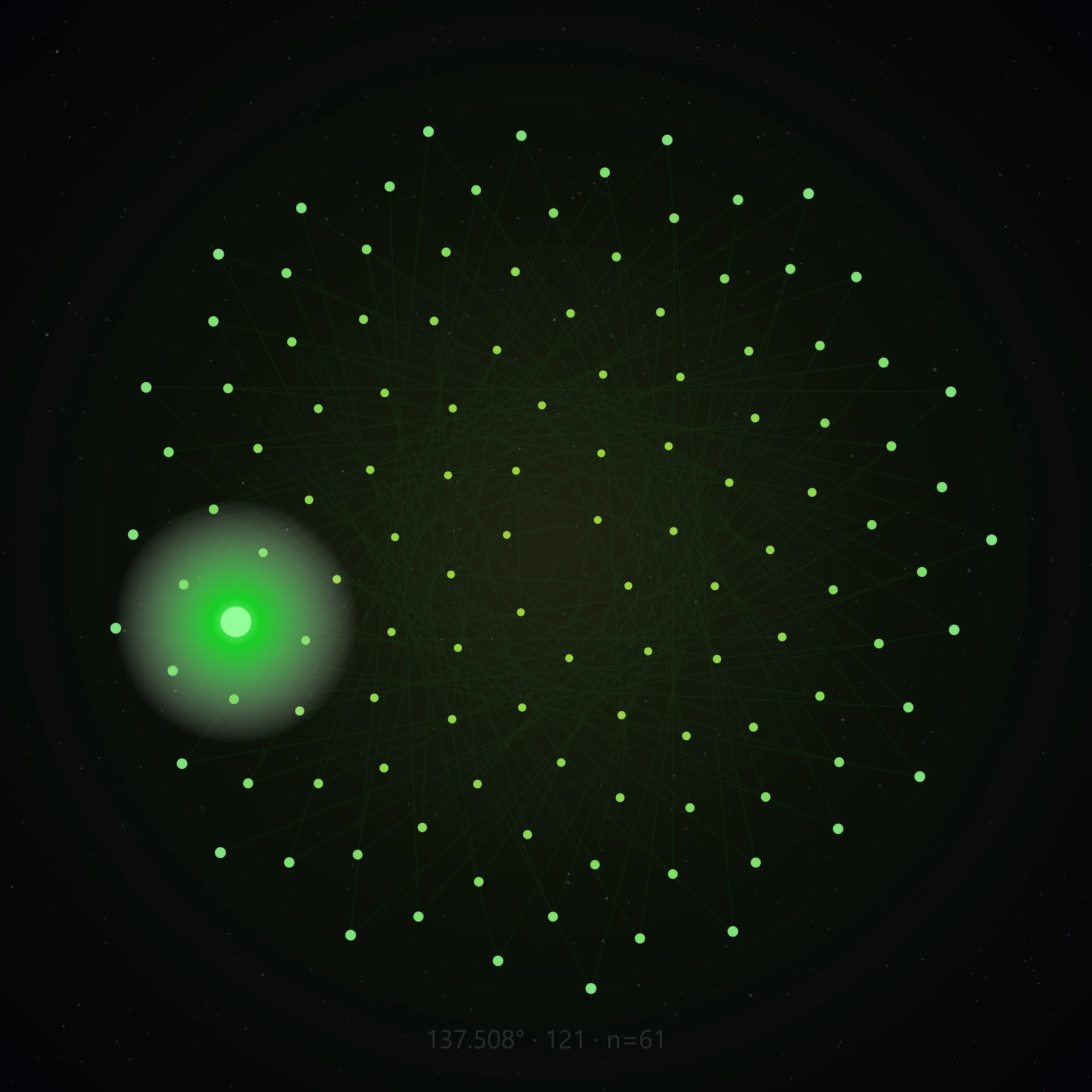
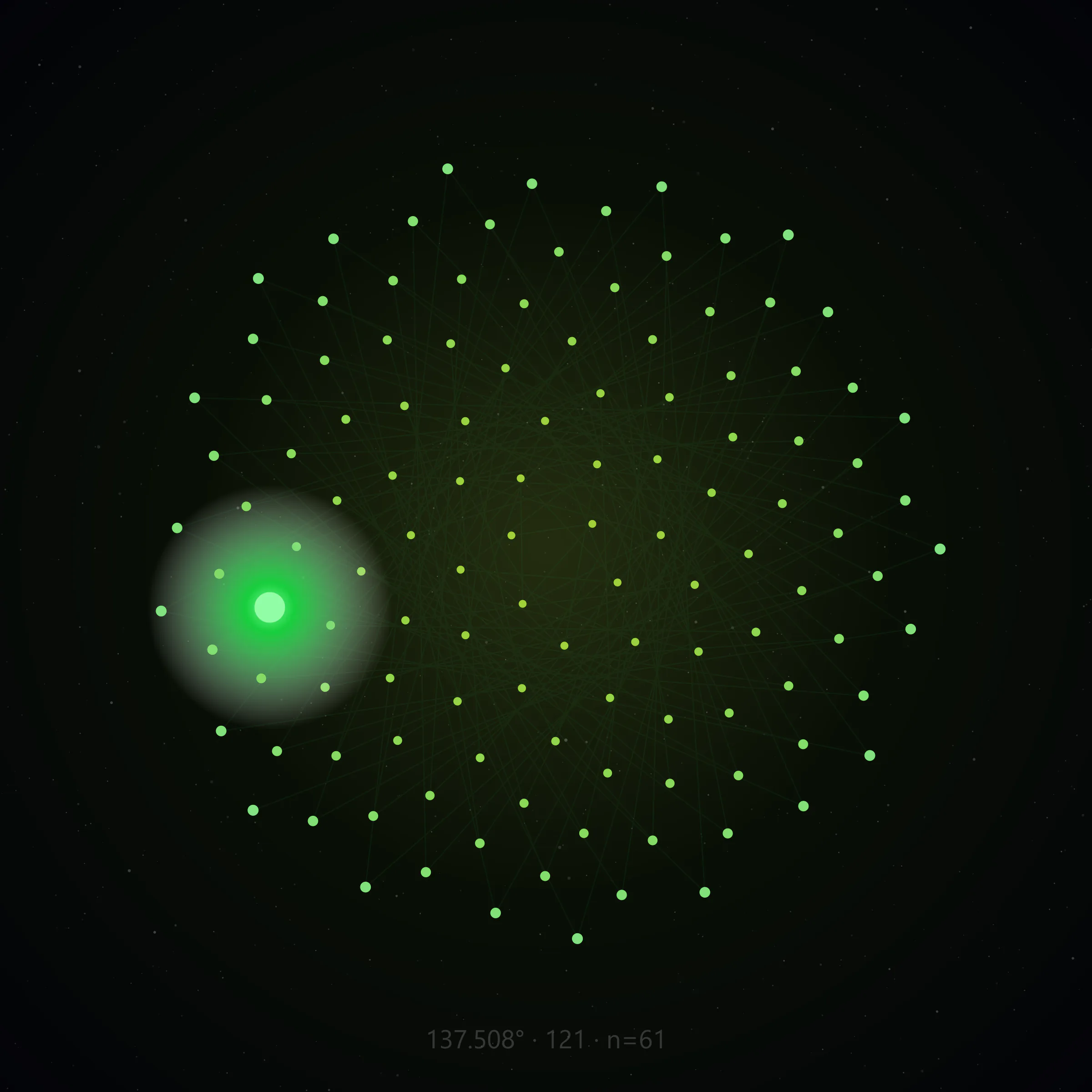
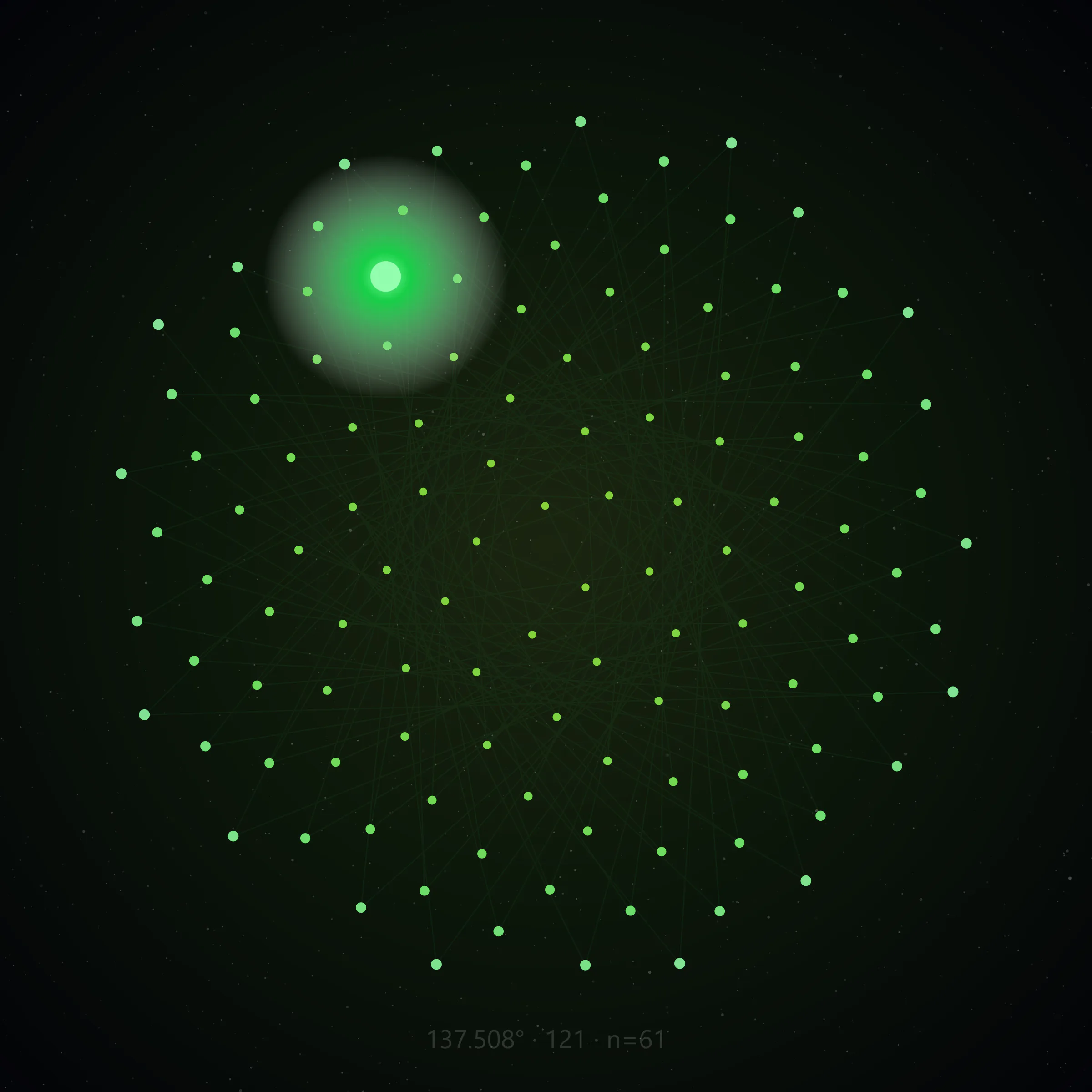
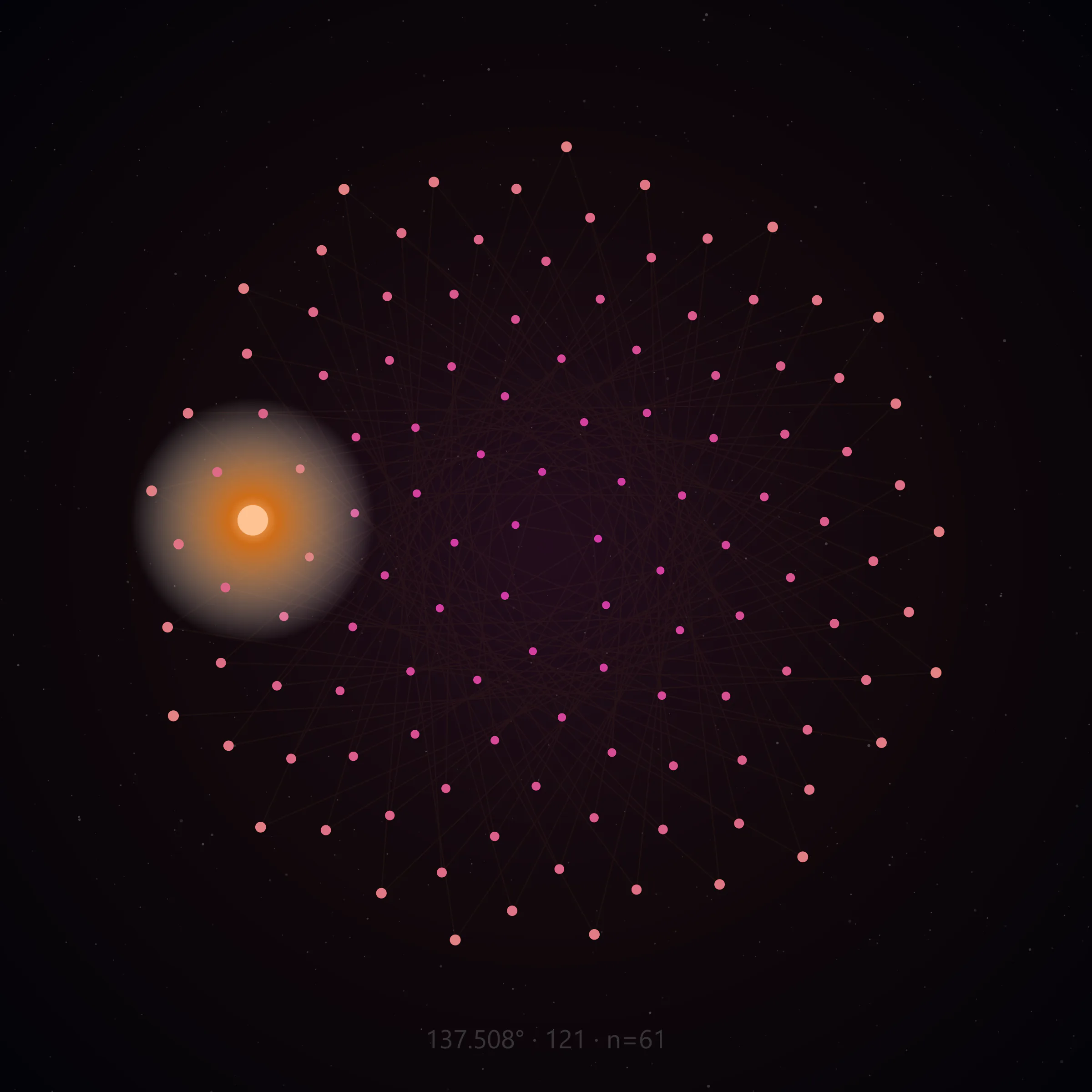
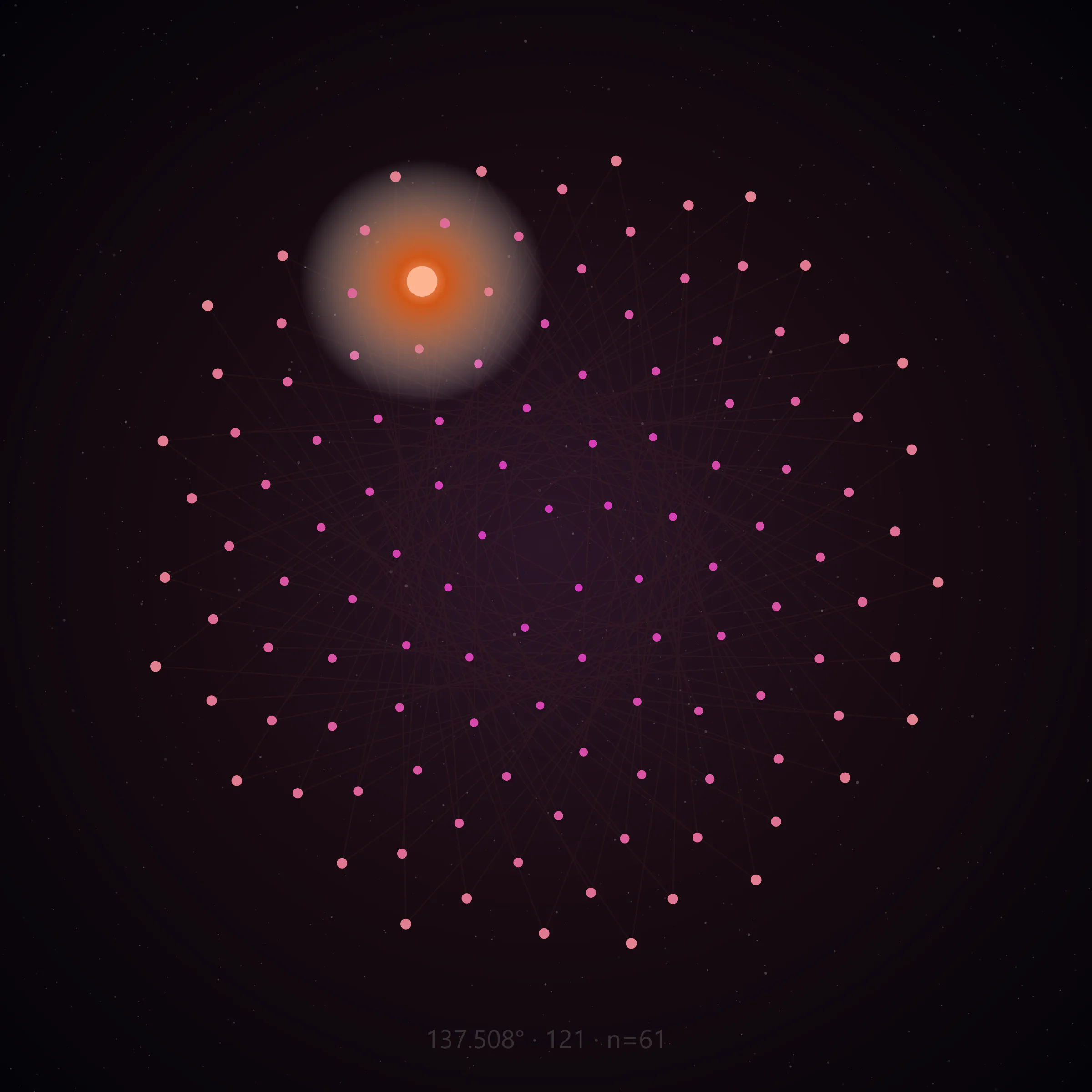
Square and Open Graph previews below are WebP lattice masters from the generator (golden-angle nodes, luminous center). The page hero image above is photoreal editorial (assets/chokmah/generated/photoreal/). Diagram exports sit in the collapsible block; quality 82 on generated assets.
Specification tables farther down remain the authority; images are illustrative.
Square master — poster-scale composition derived from generator.Open Graph / Twitter card — safe crop for previews.
Lattice mosaic — 137 generated frames (collapsible; high image count)
Lattice mosaic — 137 generated frames
Each tile is chokmah-137-2400px-vNNNN.webp from the repo generator (distinct PRNG hues; same geometric recipe at 2400×2400). Decorative only.
What we do and do not claim. Equidistant letter sequences (ELS) in large texts produce vast search spaces; many skips and windows exist. Chokmah 137 names one window whose parameters are stated precisely so you can verify or falsify structural claims (letter at center, Aleph–Tav span, named corpus). We do not claim that the fine-structure constant “governs” Hebrew text, or that this pattern proves divine authorship. We do document a convergence people have noticed for generations—137 in physics (as 1/α), 137.508° in phyllotaxis, and skip 137 in this specification—and we separate testable structure from interpretive reading.
“The Lord by wisdom founded the earth.” — Proverbs 3:19
“A magic number that comes to us with no understanding by man.” — Richard Feynman, on 137 (fine structure)
Working definition (published)
On phyllux.io, Chokmah 137 is the anchor name for this checkable convergence bundle (not a claim that mystical tradition began here):
Kabbalistic:חכמהChokmah is Wisdom—the second Sephirah, the first flash of creative force below Keter, alongside Binah (Understanding). Together, Keter–Chokmah–Binah form the Supernal Triad, drawn as the upper group on many Tree-of-Life charts.
Geometric: A 121-node (11×11) array laid out in phyllotactic order at the golden angle137.508° (360°/φ²). The arithmetic center of the 121 positions is position 61—the anchor used throughout this specification.
Textual (ELS): In the Masoretic Torah (consonantal Leningrad / xml-tanach convention), begin at 1-based position 64,516, take every 137th letter, build the surrounding matrix (275 starts × 301 letters), and extract the central 11×11. At the center: the letter Tavת. At the corner (0,0) of that submatrix: Alephא—an Aleph–Tav span from first to last letter.
Cross-domain: The numeral 137 links 1/α ≈ 137.036, the 137.508° packing angle, and the skip 137 window. Whether that linkage is coincidence or design is left to the reader; this page presents the definition in full.
64,516 — falls in Genesis 42 (Joseph narrative); Leningrad verse mapping ≈ Gen 42:32
Start (0-based, implementers)
64,515
Skip
137
Outer matrix
275 × 301
Inner submatrix
11 × 11 = 121 cells
Geometric center index (1-based in 121)
61 → letter Tavת
Corner anchor
Alephא at (0,0); Tav at center (5,5)
Golden angle (phyllotactic layout)
137.508° (reference implementations may use 137.5° in prose; code often pins 137.508°)
Scale constant λ (PhiKey narrative)
137.036 — engineering constant in the security narrative, not a claim that QED derives the Torah skip
Chokmah in Kabbalah and Sefer Yetzirah
Chokmah sits at the top of the Pillar of Mercy. Where Keter is undifferentiated potential, Chokmah is the point that becomes line—the intuitive flash. Binah receives and gives form. Without Chokmah, no creative impulse; without Binah, impulse never becomes structure.
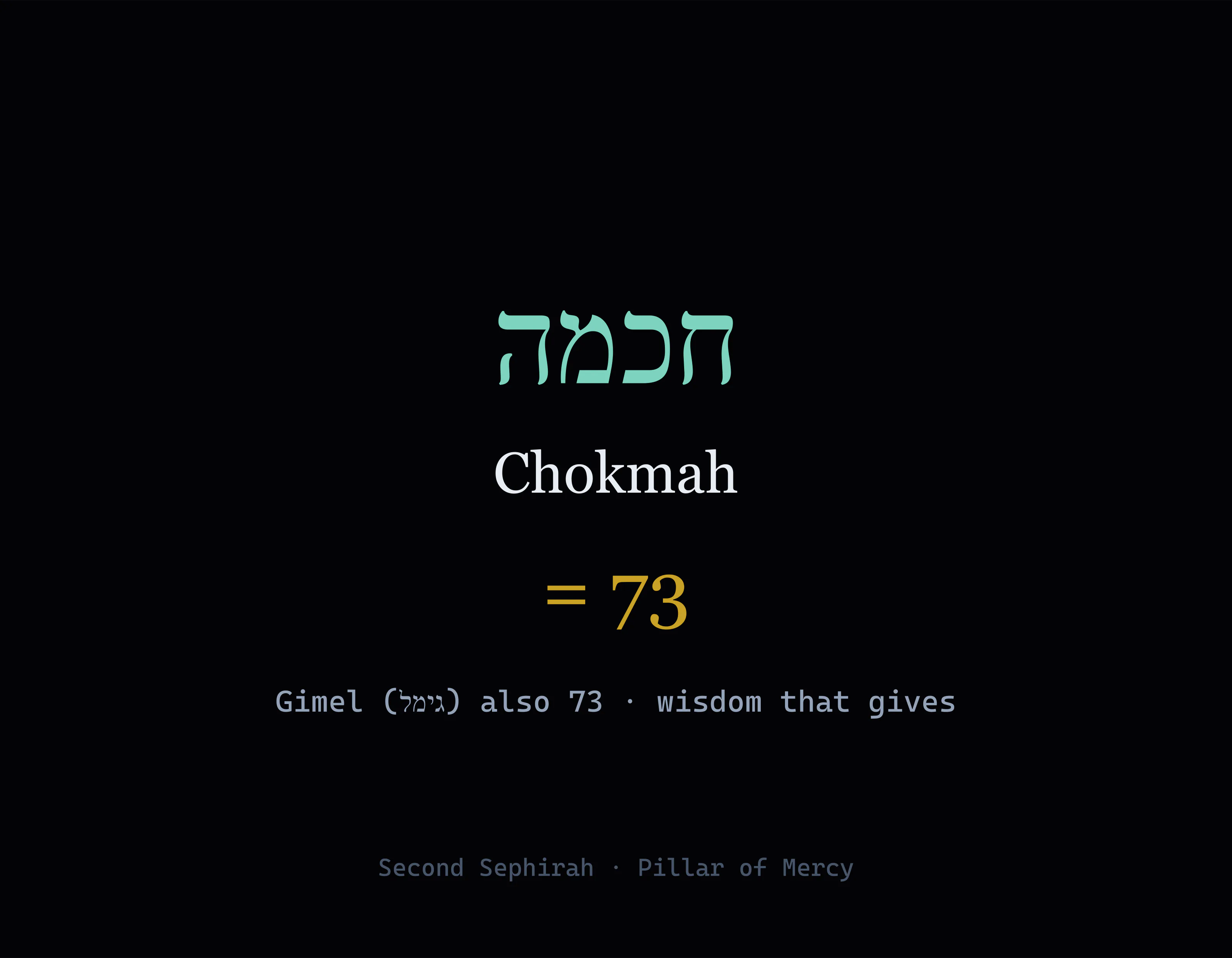
Gematria:חכמה = 73. Traditions also connect 73 to Gimel (גימל = 73)—the camel, generosity: wisdom that does not flow outward is sterile.
Sefer Yetzirah: thirty-two paths—ten Sefirot and twenty-two letters—as the scaffolding of creation. This page is not a Sefer Yetzirah commentary; it is a contemporary specification that places Wisdom and letter next to number and geometry with explicit limits.
Three pillars
Physics — the fine-structure constant
The fine-structure constant α ≈ 1/137.036 sets the strength of electromagnetic coupling in atomic structure. Its numerical value is not derived from first principles in the Standard Model; it is measured. That open mystery is why 137 has a reputation in physics culture—not because text and α have been shown to share a single mechanism.
Biology — phyllotaxis and 137.508°
In phyllotaxis, successive primordia often diverge by the golden angle137.508° = 360°/φ². Sunflowers, cones, and many leaf systems approximate this packing. The angle is close to, but not identical to, 1/α in the same units (degrees versus dimensionless inverse)—a striking neighborhood, not an identity.
Text — the ELS window
The Torah specification above fixes one window. The Ishmael narrative associates 137 years with a lifespan (Genesis 25:17); that is a thematic resonance. Empirical letter counts place the canonical start in Genesis 42, not at the verse of Ishmael’s death—so the link is interpretive, not a claim that position 64,516 lands inside Gen 25:17.
Narrative anchors: Ishmael, Levi, Amram
The Torah reports 137-year lifespans for Ishmael (Genesis 25:17) and Amram (Exodus 6:20), and places Levi in the priestly line; those are narrative facts in their own verses. How they relate to the fixed Leningrad ELS window is interpretive, not a claim that every name appears as a short straight path on the inner 11×11.
Ishmaelישמעאל — seven letters; 137 years in Genesis 25:17.
Leviלוי — priestly line.
Amramעמרם — 137 years in Exodus 6:20 (Masoretic tradition).
Research note: In straight-path searches within the inner grid, Levi appears in documented paths; Ishmael and Amram may require different path classes or the larger matrix. Treat this block as thematic memory, not as “every name sits on a corner of a proven ELS loop.”
The 1-3-7 signature
One center (Tav at 61), three narrative hooks, seven letters in ישמעאל, skip and cluster around 137. This is a mnemonic structure, not a physical law.
Leningrad 11×11 (center cell = Tav)
Rows and columns 0–10. Center (5,5) is position 61 in the 121-cell read order used in the treatise. Highlighted row and column show the cross through the center.
0
1
2
3
4
5
6
7
8
9
10
0
א
ו
כ
ש
נ
ה
ן
א
א
ש
י
1
ב
א
י
מ
י
מ
ל
ת
ב
ה
ה
2
ר
ז
א
ע
ע
ש
ב
א
י
א
ו
3
ה
כ
נ
ו
ר
פ
נ
ה
ה
ש
ה
4
ם
ר
י
א
ל
ח
י
ר
ו
ר
א
5
א
א
י
ל
ש
ת
ו
ן
א
א
ל
6
ל
ת
ה
מ
פ
ר
ש
ו
א
מ
מ
7
י
ב
ו
ש
ת
א
מ
א
ת
ר
ש
8
צ
ר
ה
ה
י
ו
ע
ת
א
י
ה
9
ח
י
א
מ
ם
ב
י
מ
ל
ה
ל
10
ק
ת
ל
ק
ו
ן
ל
ש
ע
ו
א
Column readings (interpretive): documented research notes phrase-like vertical strings in several columns—for example covenant language, “I am YHWH,” Moses, and Reuben’s family line—while stressing that multiple-comparison and post-hoc reading require caution. Straight paths of length 3–6 in one exhaustive pass found YHWH vertically in column 10 (and related strings in column 2); Adam, Chokmah, and Kabbalah did not appear as short straight paths in that enumeration.
State of research and statistics
Manuscript sources differ: Letter counts and spelling conventions shift the absolute index. The canonical public specification for the Aleph–Tav center pattern is pinned to Leningrad xml-tanach at 64,516 / skip 137. Other editions (Sefaria, tanach.us) can move the center letter; always name your corpus.
Superseded index: An earlier 64,512 anchor was retired after empirical checks; 64,516 is the working canonical start (1-based).
Monte Carlo (illustrative): On randomized Torah-like matrices, metrics such as YHWH path counts and “phrase-rich columns” for the 64,516 grid have been reported as rare compared to random draws—tail probabilities depend on exact test definition and corpus. Treat such figures as hypothesis-generating, not publication-grade proof.
Selection bias: Many skips and starts would be tried in an unstructured search. Here, the parameters are fixed and published so the community can replicate.
PhiKey, Phyllux Vault, and derivative engineering
Phyllux’s public PhiKey story uses a 121-node golden-angle lattice, explicit constants, and standard cryptography outside the lattice. That work is engineering: it applies phyllotactic geometry where it helps key direction and testing. It does not require accepting any theological reading of the Torah window. Conversely, finding the ELS window moving does not invalidate antenna or mesh geometry—it only separates textual claims from hardware math.
For implementation scope, threat model, and what is still open, start at PhiKey and Phyllux Vault.
Chokmah of conduct
The treatise ties the pattern to ethics without forcing metaphysics:
Tikkun Olam (תיקון עולם) — repair of the world; justice and healing as practice, not only symbolism.
Humility — 137 was not invented here; the geometry appears in nature independent of any patent or brand.
Law and mercy — the Tree’s pillars as a moral image: compassion and severity in balance.
The Chokmah threshold (invitation)
Some expositions frame a threshold moment: when enough lines converge, some observers pause—others see coincidence. This site does not adjudicate that. We publish the definition, the limits, and the research status for anything that sounds like a product claim.
Replication
Use the consonantal Leningrad stream you trust (xml-tanach is the reference cited in this specification).
Begin at 64,515 (0-based) or 64,516 (1-based), skip 137, extract the centered 11×11 after building the prescribed matrix.
Confirm: corner Aleph, center Tav.
Public tools and monographs may live in partner lanes; this page is the narrative and parameter anchor on the open web.
Provenance
Tradition.Chokmah (חכמה, Wisdom) and the broader structures discussed here belong to longstanding Jewish and scientific literature; this site does not claim to have originated those traditions or the numeral 137 as they appear in physics, biology, or exegesis.
Label. The public page title is Chokmah 137. Torah-related structure on this specification is an 11×11 letter matrix, not a Euclidean triangle; Kabbalistic context uses orthodox vocabulary such as Supernal Triad where appropriate.
What this page is. A public, checkable summary aligned with Phyllux honesty lines and research status. Long-form binders occasionally used the legacy phrase “Chokmah Triangle” when this window was archived; numbering and Leningrad pinning match this page unless a document says otherwise.