Black box track: This hub is public; core implementation and repo detail stay partner scoped. Research status (what ships, what is spec): Research status. Technical briefings under NDA: Partners.

Confucianism

The Cultivation of Virtue

Confucianism is less a religion than a tradition of ethics and social philosophy—though it has ritual, reverence for ancestors, and a vision of cosmic harmony. Confucius (551–479 BCE) taught that human flourishing depends on the cultivation of virtue: benevolence (ren), propriety (li), and the right ordering of relationships. The ideal is the junzi—the noble person—who embodies these qualities and models them for society.

What We Hold Sacred

The Analects & the Five Classics — The cultivation of virtue

Confucians hold sacred the cultivation of the noble person—the junzi—and the relationships that make society humane. The Analects record the words of Confucius; the Five Classics (including the Book of Odes, the Book of Rites) embody the wisdom of the sages. The transcendent secret of Confucianism is ren—benevolence, humanity, the virtue that makes us fully human. Li—ritual, propriety—is not empty form but the embodiment of respect and harmony. Xiao—filial piety—honors parents and ancestors, the bond between generations. What Confucians hold most sacred is the possibility of a harmonious society through education, self-cultivation, and right relationship. The sage-kings of antiquity modeled virtuous rule; the goal is to restore that order. Sacred is the mandate of heaven, the responsibility of the ruler to care for the people, and the dignity of every person who strives to become noble. The Way is human, social, attainable—through study, reflection, and practice.
Confucius (Kongzi)

The teacher who shaped East Asia

Confucius lived in a time of political turmoil. He sought to restore order through moral cultivation—not law alone but the inner transformation of individuals. He said he transmitted, not innovated: he looked back to the sage kings. His teachings, compiled in the Analects, have influenced Chinese, Korean, Japanese, and Vietnamese culture for two and a half millennia.

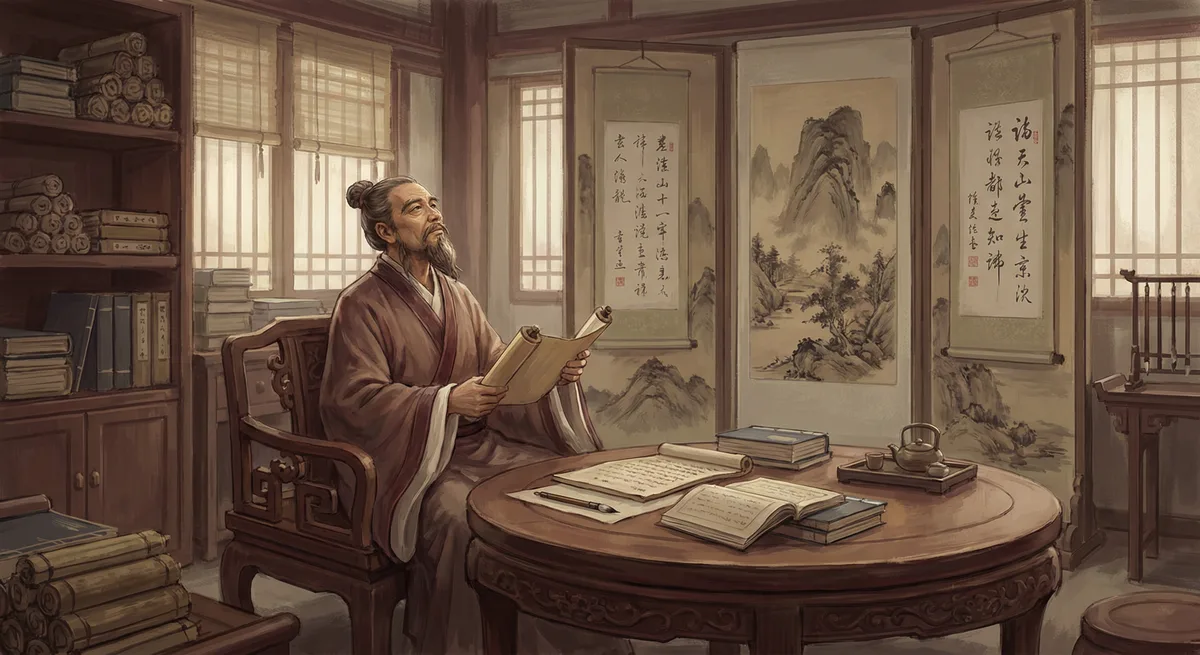
Scholar or sage in traditional setting — contemplation, books
Scholar — image to be generated

Ren — Humanity, Benevolence

The supreme virtue

Ren (仁) is often translated as "humanity" or "benevolence." It is the quality of caring for others, of treating people with respect and compassion. Confucius said ren is to "love others." The Golden Rule appears in negative form: "Do not impose on others what you yourself do not desire." Ren is cultivated through practice, not innate—we become humane by acting humanely.

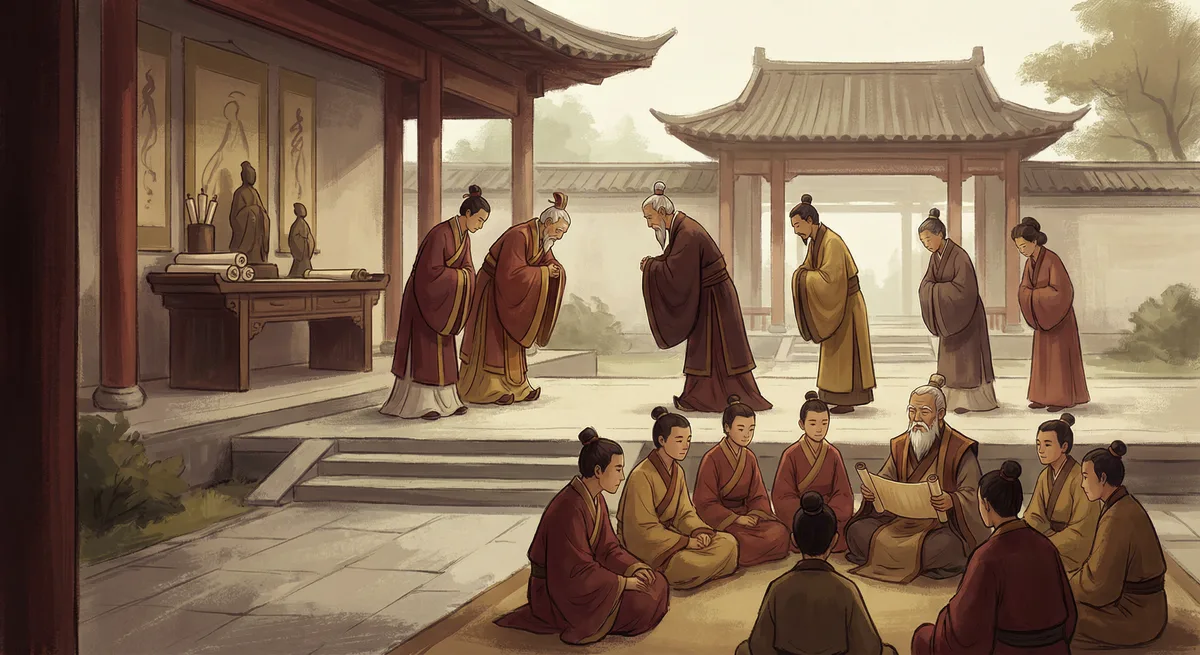
Teachers and students — learning, respect, harmony
Learning — image to be generated

Li — Ritual & Propriety

The outer form of virtue

Li (禮) is ritual, ceremony, and propriety—the norms that structure relationships. It includes ancestral rites, court ceremony, and everyday etiquette. Li is not empty form; it shapes character. "Through the practice of rites, we learn to embody respect." Proper relationships—ruler and subject, parent and child, friend and friend—create social harmony.

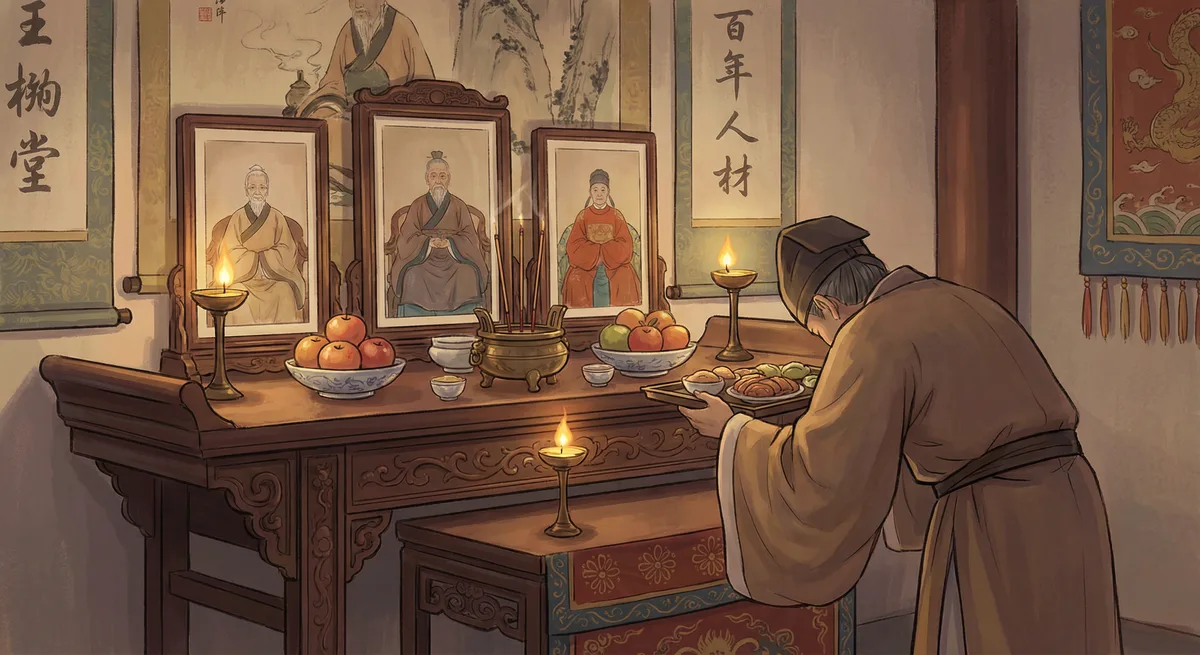
Ancestral altar — reverence, offerings, tradition
Ancestral reverence — image to be generated

Filial Piety (Xiao)

The root of virtue

Xiao (孝)—filial piety—is respect and care for parents and ancestors. Confucius said it is the root of ren. The family is the model for society; if the family is ordered, the state will be ordered. Ancestor veneration connects the living to the dead and reinforces obligation across generations.

The Junzi — The Noble Person

The ideal human

The junzi (君子) is the person of moral excellence—not born noble but made so through cultivation. The junzi is humane, righteous, wise, and trustworthy. They serve as a model for others. "The junzi seeks within; the small person seeks without." The goal is not individual salvation but a harmoniously ordered society in which all can flourish.