Black box track: This hub is public; core implementation and repo detail stay partner scoped. Research status (what ships, what is spec): Research status. Technical briefings under NDA: Partners.

Cao Dai

Unity of Religions

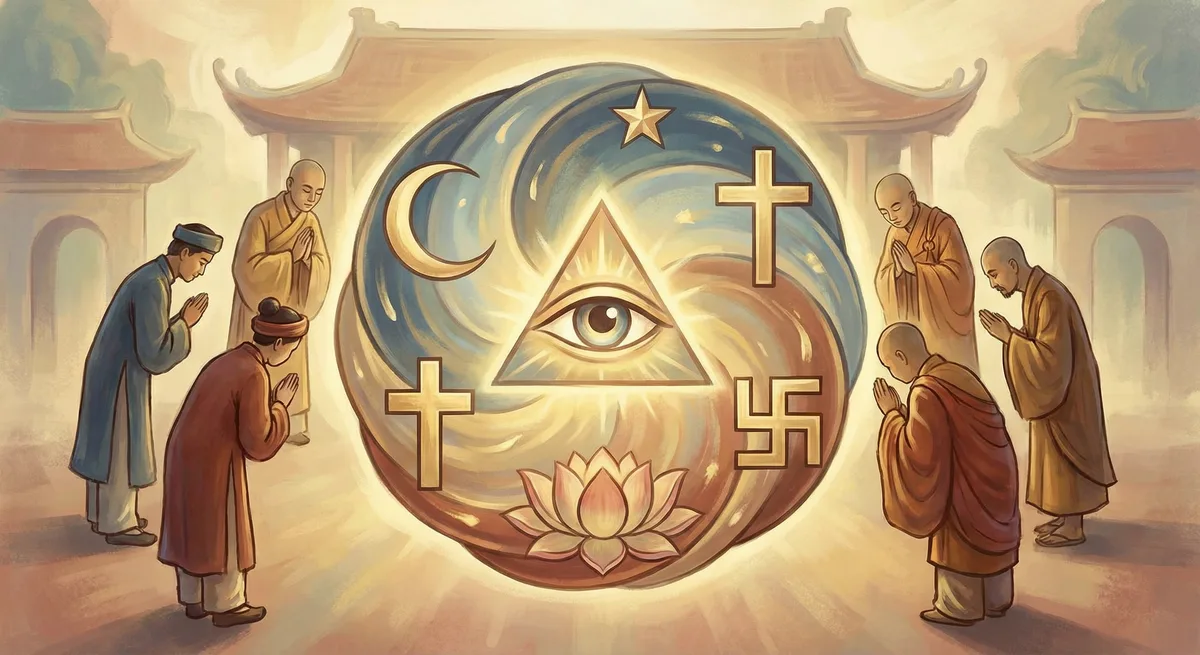
Cao Dai (Đạo Cao Đài) emerged in Vietnam in 1926 through a series of spirit séances. The name means "high tower" or "supreme palace"—a metaphor for the divine. Cao Dai teaches that all religions originated from the same source: Buddhism, Taoism, Confucianism, Christianity, Islam, and indigenous traditions all point to one truth. The Divine Eye—the symbol of God—watches over all. Cao Dai synthesizes these traditions into a single path of harmony, peace, and liberation.

What We Hold Sacred

The Divine Eye — One God, many messengers

Cao Dai holds sacred the synthesis of all religions—Buddha, Lao Tzu, Confucius, Jesus, Muhammad—as teachers of one truth. The Divine Eye, the symbol of God, sees all and unifies all. Founded in Vietnam in 1926, Cao Dai incorporates elements of Buddhism, Taoism, Confucianism, Christianity, and Islam into a single path. The transcendent secret of Cao Dai is that revelation did not end. God continues to speak; the great traditions are branches of one tree. Sacred are the Three Teachings—Buddhist liberation, Taoist harmony, Confucian virtue—and the ethical code that honors all. What Cao Dai holds most sacred is the unity of humanity under the one God, the possibility of peace among religions, and the duty to cultivate virtue while serving others. The temple at Tay Ninh, with its vivid colors and syncretic imagery, embodies this vision: many paths, one destination.
The Divine Eye

Thiên Nhãn—the all-seeing eye of God

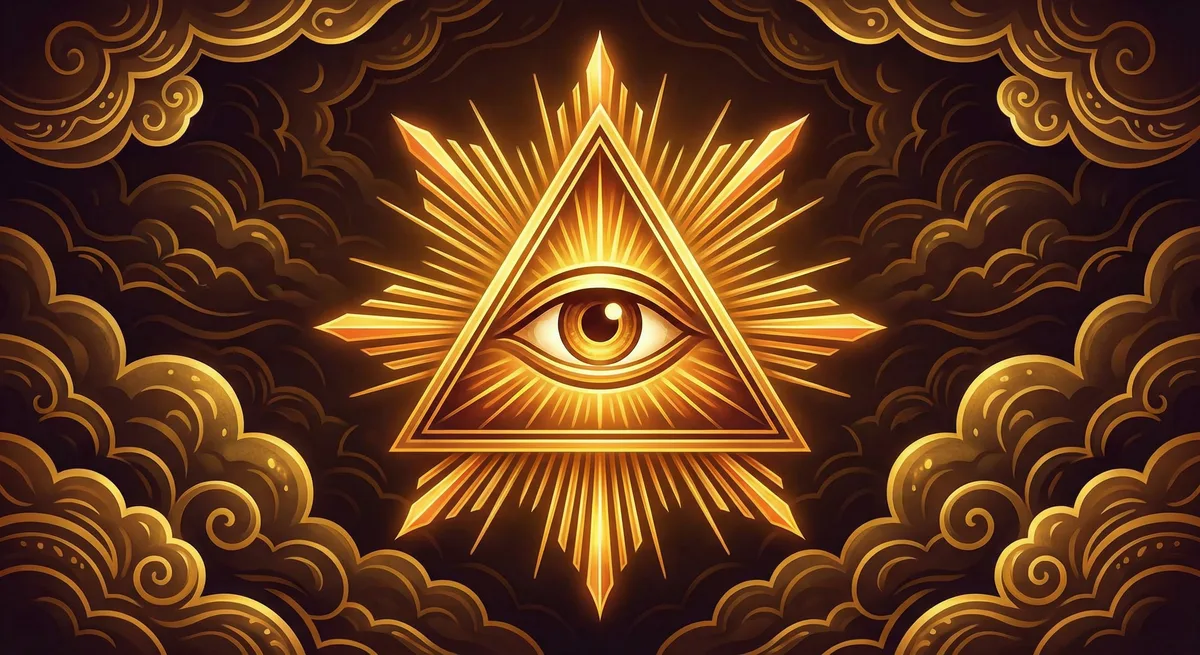
The Divine Eye (Thiên Nhãn) is the supreme symbol of Cao Dai—a left eye within a triangle, radiating light. It represents God as omniscient, watching over creation. The eye appears in temples, on altars, and in ritual. It signifies that the divine sees all, judges with compassion, and unites all paths. No tradition is excluded; the eye sees Buddhists, Taoists, Christians, Muslims, and everyone else as children of the same source.

Divine Eye symbol — Thiên Nhãn, golden, reverent
Divine Eye — image to be generated

Origin

1926—spirit messages in French Indochina

Cao Dai was founded through spiritism. In 1926, Ngô Văn Chiêu and others received messages from a spirit calling itself Cao Đài (God). The spirit declared the time had come to unite all religions. Jesus, Buddha, Lao Tzu, Confucius, and the Prophet Muhammad were named as teachers of the same truth. The movement spread rapidly in southern Vietnam. Its Holy See was established at Tây Ninh. Despite persecution under various regimes, Cao Dai endures—in Vietnam and in diaspora communities worldwide.

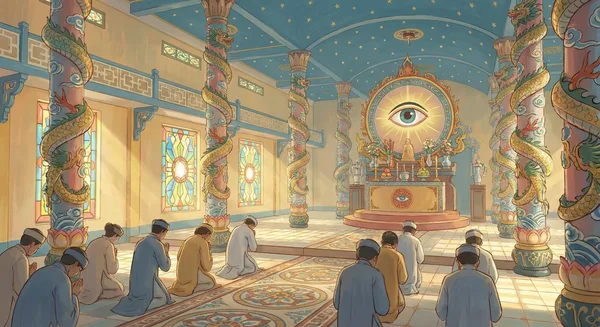
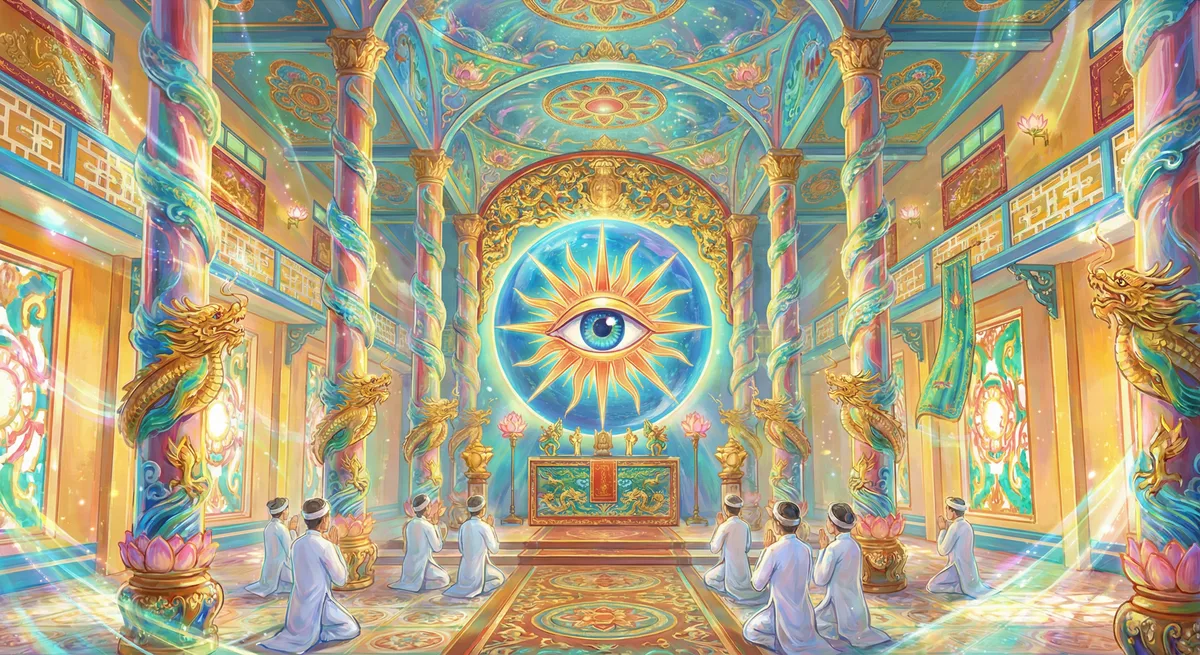
Cao Dai temple — colorful, ornate, the Divine Eye
Temple — image to be generated

Unity of Religions

One source, many expressions

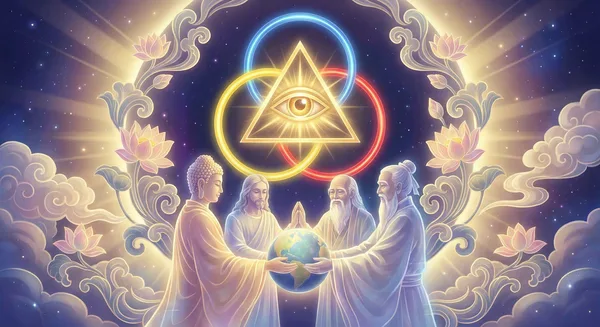
Cao Dai explicitly teaches that God has sent different revelations to different peoples at different times. Buddhism, Taoism, Confucianism (the "three teachings" of East Asia), Christianity, and Islam are not competitors but chapters of one divine education. Saints and sages from all traditions are honored in Cao Dai temples. The goal is to harmonize—to show that beneath apparent difference lies unity. This makes Cao Dai a natural ally of interfaith work and projects like this one.

Multiple symbols or figures in harmony — unity
Unity — image to be generated

Teachings

Virtue, compassion, liberation

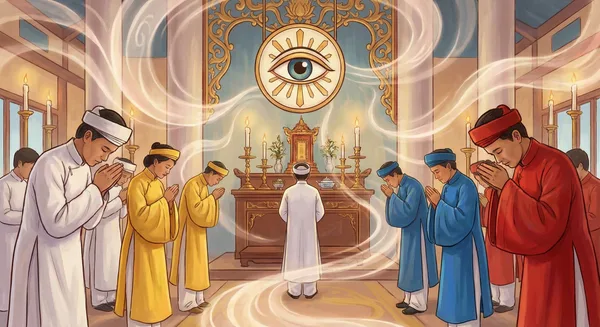
Cao Dai ethics emphasize vegetarianism (or at least reducing meat), abstinence from alcohol, honesty, compassion, and the cultivation of virtue. The aim is liberation from the cycle of rebirth—a goal shared with Buddhism and Hinduism. Ritual includes prayer, meditation, and ceremonies that blend elements from Buddhist, Taoist, and Catholic practice. Hierarchy includes priests, bishops, and a pope-like figure; women can hold leadership roles.

Practice

Temple, prayer, community

Cao Dai temples are colorful and elaborate—rich traditional imagery, the Divine Eye, statues of saints from many traditions. Worship involves offerings, chanting, and meditation. Four daily ceremonies structure ritual life. Lay followers observe the teachings in daily life; clergy undertake stricter vows. The community gathers for festivals and commemorations that honor the unity of all paths.