Black box track: This hub is public; core implementation and repo detail stay partner scoped. Research status (what ships, what is spec): Research status. Technical briefings under NDA: Partners.

Sufism

The Mystical Dimension of Islam

Sufism (taṣawwuf) is the inner, mystical dimension of Islam. Sufis seek direct experience of the divine—through love, remembrance (dhikr), discipline, and the guidance of a spiritual teacher. Sufism is not separate from Islam; it is Islam deepened. The Prophet Muhammad ﷺ is the model; the Qur'an is the source. Across continents and centuries, Sufi orders have carried practices of devotion, music, and poetry that speak to the heart. Rumi, al-Ghazali, Rabia, Ibn Arabi—their words have crossed borders. Sufism has also connected with other mystical traditions in mutual respect.

What We Hold Sacred

Ishq — Divine love and the annihilation of the self

Sufis hold sacred what cannot be fully spoken: the encounter with the Beloved, the taste of divine presence, the dissolution of the ego in God. The Qur'an is the foundation, but Sufism seeks what lies beneath the letter—the batin, the inner meaning. Dhikr—the remembrance of God's name—recited in circles until the heart overflows. The poetry of Rumi, Hafiz, and Ibn Arabi gives voice to what theology cannot: Ishq—love that burns away everything but love. The transcendent secret of Sufism is that the lover and the Beloved are not two. "I am the mirror in which God looks and sees Himself." The tariqas—the orders—pass down methods of purification, but the goal is always the same: union, annihilation, subsistence in God. What Sufis hold most sacred is the heart that has been broken open—the heart that knows only One.
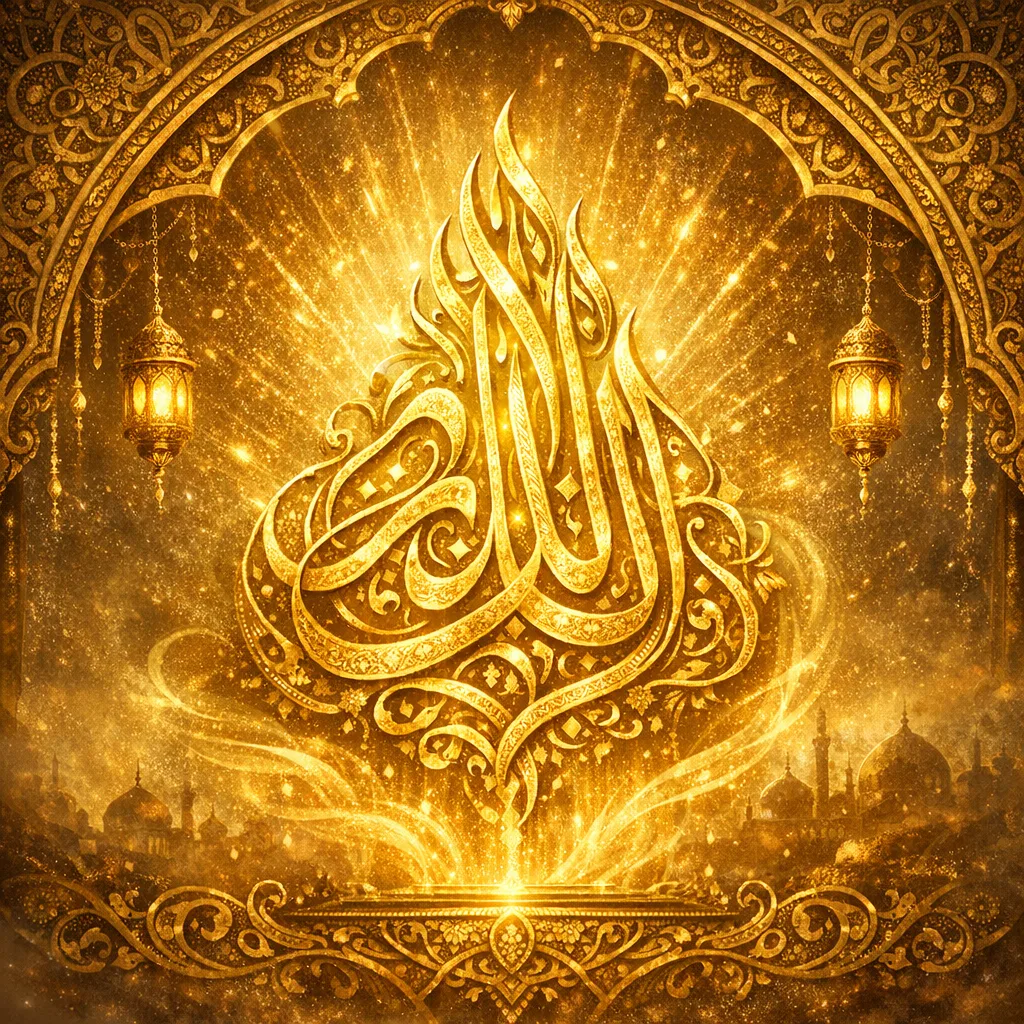

The Inner Path

From outer observance to inner awakening

Sufism begins with Islamic practice—prayer, fasting, charity—and goes inward. The goal is tawhid not only as doctrine but as lived experience: the dissolution of the ego (nafs) and union with the divine. The path requires a guide (shaykh, murshid) and discipline. Stages include repentance, abstinence, renunciation, and love. The seeker (murid) is initiated into an order (tariqa) and practices under the shaykh's direction. Sufism has always been part of Islam—many of the greatest Islamic scholars were Sufis—though it has sometimes been contested.

Islamic calligraphy — Allah or Bismillah, reverent
Calligraphy — image to be generated

Love & Divine Union

Ishq—love as the driving force

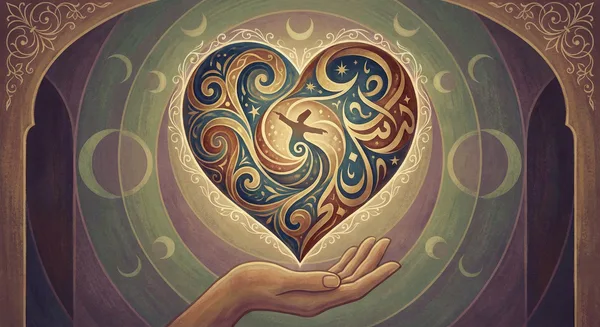
Sufis speak of love (ishq, mahabbah) as the highest stage. Rabia al-Adawiyya prayed: "O God, if I worship You from fear of hell, burn me in hell. If I worship You from hope of paradise, exclude me. But if I worship You for Your own sake, withhold not Your eternal beauty." The beloved is God; the lover is the soul. Rumi's poetry—the Masnavi, the Divan—uses human love as metaphor for divine love. Union (fana) is the vanishing of the self in the presence of the One. The result: baqa, subsistence in God—living in the world while rooted in the divine.

Abstract representation of whirling—circular motion, reverent
Whirling — image to be generated

Dhikr & Practice

Remembrance of God

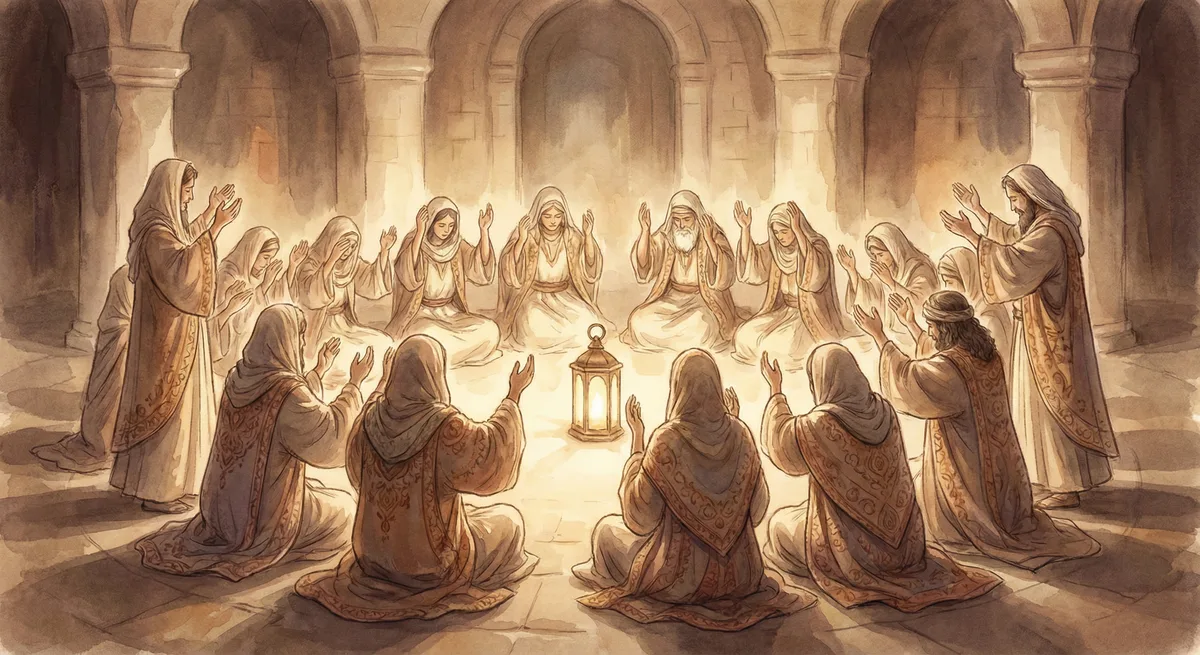
Dhikr—remembrance of God—is central. Repetition of the names of Allah, of la ilaha illallah (there is no god but God), or of Allah alone, draws the heart toward the divine. Dhikr may be silent or vocal, individual or communal. Sama—listening to poetry and music—can induce spiritual ecstasy; the Mevlevi "whirling dervishes" turn in meditation. Muraqaba is contemplative meditation. The practices vary by order but share the aim: to polish the heart until it reflects divine light.

Gathering for dhikr—reverent, communal
Dhikr — image to be generated

The Tariqas — Sufi Orders

Lineages of transmission

Sufi orders (tariqas) trace lineage to early masters: the Qadiriyya to Abd al-Qadir al-Jilani, the Naqshbandiyya to Baha al-Din Naqshbandi, the Chishtiyya to Muinuddin Chishti, the Mevleviyya to Rumi. Each order has its methods, litanies, and characteristics. The shaykh transmits the chain (silsila) from teacher to student. Tariqas spread from the Middle East to Africa, Central Asia, South Asia, and the West. They have preserved Islamic spirituality through times of political upheaval.

Poetry & Wisdom

Words that cross borders

Rumi, Hafiz, Attar, Ibn Arabi, Rabia, al-Ghazali—Sufi poets and sages have produced some of the world's most beloved spiritual literature. Rumi's verses are read by Muslims and non-Muslims alike. The message often transcends sect: love, longing, the folly of the ego, the beauty of the divine. Sufi poetry has been a bridge—between cultures, between faiths. It speaks a universal language of the heart while remaining rooted in Islam.