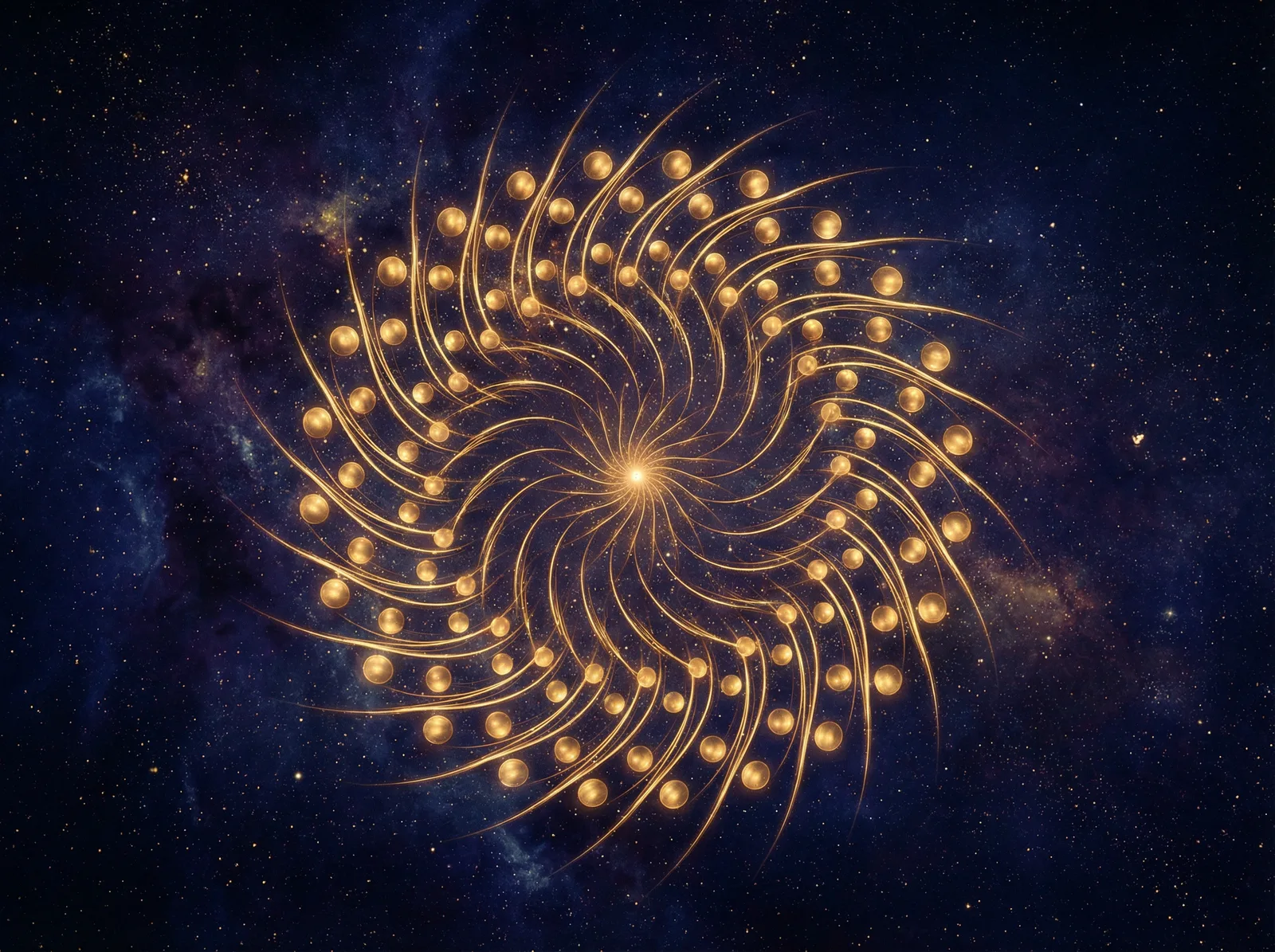
The Golden Angle
137.508° — Nature's Optimal Packing
The same angle appears in sunflowers, pinecones, and galaxies. Nature has one geometry for packing without waste.
— Phyllux
The golden angle—approximately 137.508°—is the angle that maximizes growth efficiency. It appears in phyllotaxis, the arrangement of leaves and seeds. It is the core of Phyllux: biomimetic design grounded in four billion years of natural R&D.
I. The Spiral — Growth and Optimal Packing
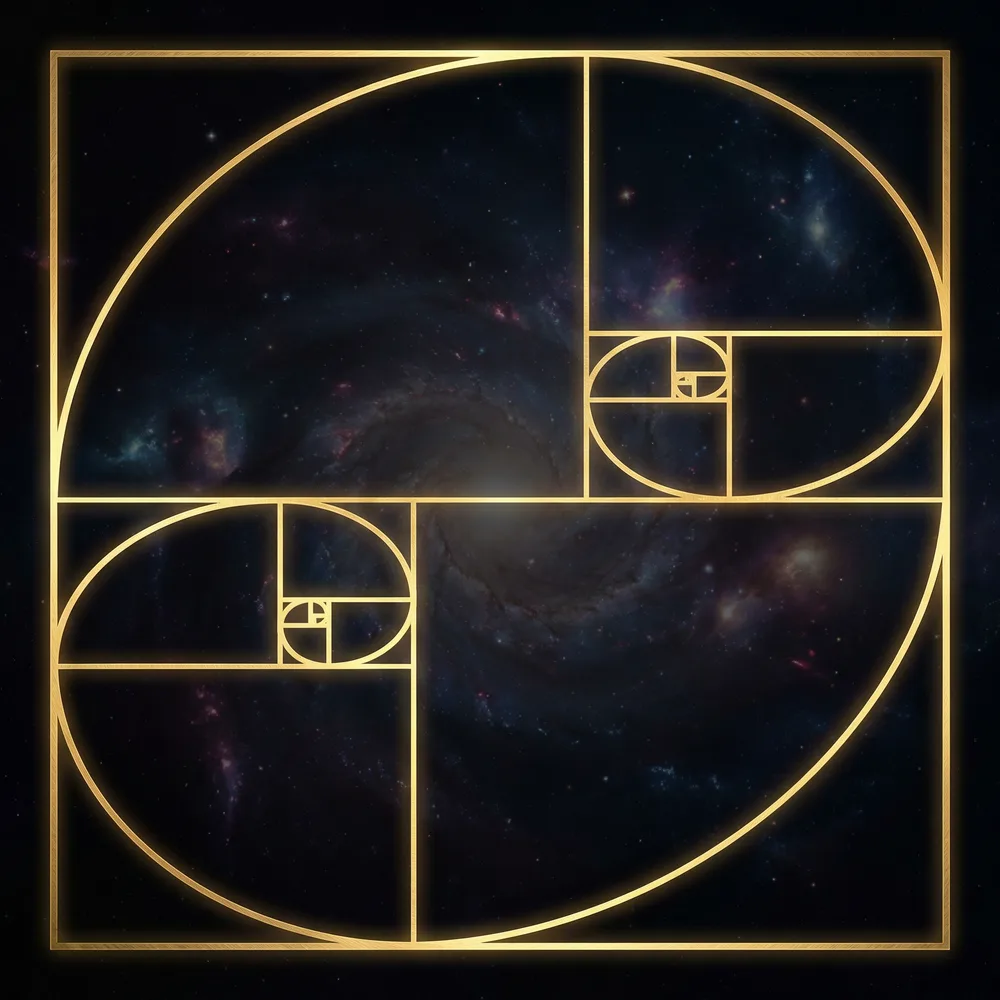
Where the golden angle creates the golden spiral
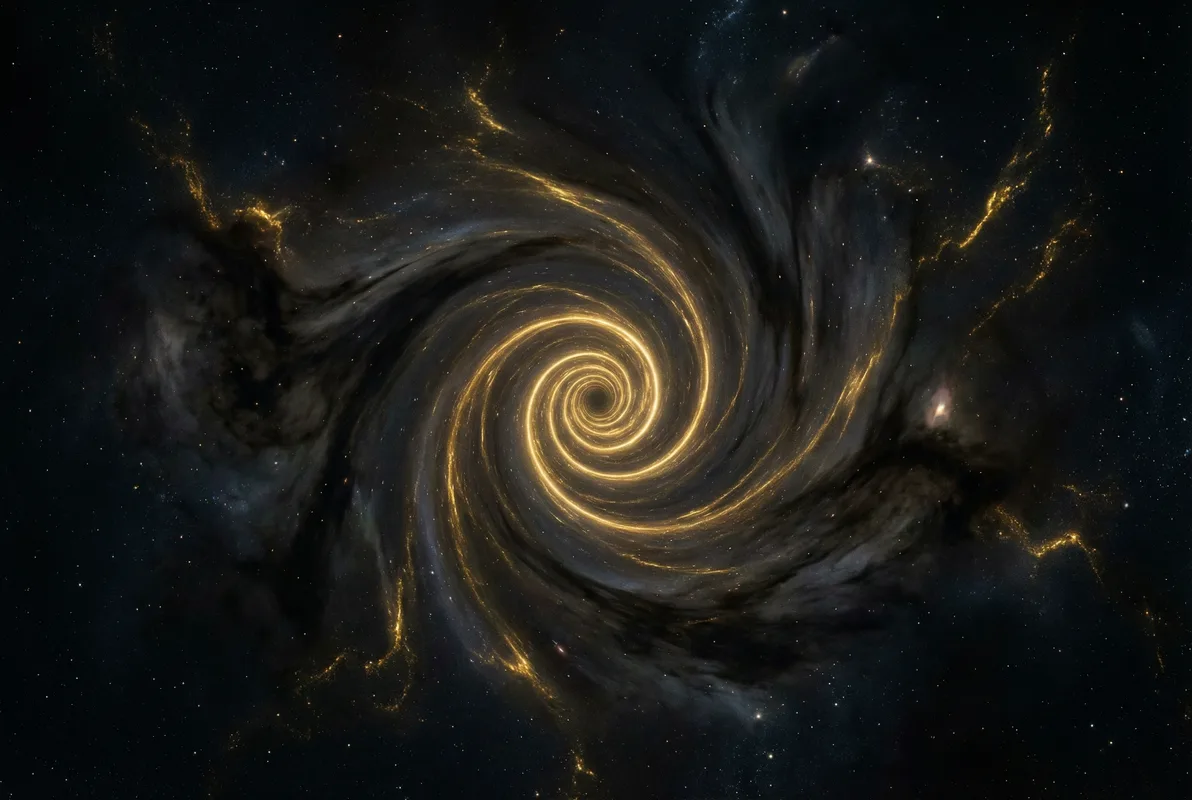
The spiral is growth made visible. When each new element is placed 137.508° from the last, a Fibonacci spiral emerges. No overlap, no waste. Maximum packing with minimum conflict.
This is not design by committee—it is design by constraint. The angle is mathematically optimal. Nature discovered it; we observe it.
II. Phi — The Golden Ratio
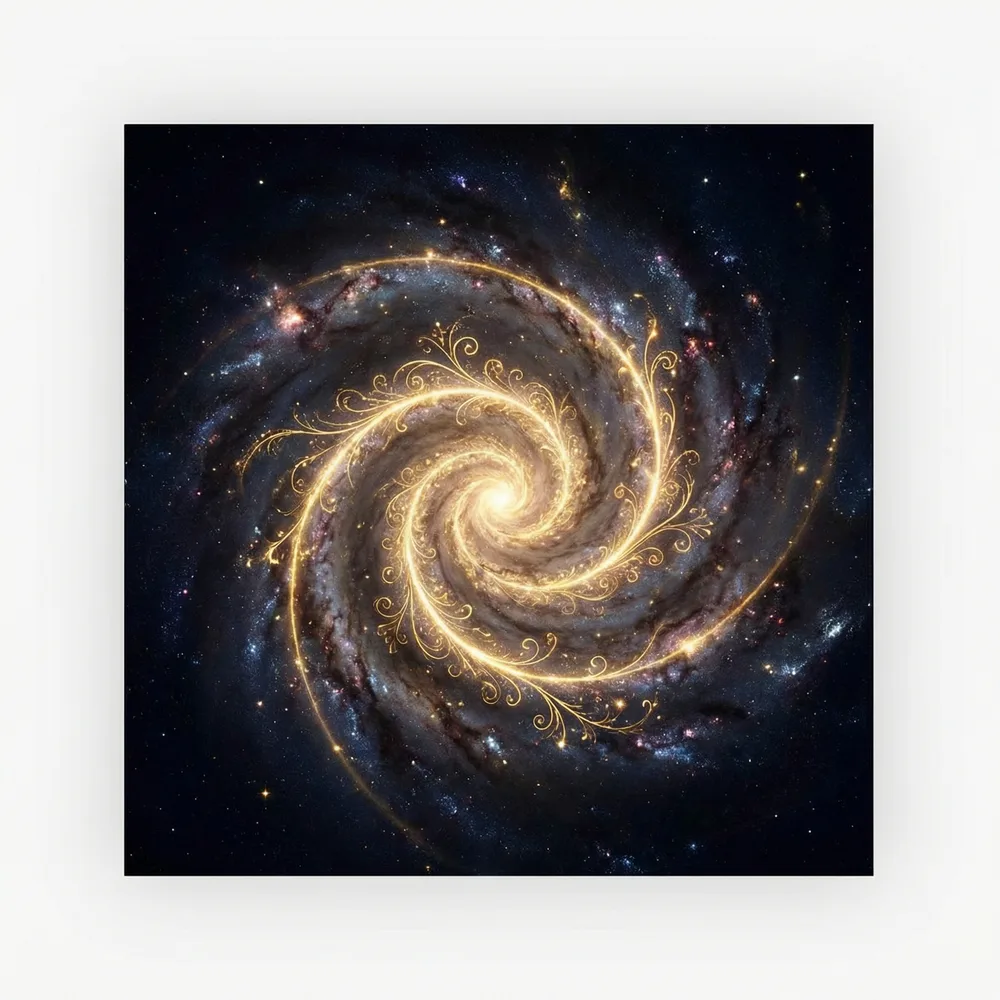
1.618... — the proportion that divides and unites
Phi (φ), approximately 1.618, is the golden ratio. It relates to the golden angle: 360° / φ² ≈ 137.5°. The same proportion appears in division and in growth—the part relates to the whole as the whole relates to the greater whole.
Sacred geometry, Renaissance art, and natural form converge on this number. It is not mystical—it is mathematical. And mathematics, in nature, becomes beauty.
III. Nature — Where the Angle Appears
Four billion years of trial; one angle wins
In nature, the golden angle governs phyllotaxis—the arrangement of leaves, seeds, and florets. Plants that pack seeds at 137.508° maximize light exposure, minimize shading, and resist spiral parasites.
Evolution does not calculate. It selects. The angle that works recurs. The angle that fails disappears. What remains is the geometry of survival.

IV. Sunflower — The Canonical Example
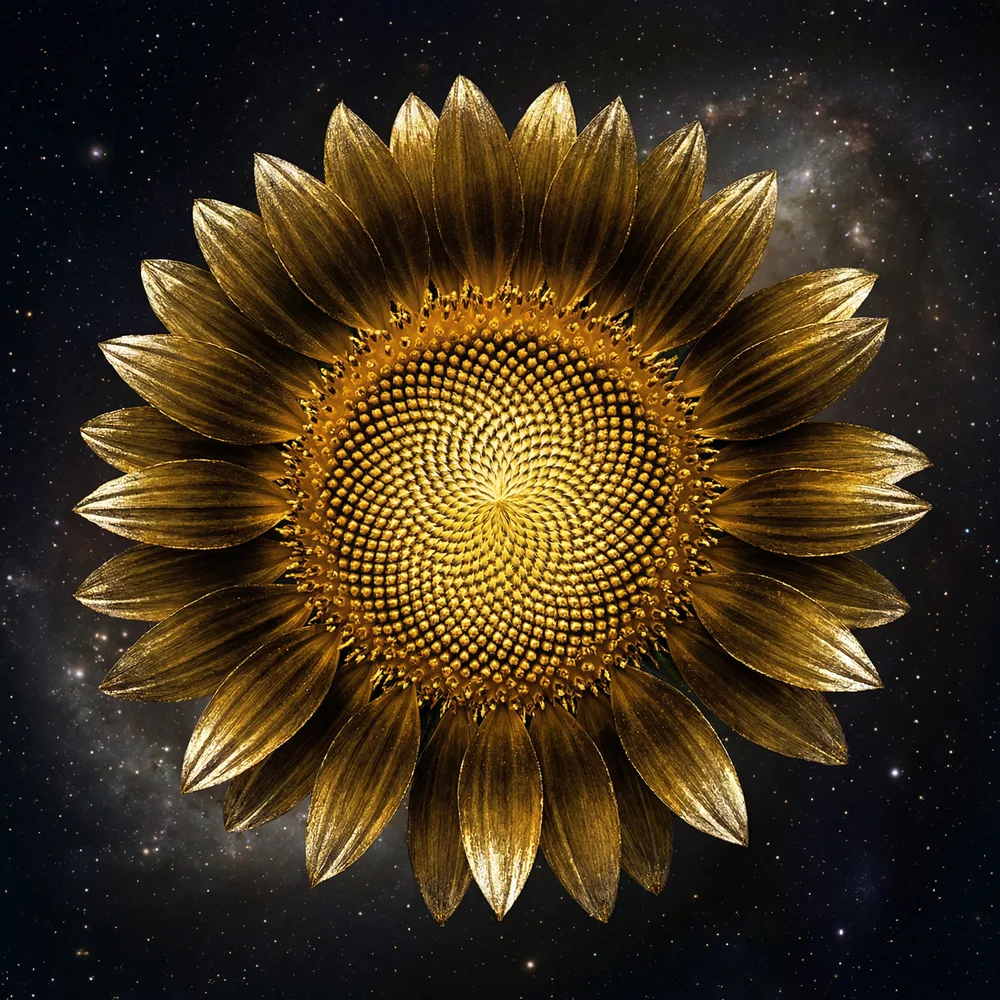
Seeds in perfect spiral; the archetype of phyllotaxis
The sunflower is the canonical example. Its seeds form two families of spirals—34 clockwise, 55 counterclockwise—both Fibonacci numbers. The angle between successive seeds is the golden angle.
Look at a sunflower and you see four billion years of optimization. Look again and you see the same pattern in pinecones, artichokes, and galaxies.
V. Pinecone — Fibonacci in Three Dimensions
Scales in spiral; the same angle, different form
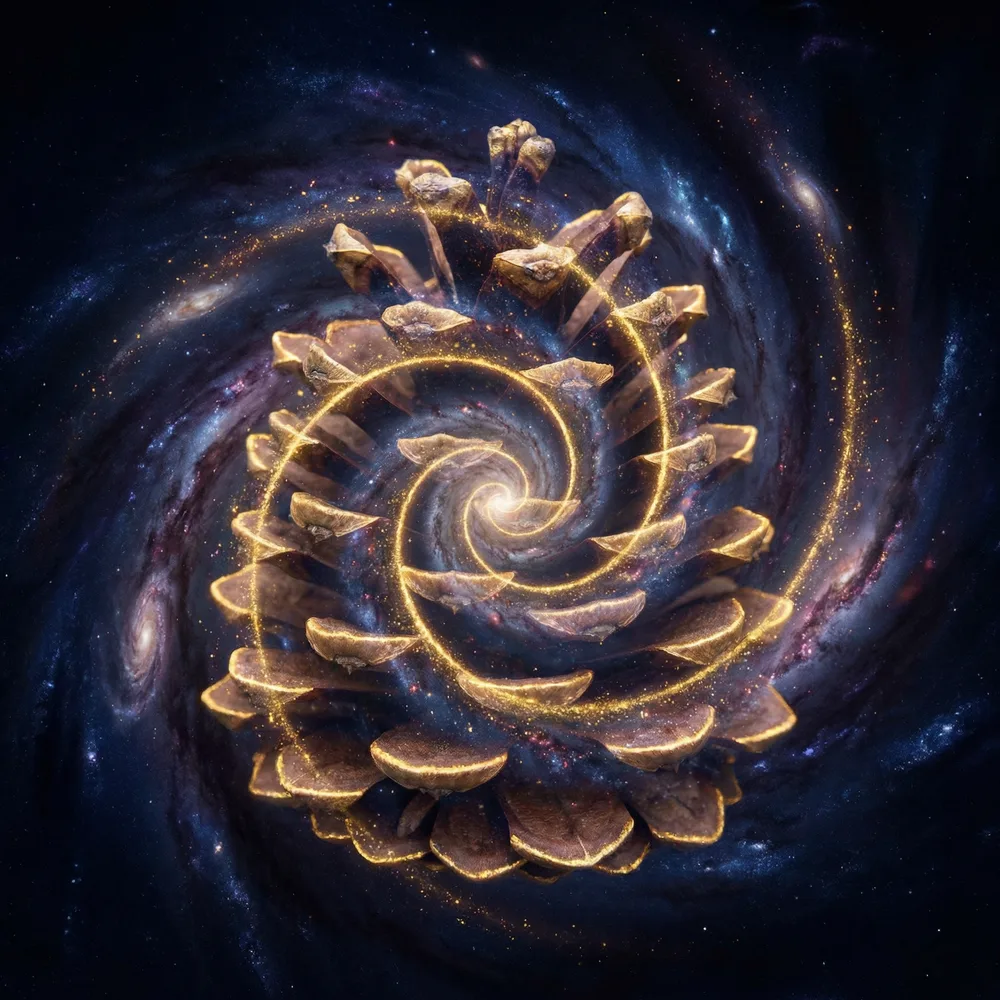
The pinecone exhibits the same geometry in three dimensions. Its scales follow Fibonacci spirals—8 in one direction, 13 in the other. The golden angle structures the cone's growth from center outward.
Conifers and sunflowers diverged hundreds of millions of years ago. They share no common plan—only the same mathematical constraint. Convergence by necessity.
VI. Emergence — Whole Greater Than Parts
From simple rules, complex beauty
Emergence: the whole exceeds the sum of its parts. One rule—place each new element at 137.508°—produces sunflowers, pinecones, galaxies. No central planner. No blueprint. Just iteration and constraint.
Phyllux builds systems the same way: simple rules, emergent complexity. Biomimicry is not copying forms—it is copying the logic of form.

VII. Gallery — The Complete Presentation
Each image: the golden angle made visible
VIII. The Golden Angle Remains
137.508° is not a symbol—it is a fact. It appears in sunflowers and pinecones, in galaxies and hurricanes. Phyllux takes it as the core of biomimetic design: build like nature builds, and the same efficiency emerges.
"One angle. Four billion years. The geometry of flourishing."