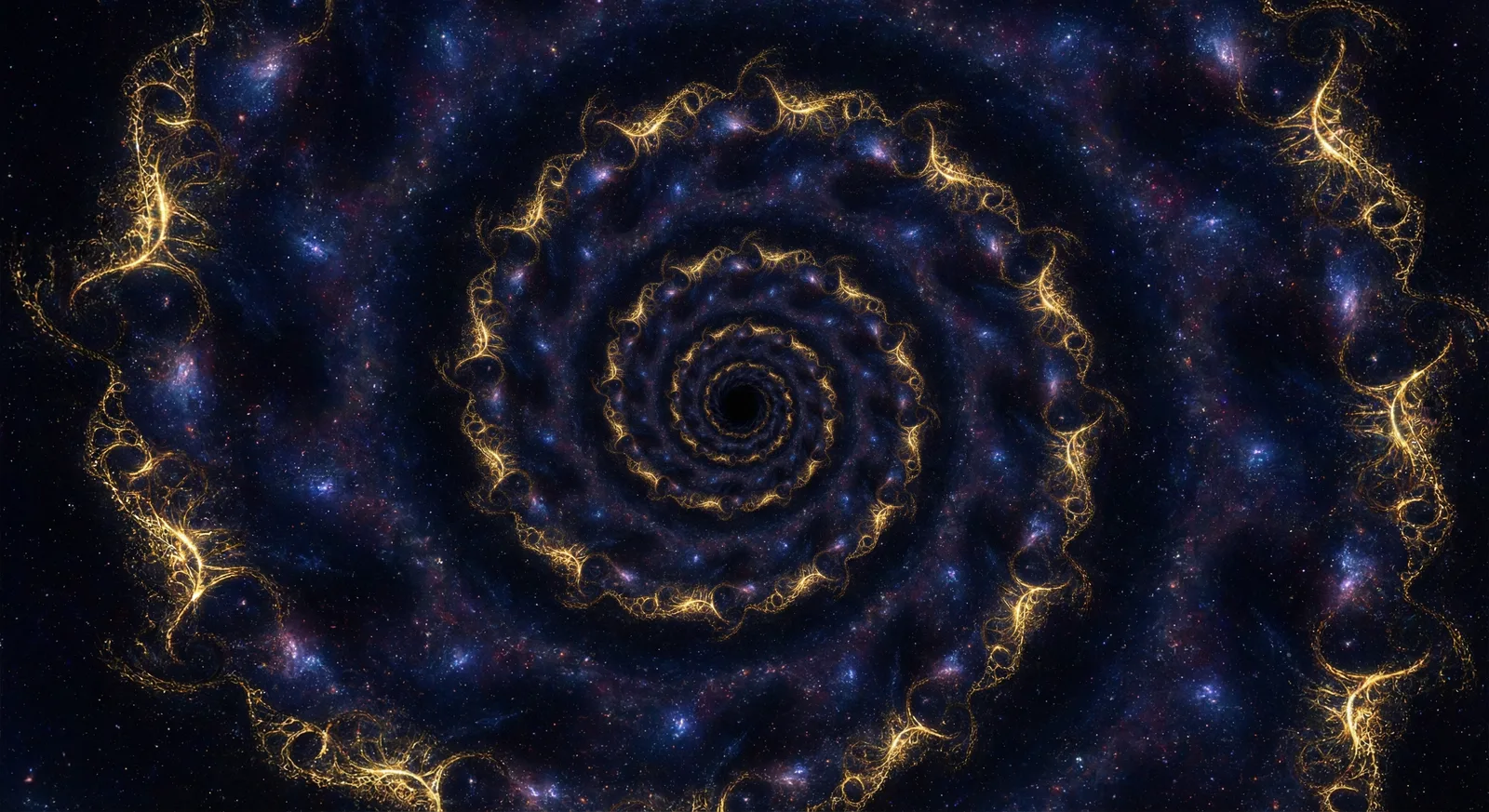
Fractals & Recursion
Self-Similarity · Infinity
The same pattern at every scale. The part contains the whole; the whole repeats in the part.
— From Mandelbrot to nature
Fractals are shapes that repeat themselves at every level of magnification. Trees, coastlines, snowflakes, galaxies—the same logic governs the branching, the boundary, the spiral. Recursion is the engine: simple rules, infinite depth.
I. Self-Similarity — Part Mirrors Whole
The signature of fractal structure
Self-similarity means the part resembles the whole. Zoom in on a fractal and you find the same structure. A branch looks like the tree; a tributary looks like the river.
This is not metaphor—it is mathematics. Fractal dimension measures how completely a shape fills space. The coastline of Britain has a fractal dimension; so does the lung, the cauliflower, the lightning bolt.
II. The Mandelbrot Set — Infinite Boundary
Where the complex plane reveals infinity
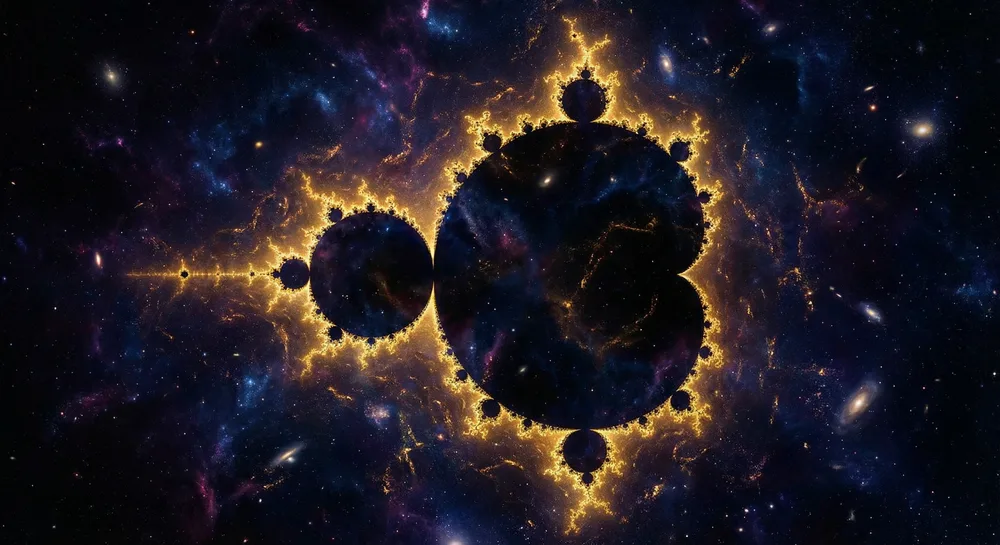
The Mandelbrot set is the most famous fractal. A simple rule—iterate z² + c—produces a boundary of infinite complexity. Zoom forever and you never reach the end.
Benoit Mandelbrot asked: how long is the coast of Britain? The answer depends on your ruler. Fractals challenged Euclidean geometry and gave us a new way to measure the irregular.
III. The Tree — Branching Recursion
Same rule, repeated
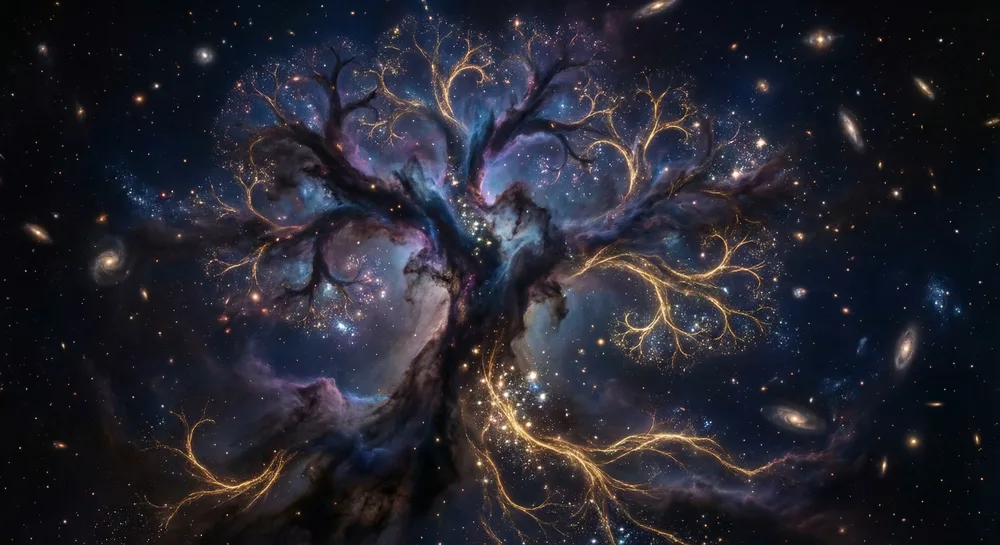
A tree grows by recursion: branch, then branch again. Each branch is a smaller tree. The pattern repeats from trunk to twig—a fractal structure that maximizes surface area for leaves, roots for soil.
Recursion in nature: no central plan, just a rule applied again and again. The result is both efficient and beautiful.
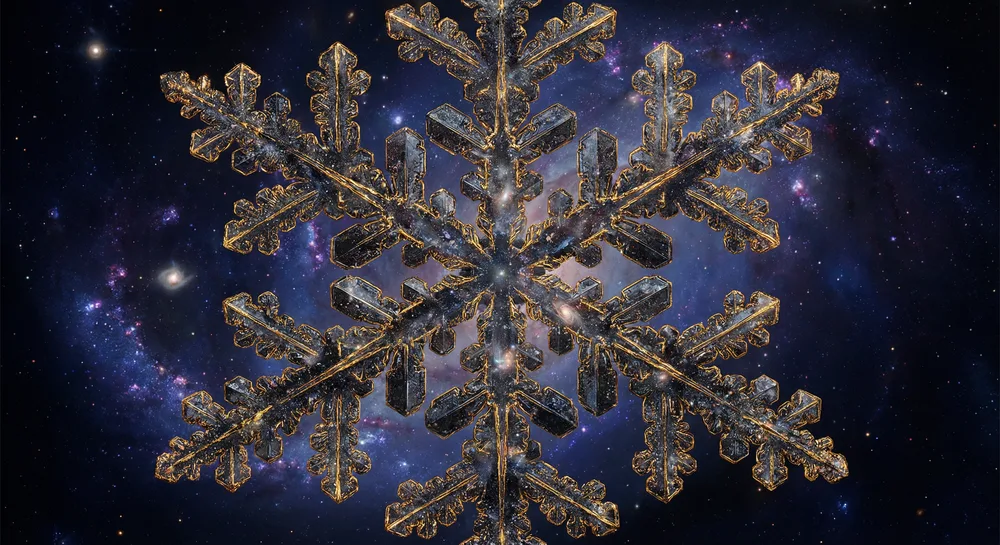
IV. Snowflake — Crystalline Self-Similarity
Sixfold symmetry, infinite variation
Every snowflake is unique—and yet every snowflake shares the same logic. Six-fold symmetry. Branches that branch. The water molecule's geometry and the vagaries of growth produce infinite forms from one rule.
Fractals in ice: the boundary between order and chaos. Deterministic process, stochastic detail.
V. The Spiral — Recursive Spirals
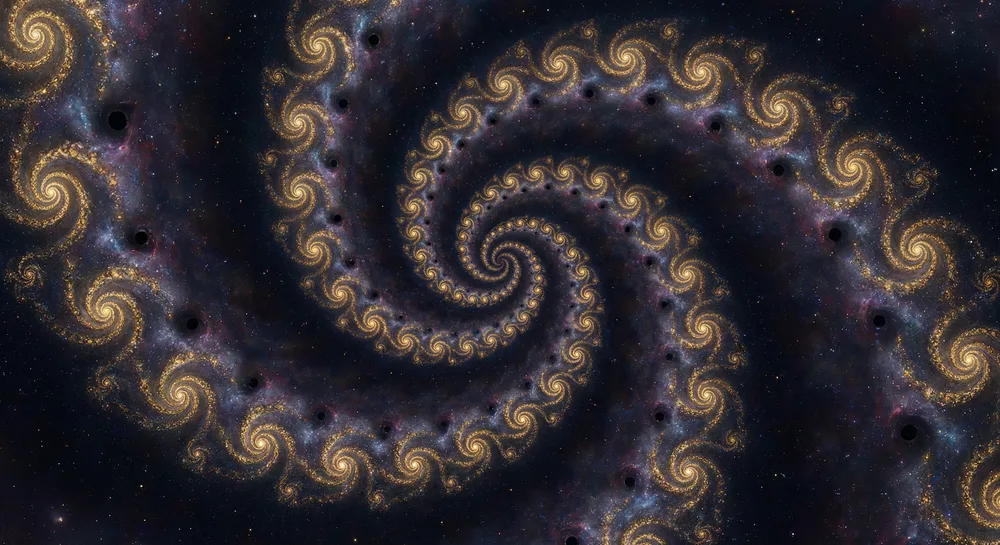
Spirals within spirals
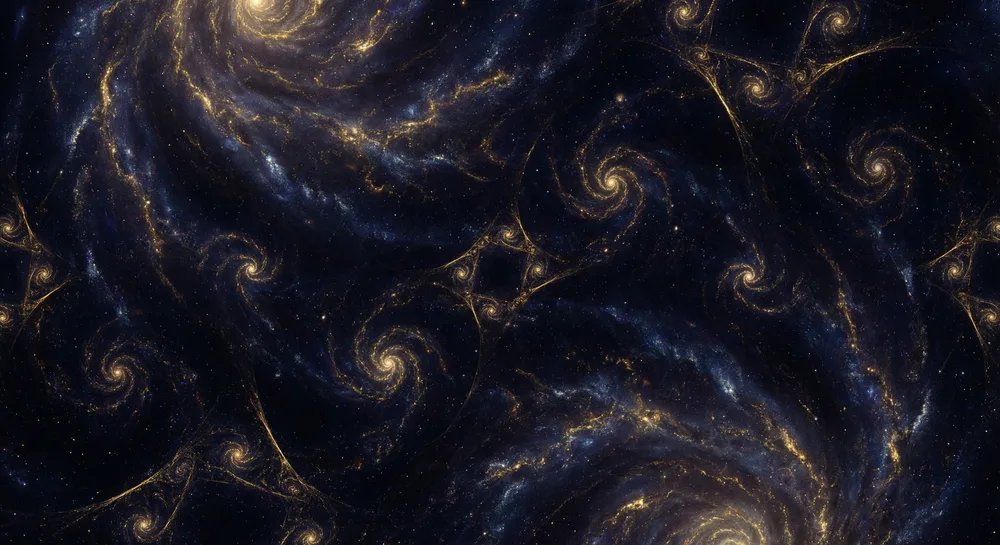
Spirals appear at every scale—galaxies, hurricanes, nautilus shells, DNA. The golden spiral is a fractal: each turn contains smaller turns. Recursion in rotation.
Phyllux takes the golden angle as core. The spiral is the fractal expression of that angle—growth that packs without waste, structure that repeats.
VI. Infinity — Endless Zoom
Where recursion never ends
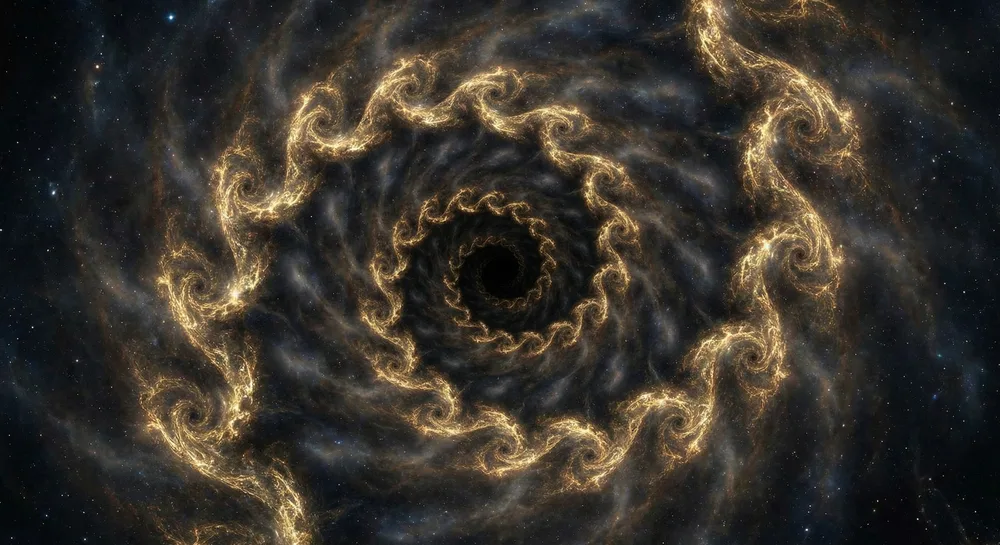
Infinity in fractals: zoom in and the structure continues. No final level. The mathematical fractal is infinite; natural fractals have a cutoff—the cell, the molecule—but the logic extends.
Fractals bridge the finite and the infinite. A finite rule generates unbounded complexity. Same pattern, every scale.
VII. Gallery — The Complete Presentation
VIII. Fractals Remain
The same logic appears in trees and galaxies, in code and in nature. Simple rules, infinite depth. Phyllux builds systems that mirror this: recursive structure, emergent complexity, one pattern at every scale.
"Zoom in forever. The boundary never ends."