Consciousness
The Hard Problem · The Observer · Mind
It feels like something to be you. Explaining why—and how—is the hard problem of consciousness.
— Philosophy of mind
Consciousness is what it is like to be something. Not just to process information—computers do that—but to have an inner life, qualia, experience. The hard problem: how does matter give rise to mind?
I. The Observer — Consciousness Observing Itself
The one who knows
The observer is consciousness turned inward. We are not only aware—we are aware that we are aware. This self-reflection is central to consciousness. The observer cannot be fully objectified; to observe the observer is to become the observer.
Quantum mechanics placed the observer at the center of measurement. Philosophy places it at the center of experience. Both point to something irreducible.
II. Light — Illumination and Awareness
Metaphor and mechanism
Light is the ancient metaphor for consciousness—enlightenment, illumination, revelation. To see is to know; to be in the dark is to be unaware. Light makes the visible visible.
Consciousness is sometimes described as the light by which we see. Not the content—the colors, shapes—but the illumination that makes content possible. The mind's light.
III. Mind — Thoughts, Qualia, Experience
What it is like
The mind is the locus of experience. Thoughts, feelings, sensations—qualia. The redness of red, the taste of chocolate, the ache of grief. These are not reducible to neural firing patterns, at least not obviously.
Functionalism says mind is what mind does. But the hard problem asks: why does doing it feel like something? The gap between structure and experience remains.
IV. The Hard Problem — Why Does It Feel?
Chalmers' formulation
David Chalmers distinguished the easy problems—attention, memory, behavior—from the hard problem: why does any of it feel like something? We can explain how the brain processes color; we cannot yet explain why processing produces the experience of redness.
Some say the hard problem is illusory. Others say it requires new physics, panpsychism, or a fundamental ontology of experience. The debate continues.
V. Emergence — From Matter to Mind
Whole greater than parts
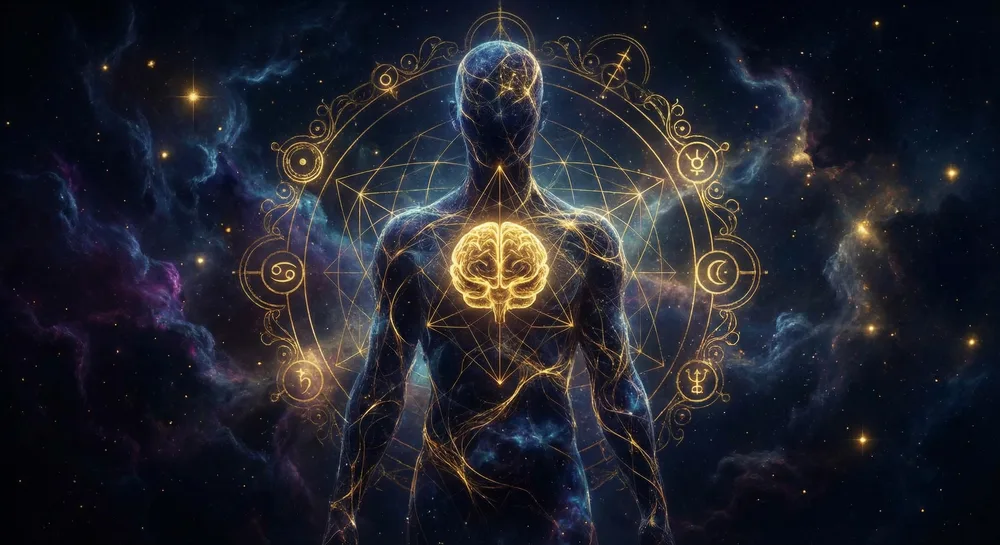
Emergence suggests consciousness arises from complexity. Neurons alone do not feel; the right network does. Like wetness from H₂O molecules, consciousness emerges from the right arrangement.
But emergence does not explain the leap from "no experience" to "experience." It names the transition; it does not close the explanatory gap. The mystery remains.
VI. Unity — The Binding of Experience
One stream of consciousness
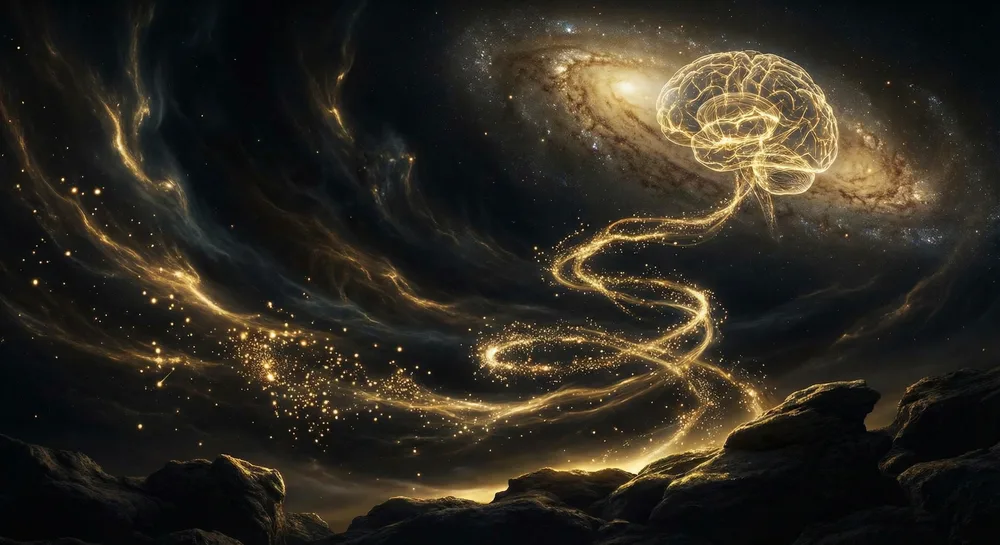
Experience is unified. We do not experience sounds, sights, and thoughts as separate streams—we experience one world. The binding problem: how does the brain integrate disparate signals into a single phenomenal field?
Unity may be the essence of consciousness. Not a collection of qualia but a single integrated experience. The "I" that is the unified subject of all that appears.
VII. Gallery — The Complete Presentation
VIII. Consciousness Remains
Whatever the explanation—emergent, fundamental, or beyond our concepts—consciousness is what we are. It is the light by which we see the world. The hard problem persists; so does the fact of experience.
"It is through consciousness that the universe knows itself."