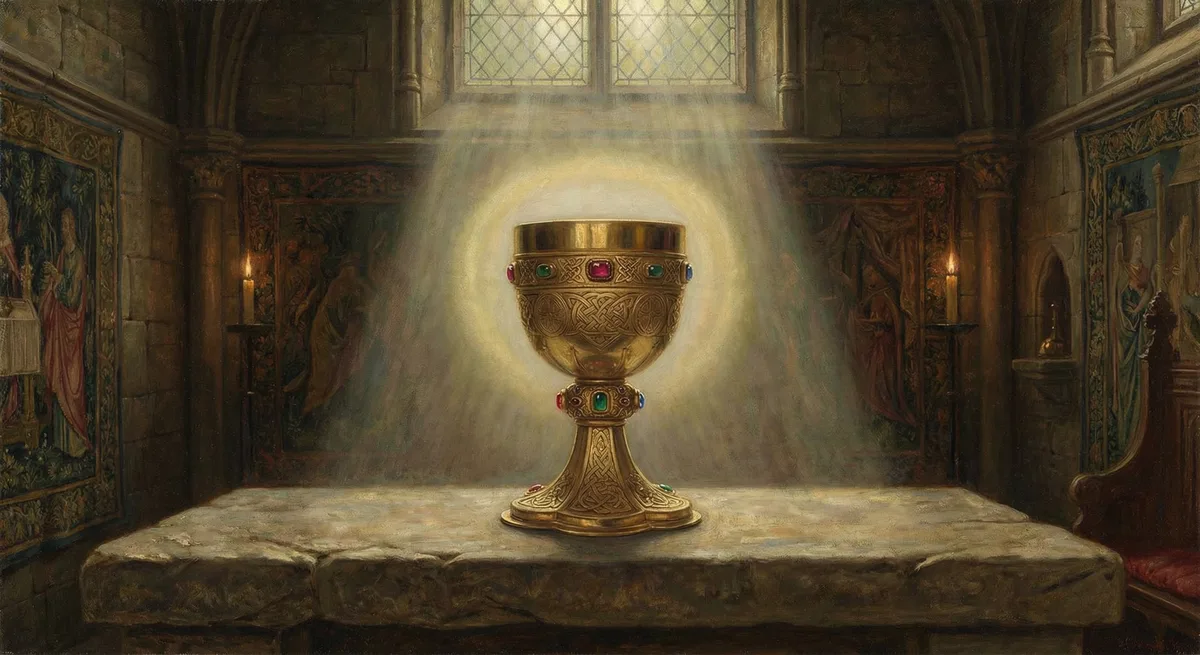
The Holy Grail
Legend · Liturgy · Story only
"The Grail is the vessel in which the divine mystery is received and from which it is poured out."
— Wolfram von Eschenbach, Parzival
The most enduring symbol of Western mysticism—a sacred chalice that heals, sustains, and reveals. From the Last Supper to Camelot, from Christian devotion to Arthurian romance, the Grail has captivated humanity for a millennium. This is its complete story.
I. The Legend
A vessel of divine power and eternal mystery
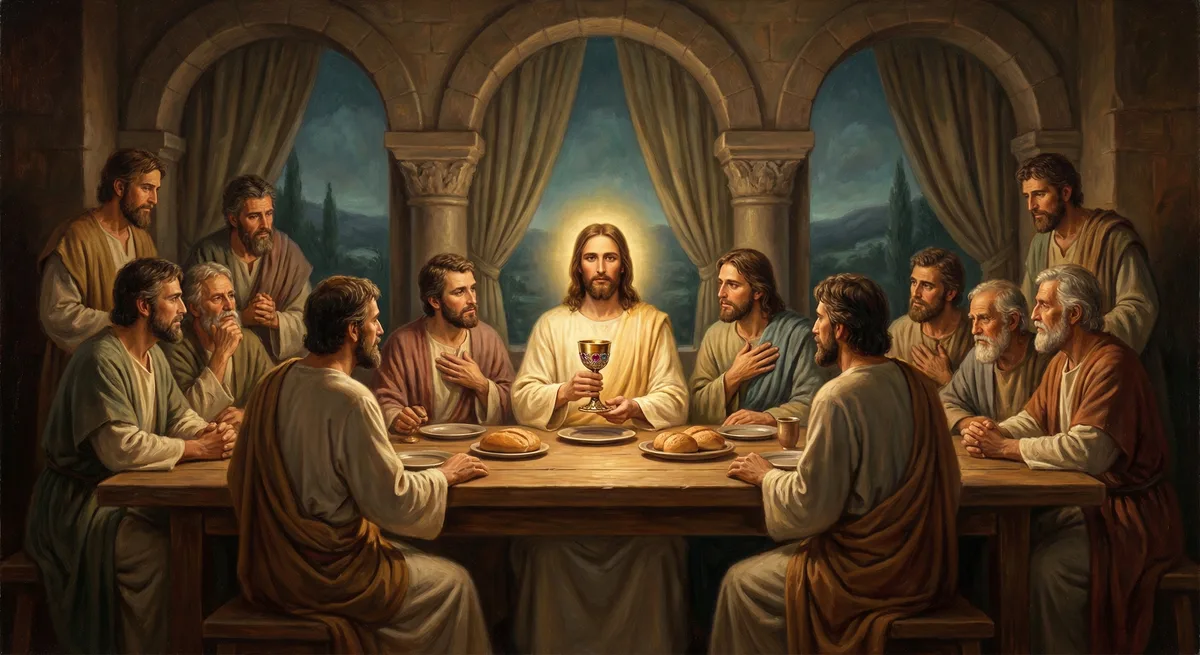
The Holy Grail is the cup from which Christ drank at the Last Supper and in which Joseph of Arimathea is said to have caught his blood at the Crucifixion. It grants healing, eternal youth, and spiritual nourishment to the worthy. To behold it is to glimpse the divine.
In medieval romance, the Grail appears only to the pure of heart. It floats in visions, heals the Fisher King's wound, and sustains the knights who seek it. Its location remains a mystery—hidden in a castle that appears and vanishes, guarded by angels and tested by trials.
II. Christian Origins
From the Last Supper to the Crucifixion
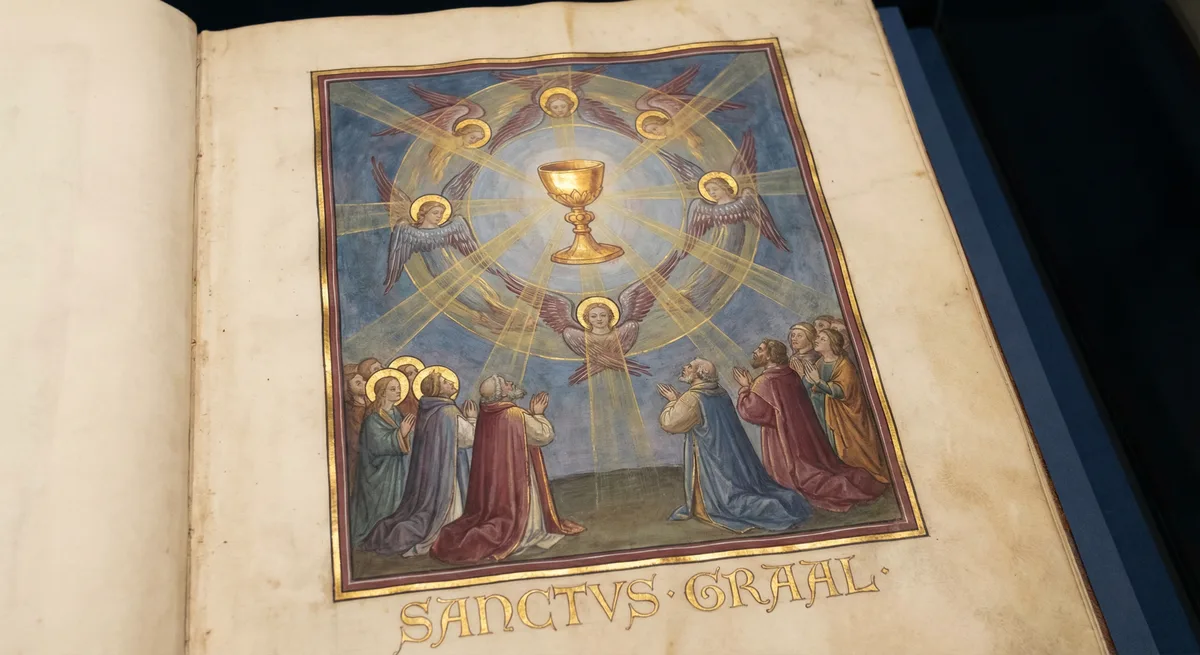
The Grail's Christian roots lie in the Eucharist—the chalice of the Mass, the vessel of Christ's blood. Joseph of Arimathea, who gave his tomb for Jesus, was said to have brought the Grail to Britain, founding the first Christian church at Glastonbury.
In the Gospels, the cup at the Last Supper becomes the symbol of the New Covenant. Medieval writers wove this into a story of sacred lineage, hidden relics, and the conversion of Britain. The Grail connects heaven and earth, the divine and the human.
III. Camelot & the Round Table
Where the quest begins
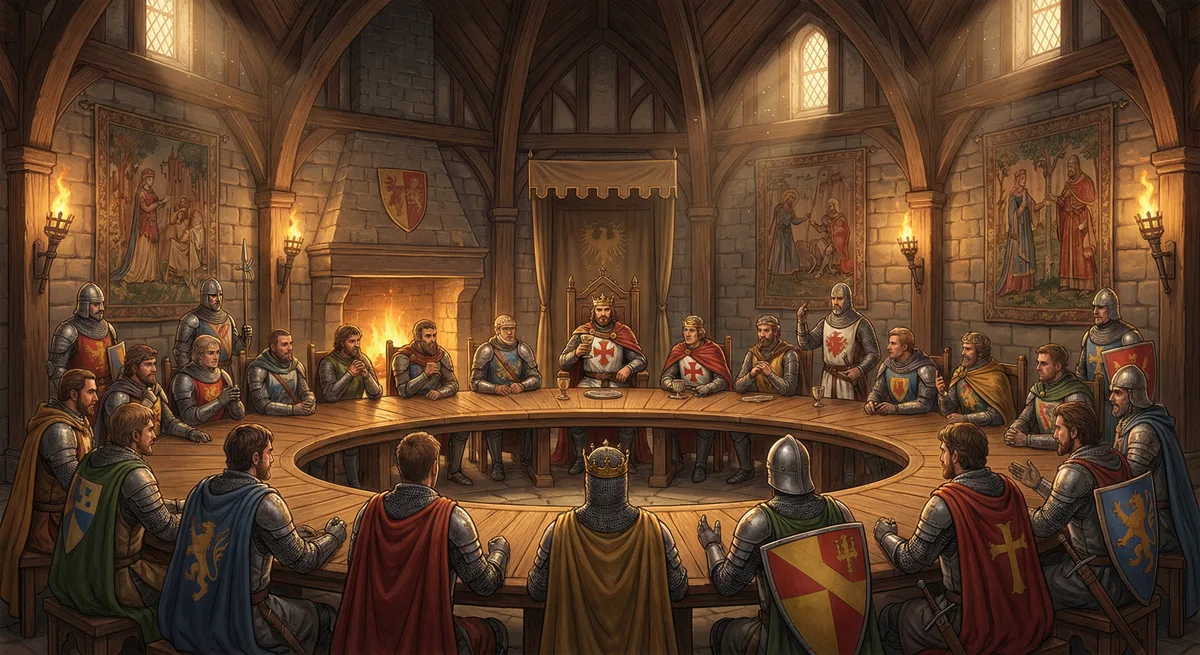
King Arthur and his knights represent the pinnacle of chivalry. At Camelot, the Round Table—a symbol of equality and fellowship—gathers the finest knights of Christendom. When the Grail appears in a vision, it sets in motion the greatest quest of all.
Only the purest knight may achieve the Grail. Lancelot, for all his prowess, is barred by his sin. Percival fails at first for lack of compassion. The quest tests not strength but virtue—humility, purity, and the willingness to ask the healing question.
IV. The Quest
Through perilous lands in search of the sacred
The Grail quest leads knights through enchanted forests, across desolate wastelands, and into castles that appear only to the chosen. Each knight follows his own path—some find glory, others death. The journey itself transforms the seeker.
Medieval romances describe trials of faith: bridges that test purity, maidens who offer temptation, hermits who offer wisdom. The Grail Castle appears when least expected, and the Fisher King—wounded and waiting—embodies a land in need of healing.
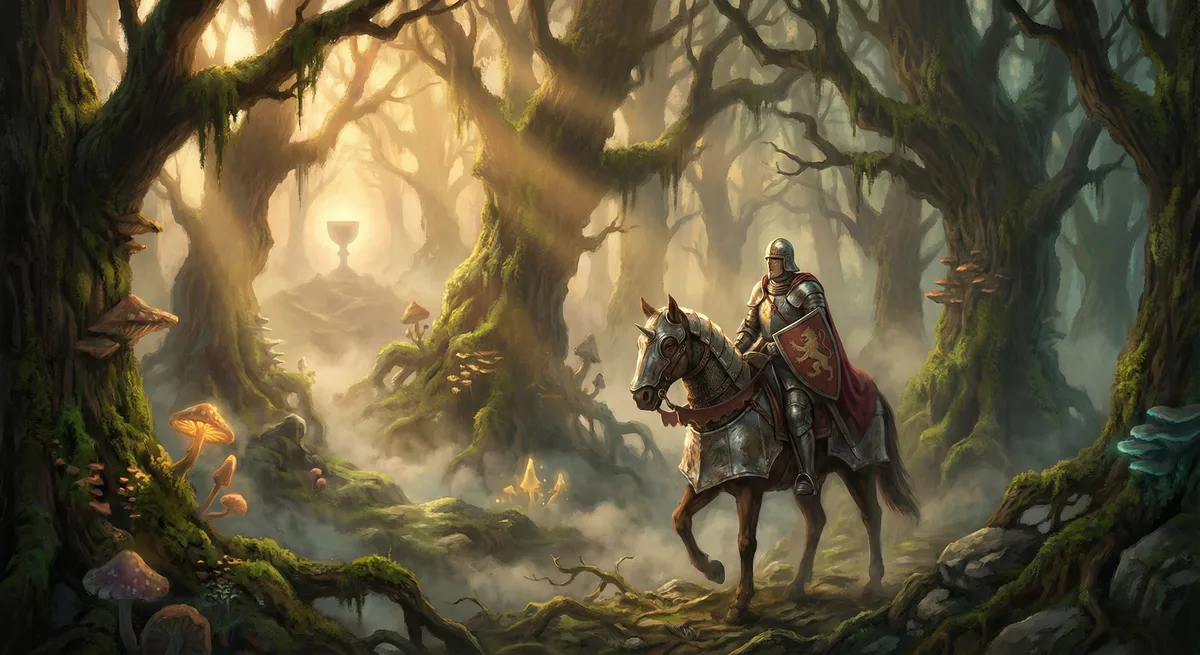
V. Sir Galahad — The Perfect Knight
He who achieved the unachievable
Sir Galahad, the son of Lancelot, is the only knight pure enough to fully achieve the Grail. Conceived in enchantment, raised in a nunnery, he is the embodiment of perfect chastity and virtue. Where he sits at the Round Table, the Siege Perilous—the seat of death for the unworthy—remains empty until his coming.
Galahad beholds the Grail in its full glory, receives communion from it, and is taken up to heaven. His quest complete, he has no need to return. The Grail, having been achieved, vanishes from the world—or so the story goes.
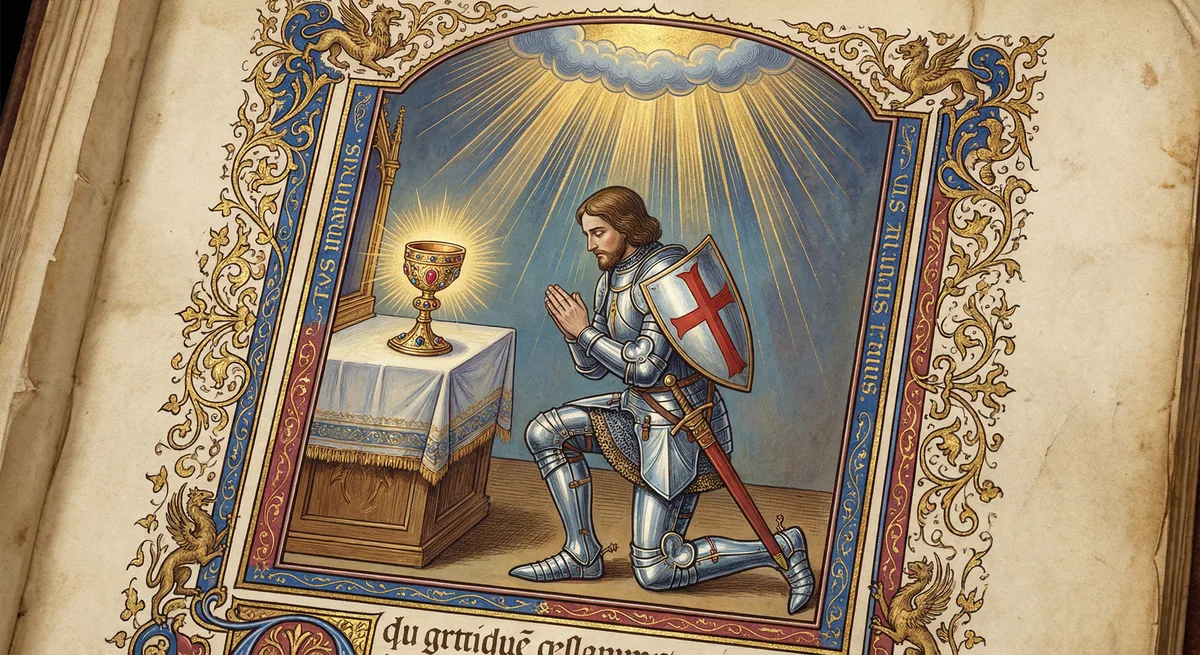
VI. Camelot — The Dream That Endures
A kingdom of ideals
Camelot stands as the archetypal realm of chivalry—a place where justice, honor, and fellowship reign. Its towers gleam in legend; its fall marks the end of an age. The Grail quest, undertaken from Camelot, represents humanity's highest aspiration.
Whether historical or purely mythical, Camelot and the Grail have shaped Western culture. They appear in art, literature, film, and psychology. The quest for meaning, for the sacred, for something that makes life whole—this is the Grail's enduring gift.
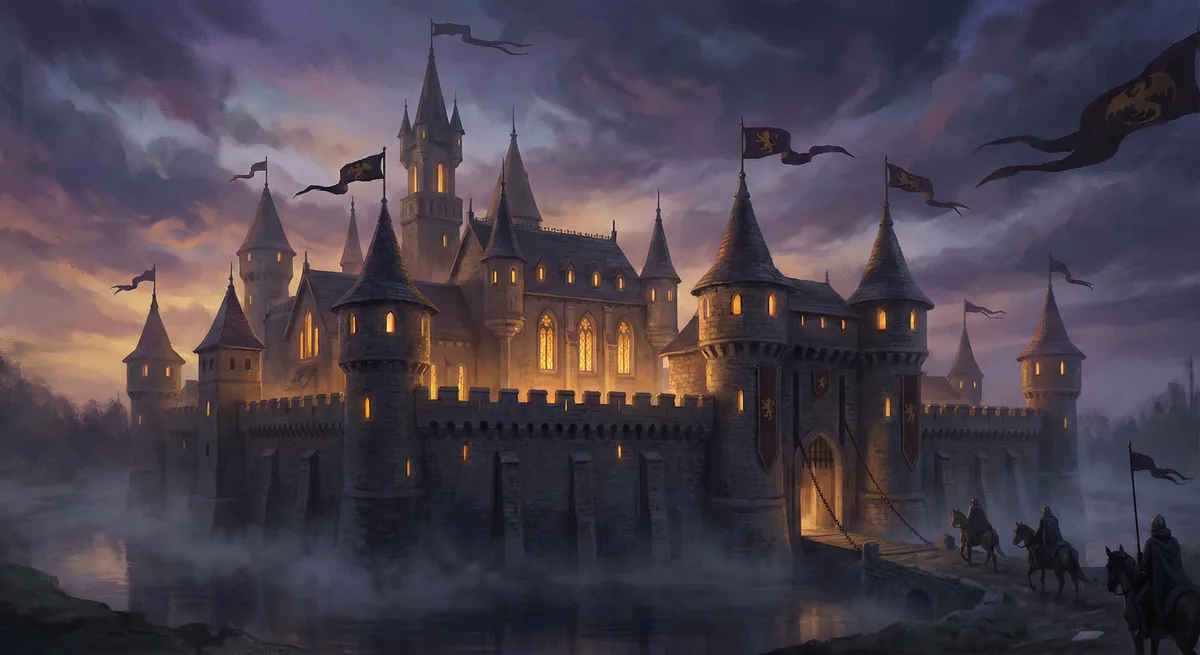
VII. The Grail Chapel
Where heaven touches earth
In the Grail Castle or the Grail Chapel, the sacred vessel is revealed. Stained glass filters divine light; stone arches frame the mystery. Here the knight receives the vision that transforms him—or fails the test and must wander until he learns.
The chapel represents the inner sanctum of the soul, the place where the seeker meets the sacred. It is both physical and spiritual, a location in the world and a state of being. To enter is to approach the source of all healing.
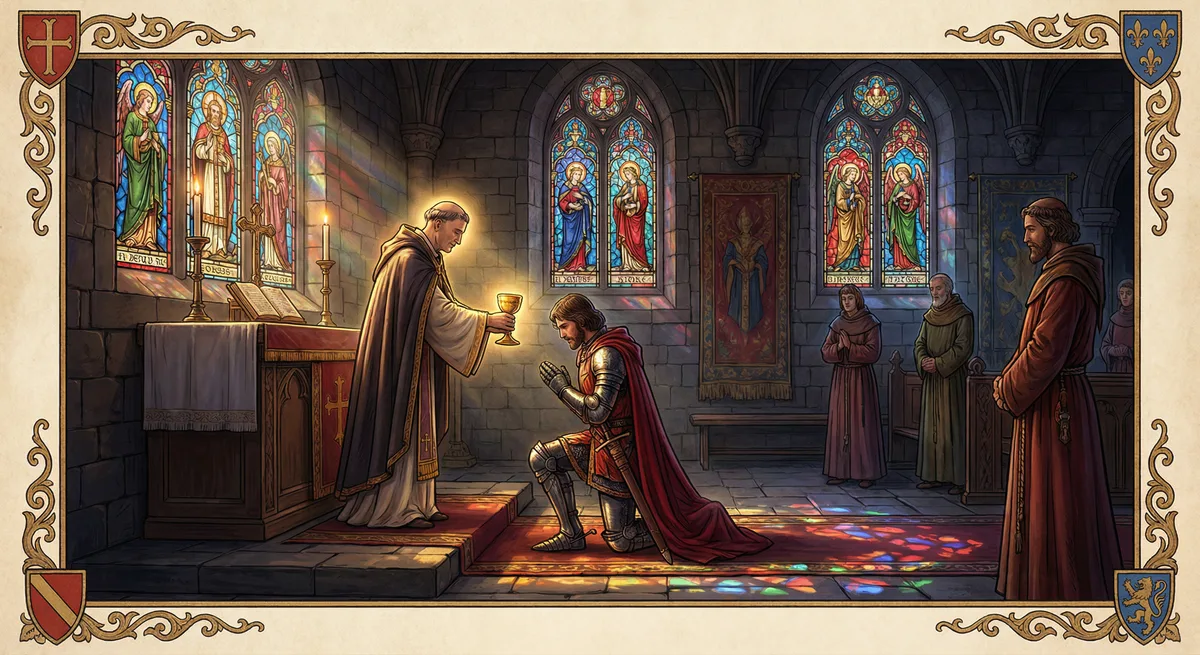
IX. The Grail Endures
The Holy Grail is more than a relic—it is a symbol of the human quest for meaning. Whether we seek healing, wisdom, or transcendence, the Grail represents that which is most precious and most elusive. It reminds us that the journey matters as much as the destination, and that purity of heart opens doors that strength alone cannot.
"The Grail is not a thing. It is a process, a way of life. It is the path of the heart."
— Joseph Campbell
